Newsletter Subscribe
Enter your email address below and subscribe to our newsletter


Discover what fashion activism really means in 2026. Learn how clothing drives social change, explore powerful examples, and find practical ways to engage authentically with this transformative movement.
Fashion activism goes far beyond wearing a T-shirt with a catchy slogan. It’s a powerful, multifimensional movement where style intersects with social change, ethical production, and conscious consumerism. This guide unpacks what fashion activism includes ethical production, consumer behavior, and symbolic expression truly means, explores iconic examples, and shows you how to engage authentically in this transformative space.
| Point | Details |
|---|---|
| Fashion activism merges style with purpose | Clothing becomes a deliberate tool to express social and political messages thoughtfully. |
| Historical movements demonstrate lasting impact | From Pink Pussyhats to Black Lives Matter shirts, fashion unifies activists visually and emotionally. |
| Drives real social and environmental change | Supports ethical labor, sustainable sourcing, and pressures brands toward responsibility. |
| Misconceptions limit authentic engagement | It’s not just protest wear but includes consumer choices and ethical production advocacy. |
| Practical actions empower meaningful contributions | Anyone can participate through informed purchasing, upcycling, and amplifying activism messages. |
Fashion activism uses clothing intentionally to communicate political and social messages. It challenges prevailing cultural norms and dominant narratives through deliberate style choices. Unlike mainstream fashion trends focused solely on aesthetics, fashion activism layers meaning onto every garment, stitch, and brand decision.
This movement operates across three interconnected dimensions. Symbolic expression turns outfits into protest signs, sending visible messages about identity and values. Ethical production advocates for fair labor practices and sustainable manufacturing processes. Consumer activism empowers shoppers to vote with their wallets by supporting responsible brands.
Fashion activism includes ethical production, consumer behavior, and symbolic expression as forms of symbolic and material resistance to dominant cultural narratives. Fashion connects personal identity with activism and empowerment in ways traditional protests cannot always achieve.
Key elements of fashion activism include:
Pro Tip: Start small by auditing your current wardrobe. Identify which brands align with your values before making new purchases. This simple step transforms shopping from passive consumption into conscious activism.
The role of fashion icons throughout history shows how individuals can leverage style to spark cultural conversations and inspire collective action.

The Pink Pussyhat project in 2017 became an iconic feminist protest symbol. Knitted pink hats with cat ears flooded the Women’s March, creating a unified visual statement that amplified feminist resistance. These simple accessories transformed individual participants into a cohesive movement visible from blocks away.
Black Lives Matter popularized symbolic T-shirts as powerful protest fashion. Phrases like “I Can’t Breathe” and “Say Their Names” turned everyday clothing into mobile memorials and awareness tools. Wearing these garments kept urgent social justice conversations alive beyond organized protests.
These examples demonstrate fashion’s unique ability to unify activists visually and emotionally. When thousands wear similar items, they signal belonging and collective strength. Fashion activism adapts continuously with cultural and political contexts, evolving its symbols and strategies.
Historical examples of fashion activism:
| Movement | Fashion Element | Impact |
|---|---|---|
| Women’s March 2017 | Pink Pussyhats | Unified millions globally in feminist protest visibility |
| Black Lives Matter | Slogan T-shirts | Sustained awareness between major protests |
| Climate Strikes | Upcycled protest signs as wearables | Highlighted fashion’s environmental footprint |
Understanding why fashion history matters provides context for how clothing has always communicated identity and resistance. The push for diversity in fashion representation connects directly to activism goals of amplifying marginalized voices.
Fashion activism raises visibility for marginalized communities through symbolic fashion items. When activists wear garments representing their causes, they transform public spaces into awareness campaigns. Each outfit becomes a conversation starter that educates passersby about important issues.
Supporting ethical labor and sustainable sourcing reduces exploitation in fashion supply chains. By choosing brands committed to fair wages and safe conditions, consumers directly influence how garments are produced. This consumer activism motivates brands to adopt socially responsible practices or risk losing market share.
Fast fashion dominates the market but conflicts fundamentally with sustainable activism values. Fast fashion accounts for 60% of global apparel production and challenges sustainable fashion activism through its rapid production cycles and environmental harm. Educated consumers can use fashion choices to push industry-wide changes by rejecting exploitative practices.
Key mechanisms for driving change:
Pro Tip: Research brands before purchasing by checking certifications like Fair Trade, GOTS (Global Organic Textile Standard), or B Corp status. These third-party verifications confirm ethical commitments beyond marketing claims.
Exploring eco-friendly fashion benefits reveals how sustainable choices reduce environmental harm. Understanding how fashion influences confidence shows the personal empowerment dimension. The role of influencers in fashion demonstrates how digital platforms amplify activism messages.
| Activism Type | Strategy | Example Impact |
|---|---|---|
| Symbolic Expression | Wearing protest slogans | Sustained public awareness between events |
| Ethical Production | Supporting fair trade brands | Improved worker conditions and wages |
| Consumer Activism | Boycotting exploitative companies | Forced policy changes or brand repositioning |
Fashion activism is not only about wearing slogan T-shirts or protest gear. While visible statements matter, authentic activism requires deeper engagement with ethical production and conscious consumption. Many assume fashion activism rejects all consumerism, but it actually supports ethical purchasing rather than total abstinence.
Engagement requires thoughtful choices beyond fleeting trends or superficial statements. Simply buying a shirt with an activist message doesn’t create change if that shirt was produced through exploitative labor. Fast fashion purchasing contradicts fashion activism goals and undermines credibility when activists unknowingly support harmful practices.
Effective activism combines symbolic expression, ethical sourcing, and informed purchases into a cohesive practice. It recognizes that every fashion choice either supports or challenges existing industry structures.
Common myths debunked:
Authentic fashion activism demands consistency between expressed values and purchasing behavior. Wearing a climate action shirt while shopping at fast fashion chains sends conflicting messages and dilutes activist credibility.
Fashion activism includes three layers: symbolic expression, ethical production, and consumer activism. This framework helps identify where and how to engage authentically based on personal strengths and resources.
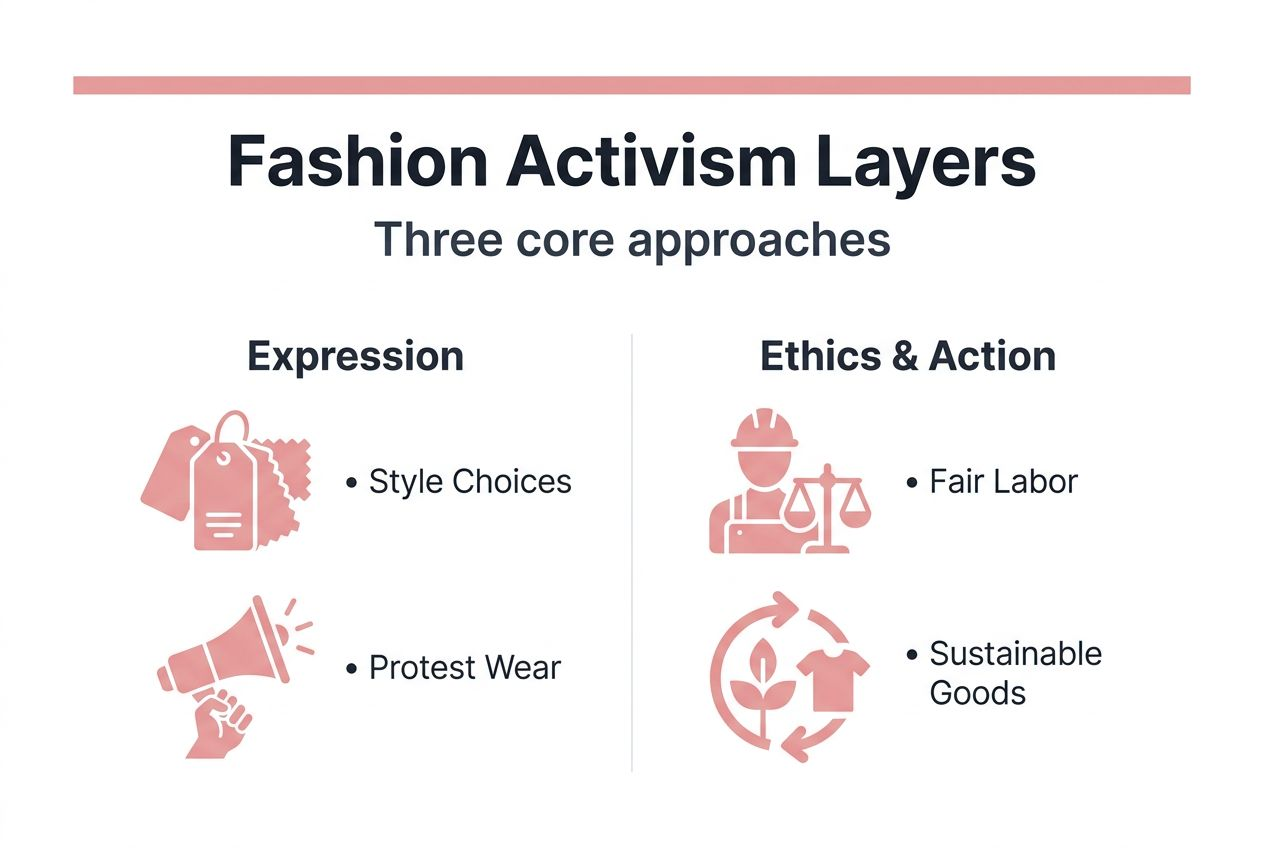
Symbolic expression refers to making political statements through clothing choices and styles. This visible layer communicates values to the world, sparking conversations and building movement identity. Wearing specific colors, slogans, or traditional garments signals solidarity and challenges dominant narratives.
Ethical production involves supporting fair labor, sustainable sourcing, and responsible manufacturing. This structural layer addresses supply chain injustices and environmental harm. Advocating for transparency and supporting certified ethical brands creates systemic pressure for industry reform.
Consumer activism focuses on informed brand purchasing decisions and promoting ethical companies. This economic layer leverages spending power to reward responsible practices and punish exploitation. Boycotts, public campaigns, and social media pressure fall into this category.
Understanding this framework empowers strategic engagement:
| Layer | Focus | Action Examples |
|---|---|---|
| Symbolic Expression | Visible messaging | Wearing protest slogans, traditional garments, movement colors |
| Ethical Production | Supply chain reform | Supporting fair trade, demanding transparency, advocating for worker rights |
| Consumer Activism | Economic pressure | Boycotting exploitative brands, amplifying ethical companies online |
This framework shows fashion activism as more than isolated actions but as an integrated practice spanning personal style, industry engagement, and economic decisions.
Join educational campaigns and participate in upcycling or sustainable fashion workshops. These hands-on experiences build skills while connecting you with like-minded activists. Local community centers, online platforms, and fashion schools often host accessible events.
Support brands committed to fair labor practices and sustainable sourcing. Research companies before purchasing by examining their supply chain transparency and worker testimonials. Small independent brands often lead ethical innovation compared to massive corporations.
Use social media to amplify activism messages and promote informed consumer choices. Share educational content about fashion’s social and environmental impact. Tag brands publicly with questions about their practices to create accountability pressure.
Engage thoughtfully beyond trends by understanding brands’ ethics and industry impact. Fast trends often mask exploitative production. Taking time to research ensures your activism aligns with genuine values rather than performative gestures.
Actionable steps to start today:
Pro Tip: Create a personal ethics checklist before shopping. Include criteria like fair wages, environmental sustainability, and local production. This tool transforms impulse purchases into intentional activism.
Personal style can be a powerful platform to express social justice and environmental values. Every outfit choice communicates priorities. Discovering strategies for updating fashion trends while maintaining ethical standards keeps activism fresh and engaging. Learning practical ways to support women extends activism beyond fashion into broader empowerment. Exploring engaging lifestyle content connects fashion activism to holistic values-driven living.
You’ve learned how fashion activism transforms clothing into meaningful statements. Now it’s time to bring those values into your personal style.
Discover curated style guides that help align your wardrobe with your activism and values. Stay inspired by exploring how social media shapes personal style trends in sustainable, thoughtful ways. Learn from celebrity style essentials blending luxury with streetwear that balance glamour with conscious choices. Find practical strategies for updating your wardrobe with modern fashion trends without compromising ethical standards. Womanedit supports your journey toward meaningful, empowered fashion that looks stunning while making a difference.
Fashion activism intentionally promotes social or political messages and ethical practices beyond aesthetics. Regular fashion focuses primarily on trends, personal expression, and visual appeal without necessarily addressing broader social issues or supply chain ethics.
Absolutely, upcycling and mindful styling are powerful activism forms. Repairing, altering, and creatively styling existing garments reduces waste and challenges fast fashion culture. Participating in clothing swaps and thrift shopping also constitutes meaningful activism.
Look for transparency, fair labor certifications, and sustainable sourcing commitments. Check for third-party certifications like Fair Trade, GOTS, or B Corp status. Read brand supply chain reports and worker testimonials to verify claims beyond marketing language.
Yes, it raises awareness, supports marginalized voices, and pressures industry shifts. Collective consumer action has forced major brands to improve labor conditions, increase transparency, and adopt sustainable practices. Fashion activism creates both symbolic visibility and economic pressure for change.
No, it encompasses everyday consumer choices and symbolic expression through personal style. While protest fashion is one visible form, daily decisions about what to buy, wear, and support constitute ongoing activism. Your regular wardrobe choices reflect and advance activist values.