Newsletter Subscribe
Enter your email address below and subscribe to our newsletter


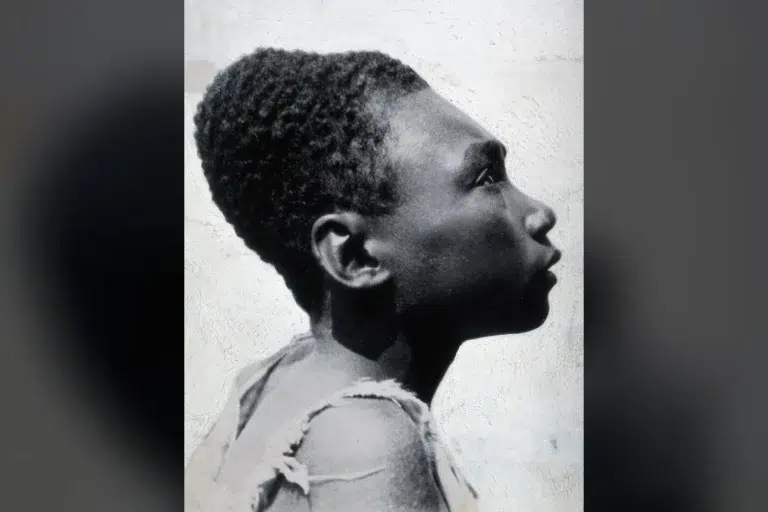
Alien origin theories for 'Conehead' mummies are back, fueled by new DNA analysis. Don't fall for this tired dismissal of human ingenuity!
Here we go again. The latest DNA analysis of the mysterious ‘Conehead’ mummies is once more sparking outlandish alien origin theories. It’s a tiresome, almost insulting reflex.
Whenever we encounter something extraordinary from our past, our first instinct is to credit visitors from the stars, rather than the boundless ingenuity of our ancestors.

This renewed buzz, particularly since May 27, 2026, isn’t new science; it’s a rehash of old arguments that consistently dismiss human brilliance. At its heart are the enigmatic Paracas skulls from Peru, renowned for their extreme cranial elongation.
Mainstream scientists have long confirmed these unique skull shapes are the result of artificial cranial deformation – a widespread practice across diverse ancient cultures. This often served profound social or ritualistic purposes.
Yet, despite this established understanding, recent online discussions brazenly twist existing DNA data to fit a sensational, extraterrestrial narrative.
The original DNA findings, which emerged in 2014, did indeed reveal unusual mitochondrial DNA (mtDNA) haplogroups, including U2e1, T2b, and H1.
While these markers are undeniably rare for the region – some even absent from currently known human population databases – this fact, by itself, is far from a smoking gun for alien intervention.
Mainstream geneticists offer a far more grounded explanation: these are likely rare indigenous lineages, perhaps now disappeared or diversified. But where science sees ‘unusual’ and ‘unknown’ as calls for further research, alternative theorists leap to ‘alien.’
It’s a fundamental misunderstanding of scientific inquiry, driven by a thirst for the fantastical. This isn’t a breakthrough in science; it’s a fresh wave of public discourse.
This wave is fueled by popular articles that cherry-pick anomalies from old data to relentlessly push the alien hypothesis. This debate, while undeniably captivating, speaks to a deep human desire for answers – a desire so potent it often blinds us to the most logical, most human explanations.
Mainstream archaeologists stand unequivocally firm: these elongated skulls are unequivocally human. They are powerful examples of intentional cranial deformation, a practice documented across countless ancient cultures worldwide.
The unique DNA, far from being alien, simply points to distinct, isolated human populations. These populations’ genetic lines may well be lost to us today, a poignant reminder of our incomplete historical record.
Crucially, scientists have found zero definitive non-human DNA markers. There is simply no proof – none – of extraterrestrial involvement.
But alternative theorists, ever eager to bypass human complexity, vehemently disagree.
They insist the extreme elongation itself points to a non-human lineage. They cite the alleged ‘sheer volume of brain matter’ in some skulls that supposedly ‘exceeds typical human capacity.’
They twist the unique haplogroups into ‘proof’ of a genetic anomaly, arguing it’s ‘inconsistent with known human evolution.’
For them, these mummies aren’t just evidence; they are the definitive smoking gun for ancient alien visitation, proof that hybrid beings once walked among us.
It’s a narrative that requires dismissing centuries of anthropological understanding.
The public, of course, remains undeniably fascinated. The ‘alien origin’ story is undeniably compelling; it offers a fantastical, easy explanation for profound mysteries.
It taps into our deepest wonder for the unknown, but this wonder, tragically, often overrides the painstaking demands of scientific rigor.
It’s disturbingly easy to gaze upon something extraordinary from our past and immediately declare it alien. It’s simpler, isn’t it?
Simpler than grappling with the breathtaking, often uncomfortable truth of ancient human ingenuity. Why, as a species, are we so quick to attribute our most profound mysteries to visitors from another world, rather than to the brilliant minds that walked this earth before us?
The truth, however, is far more awe-inspiring: ancient peoples were incredibly resourceful, brilliant engineers, and creators of profoundly complex societies.
Cranial deformation, while shocking and perhaps unsettling to modern eyes, was a deliberate, powerful cultural act. It wasn’t a random quirk; it symbolized status, identity, or deep spiritual belief.
It demonstrated sophisticated societal structures and an astonishing mastery over physical form.
This relentless rush to alien theories doesn’t just miss the mark; it actively diminishes human accomplishment.
It undercuts the very real, very human stories of resilience, creativity, and spiritual depth.
It disrespectfully ignores the complex lives of people who lived 3000 years ago – people who intentionally shaped their world, and their bodies, with purpose and meaning.
When we see an elongated skull, our knee-jerk reaction shouldn’t be ‘alien.’ It should be ‘ancient human.’
We should be utterly amazed by what these people achieved without modern tools, by the sheer audacity and artistry of their cultural practices.
These were sophisticated societies, imbued with deep spiritual beliefs and an advanced, albeit different, knowledge of anatomy and aesthetics.
The real mystery, the one truly worthy of our intellectual curiosity, isn’t whether little green men delivered these skulls.
It’s how these ancient cultures achieved such precise, intricate modifications. It’s what these practices profoundly meant to them, and how their societies functioned with such sophisticated understanding of the human body and spirit. This is the story worth unraveling – a story of human genius, not extraterrestrial intervention.
The unique DNA, while undeniably intriguing, almost certainly points to isolated human groups, to lost lineages whose stories are waiting to be rediscovered. It does not automatically scream ‘alien.’
We owe it to our ancestors, and to ourselves, to exhaust every human explanation first.
We must celebrate the rich, diverse, and endlessly fascinating history of humanity before we look to the stars for easy answers.
So, let’s put away the sci-fi fantasies for a moment. Let’s stop diminishing human brilliance by constantly searching for alien saviors.
The true marvel isn’t a visitor from outer space; it’s the astounding, often bewildering, capacity of humanity itself. Let’s dig deeper into our own past, for the answers there are not only more profound, but they are also gloriously, undeniably ours.
Source: Google News