Newsletter Subscribe
Enter your email address below and subscribe to our newsletter

Enter your email address below and subscribe to our newsletter


Fashion influences confidence by shaping self-expression, body image, and mental health. Explore trends, psychological impact, and empowering style choices.
A bold outfit can do more than catch someone’s eye. For young women striving to balance work, wellness, and style, fashion becomes a source of confidence and self-expression. Research highlights that clothing choices have strong effects on psychological well-being, making every wardrobe decision a form of personal empowerment. This article spotlights how personal style shapes self-esteem and mental health, offering practical insights for building confidence on your own terms.
| Point | Details |
|---|---|
| Fashion Influences Confidence | Clothing choices can significantly shape self-perception and mental well-being, serving as a tool for self-expression and empowerment. |
| Mindful Fashion Matters | Embracing inclusive and mindful fashion promotes personal values and enhances self-acceptance, moving beyond trends and external validation. |
| Psychological Mechanisms | Fashion acts as emotional armor, boosts confidence, and supports identity expression, influencing how individuals navigate social situations. |
| Risks of Fashion-Driven Validation | Seeking external approval through fashion can lead to negative mental health outcomes, emphasizing the importance of developing self-worth independent of trends. |
Fashion serves as a powerful tool for self-expression and personal empowerment, transcending mere clothing choices to become a profound psychological mechanism that shapes women’s confidence. Psychological research on clothing impacts reveals that apparel selections profoundly influence mental well-being and self-perception.
Clothing acts as a strategic self-presentation mechanism, enabling women to craft and communicate their identity through intentional style choices. The psychological impact extends far beyond aesthetic appeal, functioning as a form of non-verbal communication that communicates personal narratives, professional aspirations, and emotional states. Fashion becomes a dynamic language through which women can articulate their inner confidence and external presentation.
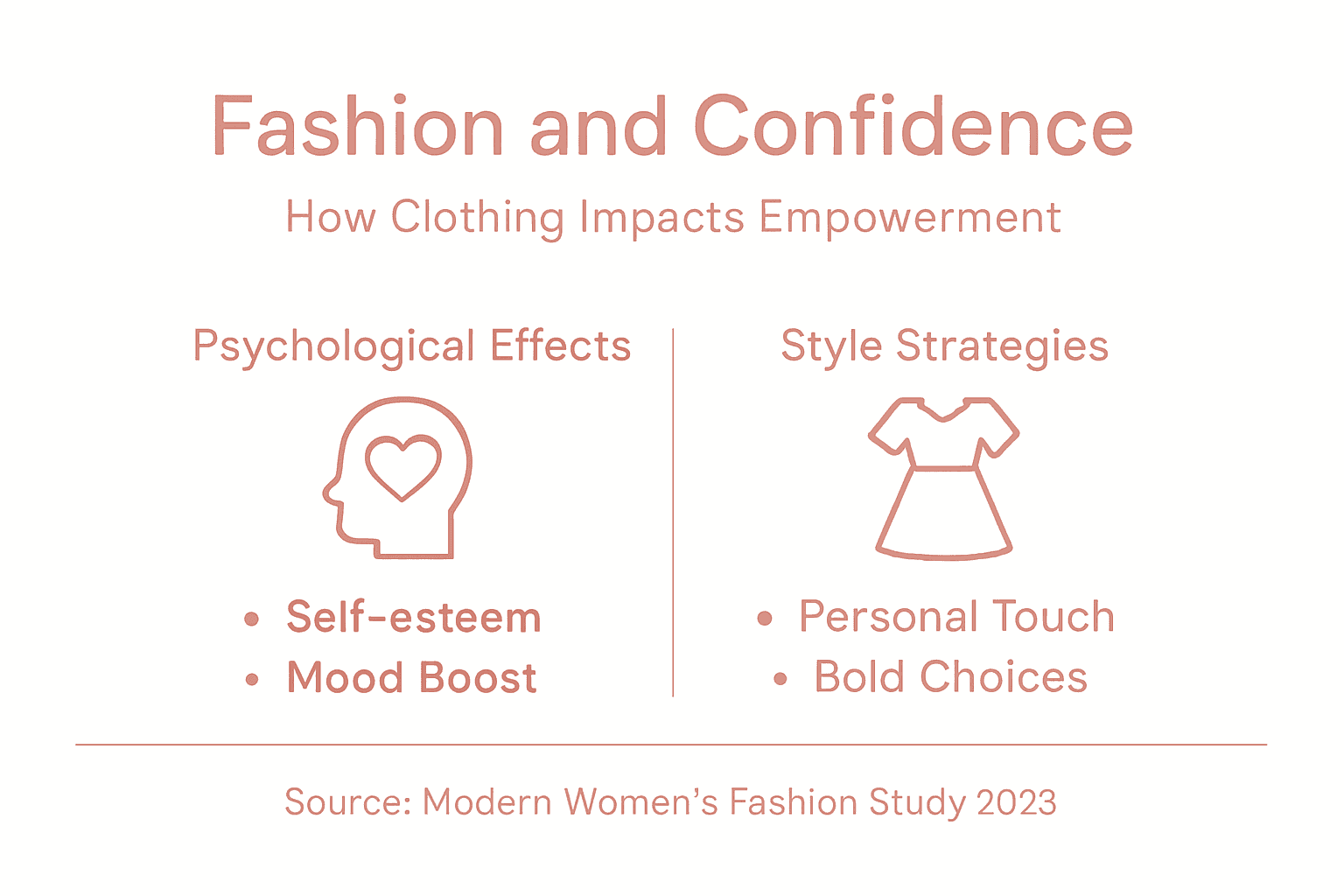
Key ways fashion influences confidence include:
The transformative power of fashion lies in its ability to bridge internal emotional landscapes with external visual representations. Fashion’s impact on psychological well-being demonstrates how thoughtful clothing choices can elevate self-perception, helping women feel more empowered, competent, and authentic in various life contexts.
Here’s a comparison of how different psychological mechanisms of fashion impact women’s confidence:
| Psychological Mechanism | Impact on Confidence | Typical Scenario |
|---|---|---|
| Self-Presentation | Enhances perceived self-value | Job interview or public event |
| Emotional Resilience | Provides coping strategies | Stressful or challenging day |
| Social Signaling | Increases sense of belonging | Networking or group gatherings |
| Personal Narrative | Amplifies authentic self-identity | Creative expression or daily wear |
Pro tip: Select clothing that makes you feel confident, not just trendy, and watch how your internal narrative transforms with your wardrobe choices.
Self-esteem and fashion share a complex, multifaceted relationship that extends far beyond surface-level aesthetics. Fashion’s psychological impact reveals how clothing choices profoundly interact with personal identity, body image, and social perception.
Researchers have identified multiple distinctive types of fashion influence on self-esteem, categorized by their psychological mechanisms and emotional outcomes. These categories range from compensatory dressing – where individuals use fashion to mask insecurities – to expressive styling, which allows authentic self-representation and emotional empowerment.
Key types of fashion influence on self-esteem include:
Consumer behavior research demonstrates that ideal fashion self-esteem significantly influences fashion consciousness, indicating that clothing choices are deeply intertwined with personal perception and social interactions.
Pro tip: Choose fashion pieces that genuinely make you feel powerful and authentic, understanding that true confidence comes from internal alignment with your external presentation.
Psychological empowerment mechanisms reveal how personal style serves as a powerful tool for self-expression and individual agency. By strategically curating clothing choices, women can transform their external appearance into a dynamic narrative of inner strength and personal identity.
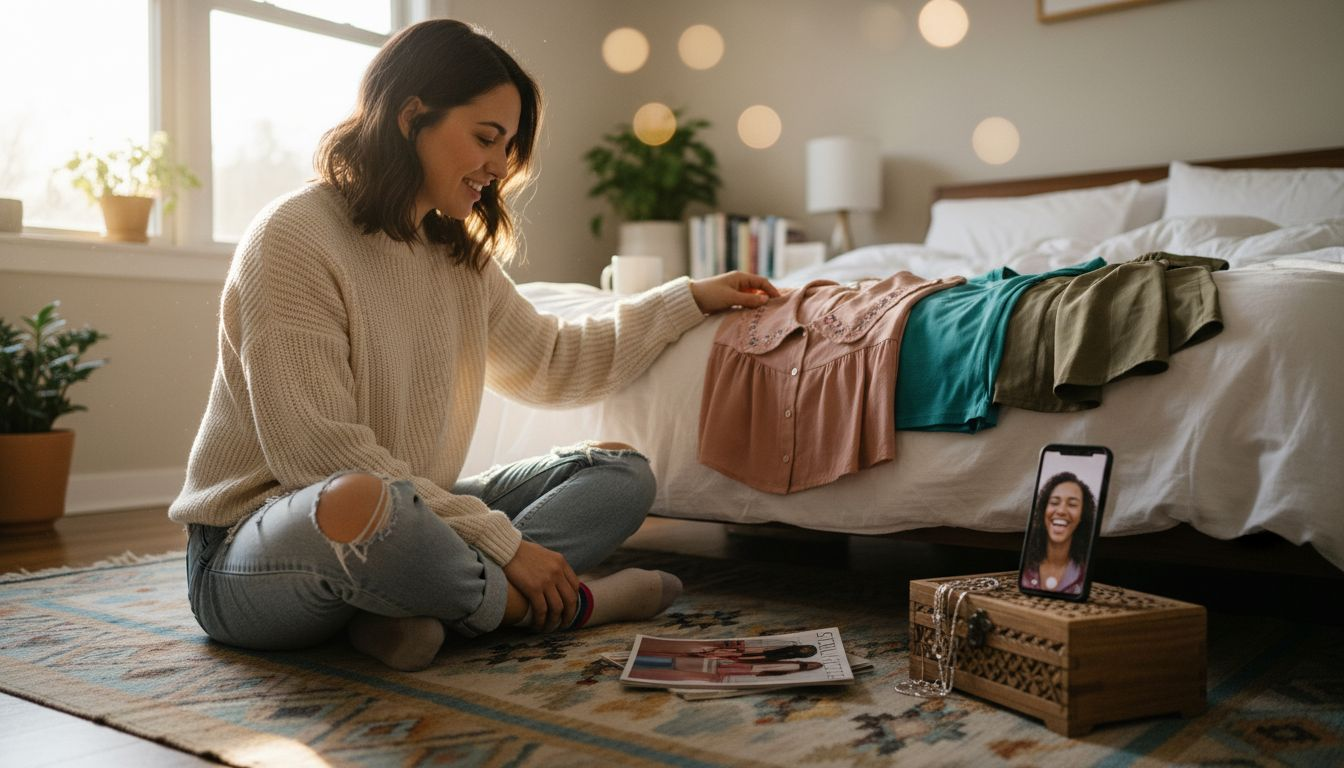
Personal style transcends mere fashion trends, functioning as a sophisticated form of nonverbal communication that communicates competence, creativity, and self-awareness. The clothing we choose becomes an intentional canvas through which we paint our professional and personal aspirations, signaling confidence and personal authority to both ourselves and the world around us.
Key ways personal style boosts empowerment include:
Core self-evaluation research demonstrates how personal style interacts with psychological empowerment, creating a powerful feedback loop where external presentation reinforces internal confidence. This dynamic interaction allows individuals to actively shape their perception of self-efficacy and personal power.
Pro tip: Develop a personal style that feels like a second skin – comfortable, authentic, and unapologetically you.
Clothing choices profoundly impact psychological states, serving as a powerful mechanism for emotional regulation and self-expression. Every garment we select becomes a strategic tool that influences our mood, behavior, and internal narrative, transforming fashion from a mere aesthetic choice into a complex psychological intervention.
The phenomenon of enclothed cognition reveals how clothing directly interacts with our mental processes, creating a dynamic feedback loop between external appearance and internal experience. Different colors, fabrics, and styles trigger specific psychological responses, enabling individuals to consciously craft their emotional landscape through intentional wardrobe selections.
Key psychological dimensions of clothing choices include:
Mental health research demonstrates that fashion serves as a therapeutic tool, helping individuals navigate complex emotional terrains by providing a tangible means of self-representation and emotional resilience. The careful selection of clothing becomes an act of self-care, enabling women to construct and reinforce their sense of personal power.
Pro tip: Treat your wardrobe as an emotional toolkit, selecting pieces that not only look good but make you feel authentically powerful.
Overconsumption in fashion presents a complex psychological landscape where social media and consumer culture intersect, creating potentially harmful dynamics of self-validation and comparison. Modern women frequently find themselves trapped in cycles of seeking external approval through clothing choices, which can erode genuine self-worth and personal authenticity.
The contemporary fashion ecosystem operates on intricate psychological mechanisms that exploit human vulnerabilities, transforming clothing from a form of self-expression into a performance of social status. Social comparison becomes a powerful mechanism through which individuals measure their perceived value, with fashion serving as the primary metric for judgment and acceptance.
Significant risks associated with fashion-driven validation include:
Fast fashion’s psychological impact reveals how rapid trend cycles create systemic pressures that undermine individual agency, promoting unsustainable consumption patterns that prioritize temporary social acceptance over personal well-being and authentic self-representation.
Pro tip: Develop self-worth independent of fashion trends, prioritizing personal comfort and authentic expression over external validation.
Inclusive fashion design represents a transformative approach that challenges traditional fashion paradigms, prioritizing diversity, representation, and individual empowerment over restrictive beauty standards. By embracing a broader understanding of human bodies and experiences, this approach redefines fashion as a tool for personal expression and social connection.
The evolution of inclusive fashion goes beyond mere size adaptation, encompassing a holistic reimagining of design principles that celebrate human diversity in all its complexity. Mindful fashion emerges as a deliberate strategy that considers the psychological, social, and environmental implications of clothing choices, encouraging consumers to view fashion as an extension of personal values and identity.
Key principles of inclusive and mindful fashion include:
Cyclic fashion design processes demonstrate how the fashion industry can systematically integrate diverse user needs, transforming clothing from a standardized product into a personalized, empowering experience that respects individual uniqueness.
The following table summarizes the differences between fashion-driven validation and mindful, inclusive fashion:
| Approach | Core Motivation | Emotional Outcome | Typical Buying Behavior |
|---|---|---|---|
| Fashion-Driven | Seek external approval | Heightened anxiety | Impulsive, trend-based |
| Mindful/Inclusive | Align with personal values | Enhanced self-acceptance | Thoughtful, needs-focused |
Pro tip: Choose clothing that makes you feel powerful, comfortable, and authentically you, regardless of current trends or external expectations.
Feeling overwhelmed by the pressure to use fashion purely for external validation can chip away at true self-esteem and personal authenticity. This article highlights the psychological effects of clothing choices and how intentional style can become your emotional armor and a source of empowerment rather than anxiety. If you want to move beyond compulsive consumption and social comparison, embracing mindful and authentic fashion is the key.
Take control of your personal style and unlock your inner confidence with inspiring lifestyle tips and empowering stories at WomanEdit. Explore how fashion, mental health, and authentic self-expression come together to elevate your self-worth. Visit us now to discover practical advice and trendy updates that help you cultivate a wardrobe that truly reflects who you are. Your journey to empowered living starts here at WomanEdit where fashion meets purpose and confidence flourishes.
Fashion influences women’s confidence by serving as a means of self-expression, allowing individuals to communicate their identity, create a sense of personal control, and provide psychological armor in challenging situations.
Personal style enhances empowerment by reflecting true personality, reinforcing self-worth, and helping women to strategically present themselves in professional or social environments.
Yes, thoughtful clothing choices can elevate self-perception and mental well-being, as fashion serves as a powerful tool for emotional regulation and self-representation.
The risks include diminished self-esteem due to constant comparison, compulsive consumption driven by emotional insecurity, and potential identity fragmentation, leading to increased anxiety and mental health vulnerabilities.
Source: Editorial Use | Image: Editorial Use