Newsletter Subscribe
Enter your email address below and subscribe to our newsletter

Enter your email address below and subscribe to our newsletter

Discover body positivity's origins, practical strategies for self-acceptance, current critiques, and empowerment tools for diverse women seeking mental well-being.
Body positivity didn’t start with Instagram influencers or wellness brands. It emerged in the 1960s as a radical social justice movement led by Black and queer women who challenged narrow beauty standards that excluded marginalized bodies. This movement went far beyond celebrating appearance, it demanded systemic change and true inclusion. Today, body positivity faces new challenges and critiques, yet its core mission remains vital for women seeking self-acceptance. This guide explores the movement’s origins, practical strategies for daily life, ongoing debates, and how diverse women can harness body positivity for genuine empowerment and mental well-being.
| Point | Details |
|---|---|
| Origins in 1960s fat acceptance | The movement emerged in the 1960s led by Black and queer women who challenged narrow beauty standards and demanded inclusion beyond appearance. |
| Radical acceptance | Every body deserves respect regardless of size, ability, race, or gender identity. |
| Body diversity celebrated | The movement celebrates body diversity as natural and valuable rather than something to merely tolerate. |
| Daily practice strategies | Shift focus from appearance to function by appreciating what your body can do and practicing self compassion. |
The body positivity movement emerged as a powerful response to oppressive beauty standards that harmed women, particularly those in marginalized communities. Rooted in the 1960s fat acceptance movement spearheaded by Black and queer women, this activism demanded recognition and respect for all body types. These pioneers understood that narrow beauty ideals weren’t just superficial preferences but tools of social control that perpetuated discrimination and psychological harm.
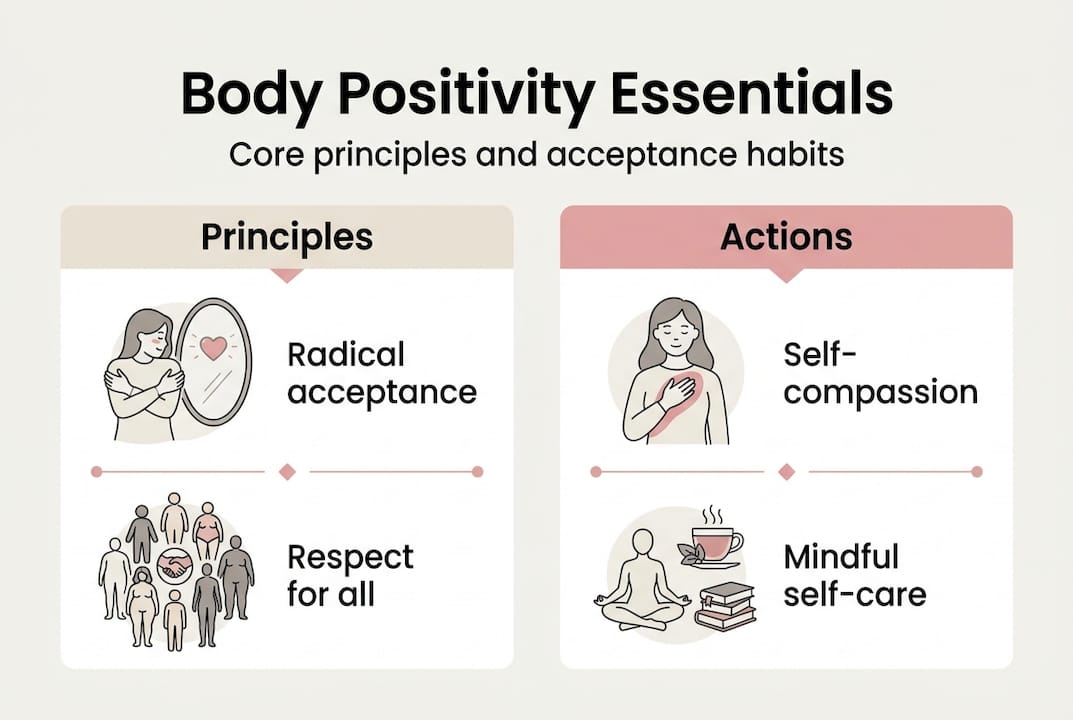
The movement’s core principles center on radical acceptance. Body positivity insists that every body deserves respect regardless of size, shape, ability, race, or gender identity. It rejects the stigma attached to bodies that don’t conform to mainstream standards and challenges the medical and cultural systems that enforce these norms. This isn’t about denying health or ignoring medical needs, it’s about separating human worth from physical appearance and recognizing that health looks different for everyone.
Research validates the movement’s psychological benefits. Studies show that body positivity correlates with higher self-esteem, increased mindfulness, greater gratitude, and improved overall well-being. When you accept your body, you free mental energy previously spent on self-criticism and redirect it toward meaningful pursuits. This shift doesn’t happen overnight, but the evidence confirms that acceptance-based approaches reduce anxiety and depression related to body image.
Social media has amplified body positivity’s reach, though not without complications. Platforms allow activists to share diverse body representations and challenge traditional media’s narrow portrayals. The role social media trends play in spreading body positivity demonstrates both opportunity and risk. While hashtags and campaigns increase visibility, they also invite commercialization and superficial engagement that can dilute the movement’s radical roots.
Key principles include:
Practicing body positivity requires intentional daily actions that shift focus from appearance to function and well-being. Start by appreciating what your body can do rather than how it looks. Notice your body’s capabilities: your legs carry you through your day, your arms allow you to embrace loved ones, your senses connect you to the world. This functional appreciation builds gratitude that counters appearance-based criticism.
Self-compassion forms the foundation of sustainable body positivity. Treat yourself with the same kindness you’d offer a close friend struggling with body image. When negative thoughts arise, acknowledge them without judgment, then consciously redirect attention to neutral or positive observations. Research confirms that self-acceptance and focusing on functionality over appearance, combined with self-compassion and mindful movement, effectively builds body positivity.
Mindful self-care practices strengthen your relationship with your body. Listen to hunger and fullness cues without rigid rules. Move your body in ways that feel good, whether that’s dancing, walking, stretching, or resting. Reject exercise as punishment for eating and reframe it as celebration of what your body can experience. The self-care guide for women offers additional strategies for building nurturing routines that honor your needs.
Your media consumption directly impacts body image. Curate social feeds to include diverse body types, abilities, ages, and races. Unfollow accounts that trigger comparison or inadequacy. Seek out body-positive creators who share authentic experiences rather than filtered perfection. Research shows that exposure to diverse body representations reduces internalized beauty standards and increases acceptance of natural body variation.
Practical daily steps:
Pro Tip: Try body neutrality as an alternative approach if positivity feels overwhelming. Body neutrality focuses on accepting your body without requiring love or celebration, simply recognizing it as the vessel that carries you through life without assigning moral value to its appearance.
Body positivity and body neutrality represent different philosophical approaches to body acceptance. Body positivity actively celebrates all bodies and encourages appearance acceptance as a path to empowerment. Body neutrality takes a different route, focusing on body functionality while minimizing appearance discussions altogether. For some women, especially those recovering from eating disorders or trauma, neutrality offers relief from the pressure to feel positive about appearance.
| Approach | Focus | Goal | Best For |
|---|---|---|---|
| Body Positivity | Celebrating all bodies and appearance diversity | Active acceptance and love of your body | Those ready to challenge beauty standards directly |
| Body Neutrality | Body function and non-judgment | Reducing appearance focus entirely | Those overwhelmed by appearance emphasis |
| Body Acceptance | Pragmatic acknowledgment | Peaceful coexistence with your body | Those seeking middle ground |
The movement faces legitimate critiques that deserve attention. Despite its inclusive origins, mainstream body positivity often centers conventionally attractive bodies with minor variations, excluding the most marginalized. Plus-size white women dominate body-positive spaces while disabled bodies, very fat bodies, and bodies of color remain underrepresented. This exclusivity contradicts the movement’s roots in intersectional activism led by Black and queer women.
Corporate co-optation poses another significant challenge. Brands use body positivity language to sell products while perpetuating the same beauty standards they claim to reject. This commercialization strips the movement of its radical critique of capitalism and consumerism, transforming social justice into marketing strategy. When companies profit from body positivity without addressing systemic discrimination, they exploit the movement rather than support it.
Current cultural debates question body positivity’s relevance. Some argue the movement is declining amid resurgent thinness ideals and new weight-loss medications that promise easy body modification. Others see evolution rather than death, with the movement adapting to address health concerns while maintaining its anti-stigma stance. This tension reveals ongoing struggles between acceptance and intervention, autonomy and medical authority.
Risks of toxic positivity emerge when the movement demands constant celebration. Pressuring yourself to love your body every moment creates new shame when you inevitably experience negative feelings. Authentic body positivity allows space for complex emotions, bad body image days don’t negate your commitment to acceptance. The wellness overload health critique examines similar pressures in broader wellness culture.
Key critiques to consider:
Pro Tip: Embrace nuanced approaches that honor both body acceptance and health needs. You can pursue medical care, modify your body, or work toward health goals while still rejecting weight stigma and advocating for body diversity. These positions aren’t contradictory when rooted in autonomy rather than shame.
Black women face unique body image challenges rooted in Eurocentric beauty standards that devalue natural features and body types. Research documents how racialized beauty ideals create body dissatisfaction among Black women, who must navigate pressure to conform to white standards while also facing fetishization and stereotyping of Black bodies. This double bind creates impossible choices between modification efforts that carry health and social costs or acceptance strategies that invite discrimination.

Coping strategies reveal complex trade-offs. Some Black women pursue body modifications like skin lightening, hair straightening, or weight management to access social and economic opportunities denied to those with natural presentations. Others embrace natural beauty and reject modification, facing potential workplace discrimination and social marginalization. Neither choice is wrong, both represent survival strategies within oppressive systems. True body positivity must acknowledge these structural constraints rather than placing responsibility solely on individual acceptance.
Social media provides crucial representation and community for diverse women. Platforms allow women of color, disabled women, queer women, and others excluded from traditional media to share their experiences and build supportive networks. Studies show that body-positive social content benefits even women with trauma histories, offering validation and healing through shared experience. However, these spaces also face harassment and algorithmic suppression that limits their reach.
Intersectional frameworks recognize that body image doesn’t exist in isolation from race, class, disability, sexuality, and other identities. A truly inclusive body positivity movement must address how multiple forms of oppression compound to shape body image experiences. The diversity in fashion representation demonstrates slow progress toward inclusive beauty standards, though significant gaps remain.
Steps for diverse women to build body positivity and resilience:
Empowerment strategies:
The women empowerment guide offers additional resources for building confidence and agency across multiple life domains. True empowerment integrates body acceptance with broader goals for autonomy, opportunity, and justice.
Your journey toward body acceptance and self-empowerment deserves ongoing support and inspiration. Womanedit offers comprehensive resources designed specifically for women navigating the complexities of modern life while building confidence and well-being. Our platform provides evidence-based guides, inspiring stories, and practical strategies that complement the body positivity principles you’ve explored here.
Discover our women empowerment guide for holistic approaches to building confidence across career, relationships, and personal growth. Explore our self-care guide for women to develop nurturing routines that honor your unique needs. Learn about top women’s wellness benefits to optimize your physical and mental health. These resources provide the tools and community support to sustain your commitment to self-acceptance and empowerment.
Body positivity celebrates all bodies and encourages active acceptance of diverse appearances as beautiful and valuable. Body neutrality focuses on body functionality and what your body can do rather than how it looks, minimizing appearance discussions entirely. Neutrality can work well for those who find positivity’s emphasis on appearance overwhelming or triggering, offering an alternative path to peace with your body.
Practicing acceptance reduces anxiety and body dissatisfaction by freeing mental energy spent on self-criticism. Research shows body positivity increases self-esteem, mindfulness, and overall happiness by shifting focus from appearance to function and well-being. This approach helps you build resilience against negative media messages and social comparison that fuel depression and eating disorders.
Focus on what your body can do rather than how it looks, appreciating its functionality and capabilities. Practice self-compassion by speaking to yourself as kindly as you would to a friend struggling with body image. Engage with supportive communities online or locally and curate social media to include diverse body representations. Limit exposure to content that triggers comparison or inadequacy.
Critics argue mainstream body positivity often excludes the most marginalized bodies while centering conventionally attractive people with minor variations. Others point to corporate co-optation that uses body positivity language for profit without addressing systemic discrimination. Some worry the movement overemphasizes appearance or creates new pressure to constantly feel positive about your body, which can become another impossible standard.
Seek representation and community with other women who share your racial and cultural background to validate your experiences. Practice self-care rooted in your cultural traditions rather than Eurocentric wellness trends. Challenge internalized beauty standards by examining which ideals you’ve absorbed and advocating for systemic change in institutions that discriminate. Build coalitions across marginalized groups to strengthen collective power for body diversity and inclusion.