Newsletter Subscribe
Enter your email address below and subscribe to our newsletter

Enter your email address below and subscribe to our newsletter

Learn how to style outfits with expert tips on color harmony, capsule wardrobes, and confidence-boosting techniques. Simplify your daily routine and express your unique style effortlessly.
Choosing what to wear each morning can feel overwhelming, especially when you want to look confident and stylish without spending hours in front of your closet. Many young women struggle to create outfits that reflect their personal style while staying practical for daily life. This guide breaks down the styling process into clear, actionable steps that simplify your routine and help you express yourself through fashion. You’ll learn expert-backed methods for building versatile looks, mastering color harmony, and developing a wardrobe that works harder for you. By the end, you’ll have the tools to style outfits that make you feel empowered and ready to take on your day.
| Point | Details |
|---|---|
| Occasion and mood | Identify the occasion, weather, and the mood you want to project to guide every outfit choice. |
| Hero piece anchor | Choose a hero item to anchor your look and build around it with supporting pieces and neutrals. |
| Layering for balance | Layer thoughtfully by combining fitted pieces with oversized items and mixing textures to achieve balance. |
| Capsule wardrobe benefits | Capsule wardrobes optimize versatility and lower cost per wear by using a curated set of versatile pieces. |
| Color harmony rule | Use the 60 30 10 rule to allocate dominant, secondary, and accent colors and test shades against your undertone in natural light. |
Successful outfit styling begins with understanding the context of your day. Before you pull anything from your closet, identify the occasion, weather conditions, and the feeling you want to project. Are you heading to a casual brunch, a professional meeting, or a weekend adventure? This clarity guides every choice that follows and prevents the common mistake of building outfits in a vacuum.
Once you’ve established context, select a hero piece to anchor your look. This could be a statement blazer, a bold printed dress, or your favorite leather jacket. Fashion influences confidence in powerful ways, so choose something that makes you feel like yourself. Build around this piece with supporting items that complement without competing, then add a neutral base to ground the ensemble. This 3-3-3 rule for fashion suggests that three tops, three bottoms, and three layers can create 27 different outfit combinations, proving that strategic selection beats closet size every time.
Layering adds dimension and sophistication to any outfit. Try these approaches:
Balance is the secret ingredient that elevates good outfits to great ones. Follow these steps:
Pro Tip: Take a photo of yourself in natural lighting before leaving home. Your phone camera reveals proportion issues and color clashes that mirrors sometimes miss, giving you a chance to make quick adjustments.
Color harmony transforms ordinary outfits into memorable looks. Neutrals like black, white, navy, beige, and gray form the backbone of versatile styling because they pair effortlessly with nearly everything. These shades provide a clean canvas that lets you experiment with bolder choices without risk.
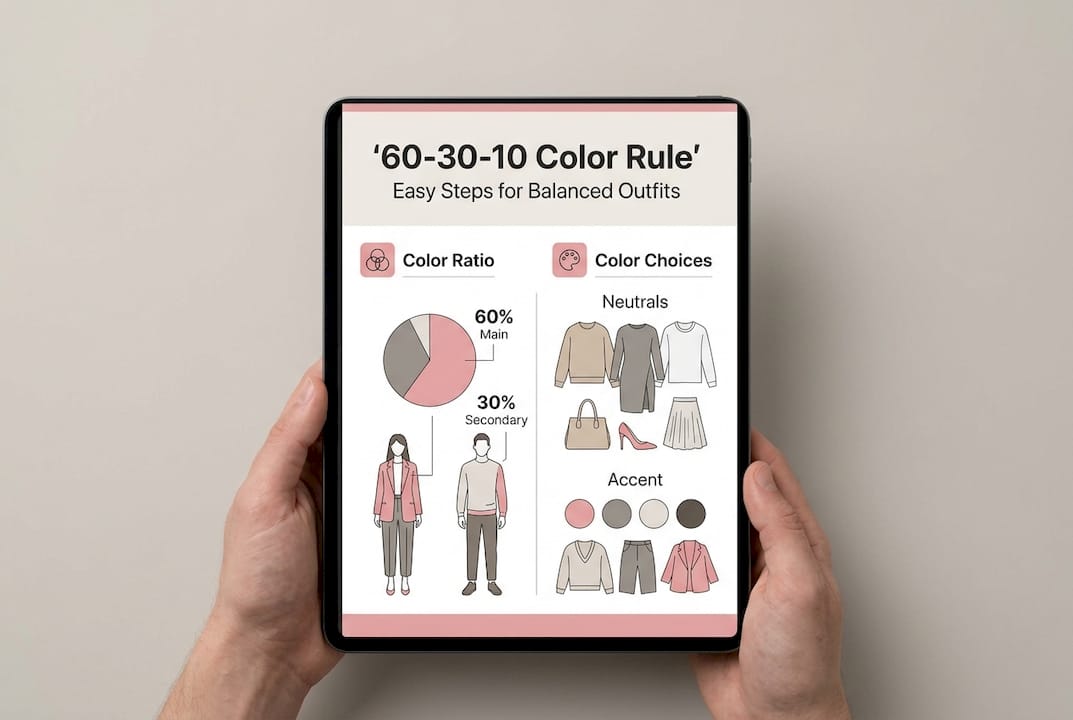
The 60-30-10 rule creates balanced, professional-looking outfits every time. Allocate 60% of your outfit to a dominant color, typically a neutral or your base piece. Use 30% for a secondary color that complements or contrasts intentionally. Reserve 10% for an accent color in accessories, shoes, or a small garment detail. This formula prevents color chaos while allowing creative expression.
Your skin undertone plays a crucial role in which colors make you glow versus wash you out. Cool undertones pair beautifully with jewel tones, blues, and purples. Warm undertones shine in earthy shades, oranges, and golden yellows. Neutral undertones have the flexibility to wear both palettes. Test colors by holding fabric near your face in natural light to see which shades enhance your complexion.
Explore these color wheel schemes for creative combinations:
| Color Scheme | Example Palette | Best For |
|---|---|---|
| Monochromatic | Navy blazer, light blue shirt, denim jeans | Sleek, elongating silhouettes |
| Complementary | Purple dress with yellow accessories | Bold, attention-grabbing looks |
| Analogous | Green sweater, teal pants, blue shoes | Cohesive, easy-to-wear outfits |
| Neutral + Pop | Beige coat, white tee, black pants, red bag | Everyday versatility with personality |
Pro Tip: Keep a small swatch of fabrics in colors that flatter you in your wallet or phone case. When shopping, compare new pieces against these swatches to ensure they’ll integrate seamlessly with your existing wardrobe and skin tone.
Diversity in color choices reflects diversity in fashion itself, celebrating individual expression. Your spring wardrobe checklist should include colors that make you feel confident, not just what’s trending on social media.
A capsule wardrobe contains 10 to 40 carefully selected pieces that work together to create numerous outfit combinations. This approach eliminates decision fatigue, reduces impulse purchases, and ensures everything in your closet earns its space. Quality trumps quantity when you focus on versatile staples that transition across seasons and occasions.
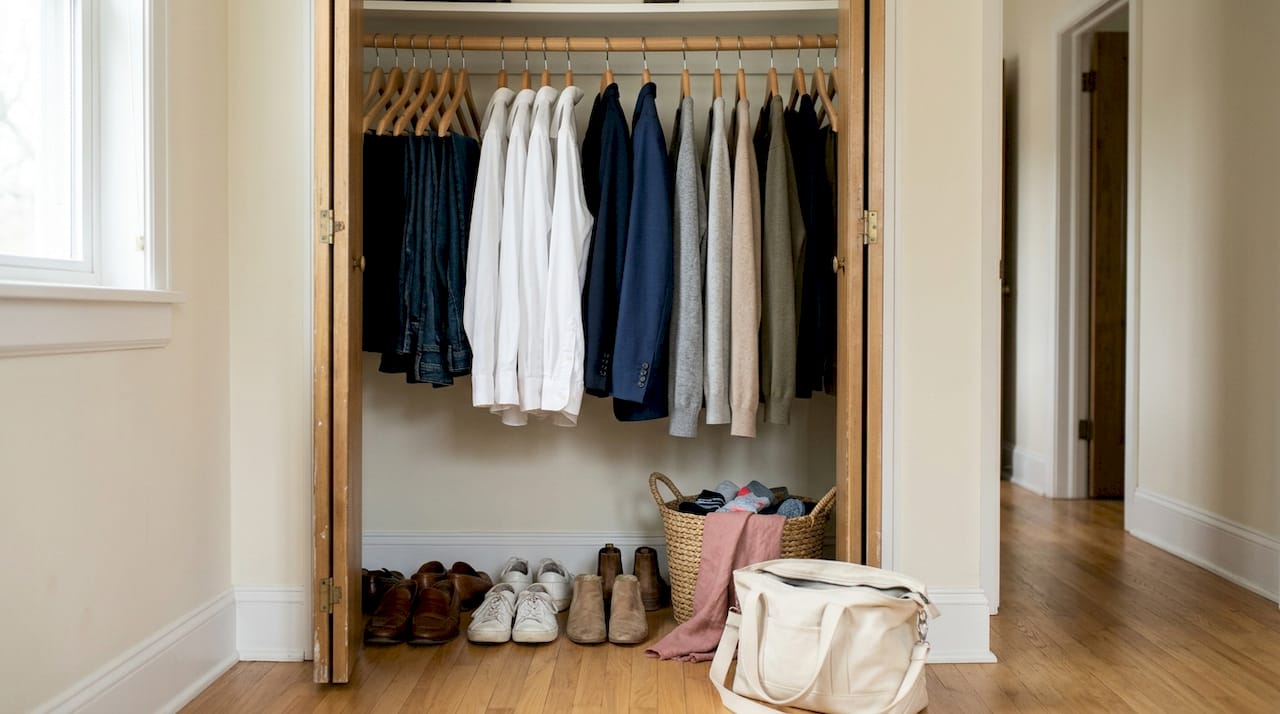
Your foundation should include seven to 10 basic staples that form the backbone of most outfits. Think well-fitted jeans, a crisp white shirt, a neutral blazer, comfortable flats, and a classic trench coat. These pieces account for 60 to 70% of what you’ll actually wear, making them worth the investment in quality construction and timeless design.
Cost per wear is a game-changing metric for wardrobe decisions. Divide the purchase price by how many times you’ll realistically wear an item. Target a cost per wear under $5 to maximize value. A $200 coat worn 50 times costs $4 per wear, while a $30 trendy top worn twice costs $15 per wear. This perspective shifts focus from sale prices to actual value.
The 80/20 rule guides smart wardrobe composition. Dedicate 80% of your closet to timeless basics in neutral colors and classic cuts. Reserve 20% for trend-driven pieces that keep your style current and express your personality. This balance lets you experiment with sustainable fashion trends without sacrificing versatility or breaking the bank.
| Staple Item | Estimated Cost | Wears Per Year | Cost Per Wear | Outfit Combinations |
|---|---|---|---|---|
| White button-down shirt | $60 | 40 | $1.50 | Pairs with jeans, skirts, blazers |
| Dark wash jeans | $80 | 50 | $1.60 | Works with tees, sweaters, blouses |
| Black blazer | $120 | 35 | $3.43 | Elevates casual and formal looks |
| Neutral ankle boots | $100 | 45 | $2.22 | Complements dresses, pants, skirts |
| Cashmere sweater | $150 | 30 | $5.00 | Layers over shirts, under coats |
Pro Tip: Photograph every item in your capsule wardrobe on a white background and save them to a dedicated album on your phone. When you’re rushing or traveling, scroll through to visualize combinations without physically trying things on, saving precious morning minutes.
Select multi-seasonal items that transition easily. A lightweight wool blazer works over summer dresses and winter sweaters. Midi skirts pair with sandals in warm weather and boots in cold months. Quality basics in neutral tones maximize mixing potential and extend your wardrobe’s functional lifespan significantly.
Well-styled outfits do more than look good, they transform how you feel and interact with the world. Research shows that 80% of women feel empowered by intentionally styled looks, experiencing increased confidence that positively affects their entire day. When you know your outfit works, you carry yourself differently and engage more authentically.
The average person spends about 17 minutes each morning choosing and styling their outfit. Over a year, that adds up to 104 hours standing in front of your closet. Strategic styling systems can cut this time by 70%, giving you back nearly 73 hours annually for activities you actually enjoy. The methods in this guide aren’t just about looking better, they’re about living more efficiently.
Lighting dramatically affects how you perceive colors and textures. What looks perfect in your dimly lit bedroom might reveal mismatched undertones in natural daylight or harsh office fluorescents. Always check your outfit in the lighting conditions where you’ll spend most of your day. Position a mirror near a window for accurate color assessment, or invest in a full-spectrum light bulb for your dressing area.
Your lifestyle should drive your style choices, not the other way around. Trends come and go, but your daily reality remains constant. Consider these factors:
“Confidence is the best accessory you can wear. When your outfit aligns with who you are and how you want to show up, everything else falls into place.”
Emerging technology offers new styling support. AI models can now predict outfit compatibility with 79% accuracy, helping you visualize combinations before getting dressed. While technology assists, your personal intuition about what makes you feel confident remains irreplaceable. Use tools to save time, but trust your gut about what feels authentically you.
The connection between fashion and confidence extends beyond individual outfits to how you engage with broader style culture. Following fashion weeks can inspire fresh ideas, but adapting trends to your lifestyle ensures they enhance rather than complicate your daily routine. Joy and confidence should be your primary styling criteria, not perfection or trend compliance.
Ready to take your style journey further? Womanedit offers comprehensive expert guides on updating fashion trends that help you refresh your wardrobe without starting from scratch. Our content bridges practical styling advice with the latest trend insights, ensuring you stay current while maintaining your unique aesthetic.
Explore celebrity style essentials that blend luxury pieces with accessible streetwear, showing you how to recreate high-fashion looks on a realistic budget. From seasonal wardrobe updates to confidence-building style tips, Womanedit delivers the fashion inspiration and empowerment content that supports your personal style evolution. Join our community of style-conscious women who prioritize both looking great and feeling authentically themselves.
Start by identifying your occasion, checking the weather, and choosing a mood or feeling you want to project. Select a hero piece to build around, then add supporting items and neutral bases that complement without competing. Balance fitted and oversized proportions while mixing textures and colors for a polished, cohesive look.
This rule allocates 60% of your outfit to a dominant color, usually a neutral or base piece. Use 30% for a secondary color that complements or intentionally contrasts. Reserve 10% for an accent color in accessories or small details. This formula creates visually balanced outfits that feel intentional rather than chaotic.
A capsule wardrobe is a curated collection of 10 to 40 versatile pieces that mix and match to create numerous outfit combinations. It simplifies daily styling decisions, reduces unnecessary spending on items you won’t wear, and ensures everything in your closet works together. Quality basics form the foundation, with a small percentage dedicated to trend pieces that keep your style current.
When you wear outfits that align with your personal style and fit your lifestyle, you feel more authentic and prepared to face your day. Well-styled looks eliminate the nagging worry about your appearance, freeing mental energy for more important tasks. This confidence from fashion positively affects your mood, body language, and how you interact with others throughout your day.