Newsletter Subscribe
Enter your email address below and subscribe to our newsletter

Enter your email address below and subscribe to our newsletter

Learn how to build an eco-friendly wardrobe with our complete sustainable fashion guide. Discover certifications, materials, care tips, and smart shopping strategies for 2026.
Sustainable fashion choices can feel overwhelming and confusing when you’re trying to align your wardrobe with your values. Between greenwashing claims, conflicting certifications, and endless fabric options, it’s hard to know where to start. The good news? Understanding a few key principles can simplify both shopping and caring for clothes, making it easier to build a stylish, eco-friendly wardrobe. This guide breaks down the essentials you need to make confident, sustainable fashion decisions that genuinely reduce your environmental impact while keeping you looking great.
| Point | Details |
|---|---|
| Buy fewer versatile pieces | Focus on 30-50 high-quality items that mix and match easily to minimize waste |
| Verify sustainability claims | Look for trusted certifications like GOTS and Fair Trade to cut through greenwashing |
| Extend garment lifespan | Proper care, repair, and circular models keep clothes out of landfills longer |
| Material choice matters less | Durability and how you use items impact sustainability more than fabric type alone |
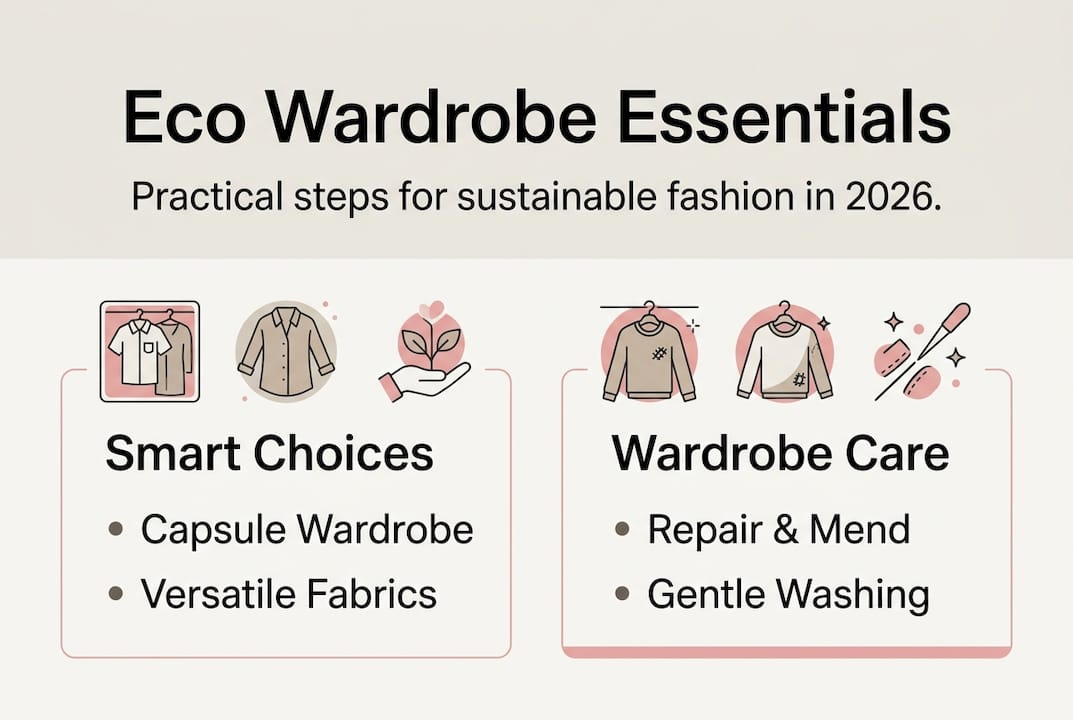
Transitioning to a sustainable wardrobe starts with shifting your mindset about consumption. Sustainable fashion is defined by three pillars: buy less, choose better quality materials and brands, and make items last longer through care and repair. These principles work together to reduce the environmental footprint of your wardrobe while keeping you stylish and comfortable.
The capsule wardrobe concept embodies these principles perfectly. A well-curated collection of 30-50 versatile pieces minimizes waste by ensuring everything you own gets worn regularly. Each item should coordinate with multiple others, creating countless outfit combinations from a smaller selection. This approach not only reduces your consumption but also simplifies daily decisions and helps you develop a signature style that reflects your values.
Extending garment lifespan is where your daily habits make the biggest difference. Washing clothes less frequently, using cold water, air drying instead of machine drying, and learning basic repairs like sewing buttons or fixing hems can double or triple how long your clothes last. When you consider that raw materials account for 43-50% of textile environmental impact, keeping existing clothes in rotation becomes a powerful sustainability strategy.
Starting your sustainable wardrobe journey:
Pro Tip: Before buying anything new, ask yourself three questions: Do I have something similar? Can I style this five different ways? Will I still want to wear this in two years? If you answer no to any question, skip the purchase.
“The most sustainable garment is the one already in your closet. Every time you wear something you already own instead of buying new, you’re making an eco-friendly choice.”
Building a mindful fashion approach means recognizing that perfection isn’t the goal. Small, consistent choices add up to significant impact over time.
Sustainability certifications can help you make informed choices, but understanding what they actually guarantee is crucial. Not all certifications cover the same aspects of sustainability, and some brands use them strategically to appear more eco-friendly than they are.
Key certifications include GOTS, which verifies organic fibers (95%+), full supply chain traceability, social criteria, and chemical bans. Fair Trade ensures fair wages and community projects for workers. OEKO-TEX tests harmful substances but doesn’t verify full sustainability practices. Each certification has specific scopes and limitations you should understand before relying on them.
| Certification | What It Covers | What It Doesn’t Cover | Best For |
|---|---|---|---|
| GOTS | Organic fibers, chemical restrictions, social standards, full supply chain | Synthetic materials, carbon footprint | Natural fiber clothing |
| Fair Trade | Worker wages, safe conditions, community investment | Environmental impact, material sourcing | Ethically made items |
| OEKO-TEX | Harmful chemical testing | Organic status, labor practices, sustainability | Chemical safety assurance |
| Cradle to Cradle | Circular design, material health, renewable energy | Affordability, availability | Premium eco products |
Greenwashing remains a significant risk even with certifications. Organic labels don’t guarantee social standards, and stacking multiple certifications doesn’t necessarily verify full sustainability. Brands may highlight one sustainable aspect while ignoring problematic practices elsewhere in their supply chain.
Red flags for greenwashing:
Pro Tip: Always verify certifications by checking official databases directly. GOTS maintains a public database of certified products and facilities. If a brand claims certification but you can’t find them listed, that’s a major warning sign.
Developing your ability to shop smarter means becoming a critical consumer who questions claims and demands transparency. Research brands thoroughly, read independent reviews, and prioritize companies that publish detailed sustainability reports with measurable goals and progress updates.
Material selection matters, but lifecycle assessment reveals surprising truths about textile sustainability. Raw materials dominate environmental impact at 43-50% of total footprint, but durability proves more important than choosing the “perfect” sustainable fabric. A polyester shirt worn 200 times has less impact than an organic cotton shirt worn 20 times before disposal.
Understanding basic lifecycle impacts helps you make better choices. Cotton requires significant water and pesticides unless certified organic. Polyester derives from petroleum but can be recycled and lasts longer. Viscose and rayon come from trees but processing involves harsh chemicals. Wool is renewable but raises animal welfare questions. No material is perfect, so focus on longevity and proper care.

| Material | Water Use | Chemical Impact | Durability | Best Use Case |
|---|---|---|---|---|
| Organic Cotton | High | Low | Medium | Everyday basics, underwear |
| Recycled Polyester | Low | Medium | High | Activewear, outerwear |
| Linen | Low | Low | High | Summer clothing, home textiles |
| Tencel/Lyocell | Low | Low | Medium | Dresses, soft layers |
| Wool | Medium | Low | High | Winter wear, structured pieces |
Extending garment life delivers the biggest sustainability wins regardless of material. Proper care practices dramatically reduce your wardrobe’s environmental footprint while saving money.
Essential garment care steps:
Circular economy models like rental and resale offer alternatives to traditional ownership. Clothing rental works well for special occasions or trying new styles without commitment. Resale platforms extend garment life by connecting items with new owners. However, adoption remains low due to trust concerns, sizing challenges, and the convenience of buying new.
The most sustainable approach combines thoughtful material choices with exceptional care. A well-maintained wardrobe of durable pieces in classic styles serves you for years while minimizing environmental impact. Focus on building relationships with your clothes rather than chasing trends that quickly lose appeal.
Keeping up with modern wardrobe updates doesn’t require constant shopping. Small additions of trend-conscious accessories or one statement piece per season can refresh your entire look while maintaining your sustainable foundation.
You’ve now got the foundation to build an eco-friendly wardrobe that reflects your values without sacrificing style. The journey to sustainable fashion is ongoing, and continuing to educate yourself makes each choice easier and more impactful.
WomanEdit offers additional resources to deepen your sustainable fashion knowledge. Our guide on shopping smarter explores the broader consumer revolution reshaping how we buy and what we value. If you’re looking to refresh your current wardrobe, check out our tips on updating fashion trends sustainably. For a comprehensive look at what’s ahead, our 2026 fashion trends guide helps you stay current while maintaining your eco-friendly principles.
“Sustainable style isn’t about perfection. It’s about making better choices more often and finding joy in wearing what you already own.”
Sustainable fashion refers to clothing designed, produced, and consumed in ways that minimize environmental harm and support fair labor practices. It encompasses buying fewer items, choosing quality over quantity, selecting eco-friendly materials, and extending garment life through care and repair. The goal is reducing waste, pollution, and exploitation throughout the fashion supply chain.
A functional sustainable wardrobe typically contains 30-50 versatile pieces that coordinate well together. This includes tops, bottoms, dresses, outerwear, and shoes that work across multiple seasons and occasions. The exact number depends on your lifestyle, but the principle remains the same: own fewer items you love and wear regularly rather than a closet full of rarely-used clothes.
No, organic cotton isn’t automatically the most sustainable option despite being better than conventional cotton. While it eliminates pesticides, it still requires significant water and land. Durability and how often you wear an item matter more than material alone. A long-lasting recycled polyester garment worn frequently can have less total impact than an organic cotton piece worn once and discarded.
Look for specific, verifiable claims rather than vague environmental language. Genuine sustainable brands publish detailed reports with measurable goals, transparent supply chain information, and third-party certifications you can verify through official databases. Red flags include focusing on one small green initiative while ignoring larger impacts, using nature imagery without substance, or making claims that can’t be independently confirmed.
Prioritize keeping clothes in use rather than disposal. Donate wearable items to local charities, sell quality pieces through resale platforms, or swap with friends. For damaged items, look for textile recycling programs in your area or brands offering take-back schemes. As a last resort, repurpose fabric for cleaning rags or craft projects. Landfill should be the absolute final option after exhausting all alternatives.