Newsletter Subscribe
Enter your email address below and subscribe to our newsletter

Enter your email address below and subscribe to our newsletter

Seasonal trends drive 28% of annual fashion revenue. Discover how they shape your style, confidence, and spending choices as a modern woman in 2026.
One season alone can drive 28% of annual fashion revenue, and that number should make you pause. Seasonal trends aren’t just a fun excuse to refresh your closet every few months. They’re a genuine force shaping what you buy, how you feel, and even how you present yourself to the world. From the colors that dominate your Instagram feed in spring to the cozy textures that take over every boutique in fall, these shifts carry real cultural weight. This article breaks down the evidence, the psychology, and the practical tools you need to work with seasonal trends instead of feeling overwhelmed by them.
| Point | Details |
|---|---|
| Trends reflect real needs | Seasonal trends are driven by climate, culture, and real-world lifestyle changes, not just fashion cycles. |
| Smart shopping wins | Understanding seasonal trends helps you choose versatile, sustainable pieces and shop smarter year-round. |
| Personal empowerment | Consciously engaging with trends can boost your confidence, express identity, and adapt you to new life phases. |
| Data shapes decisions | AI and social media now forecast and accelerate trend cycles, tailoring what’s in style for the modern woman. |
Seasonal trends are the predictable shifts in style, color, fabric, and lifestyle priorities that happen as the calendar moves through spring, summer, fall, and winter. They’re not random. Climate drives a lot of it: you reach for linen in July and wool in December because your body needs it. But culture, emotion, and collective mood play just as big a role.
Think about how fall always brings a wave of earthy tones and layering, or how summer collections explode with bold prints and breezy silhouettes. These aren’t accidents. Climate-driven fabric and style needs shape what brands produce and what consumers reach for, season after season. There’s a feedback loop between what designers forecast, what retailers stock, and what ends up in your cart.
Seasonal trends also mark cultural moments. Back-to-school energy in late summer, holiday dressing in winter, the fresh-start optimism of spring collections — these aren’t just marketing. They reflect how we actually feel and what we want to project at different points in the year. For anyone staying ahead in style, understanding this rhythm is genuinely useful.
Here’s a quick breakdown of what drives seasonal trends:
Pro Tip: Pay attention to how your mood shifts with the seasons. If you notice you always crave color in spring or reach for neutrals in winter, you’re already tuned into seasonal trend logic. Use that instinct intentionally.
So, what does the data reveal about the real-world importance of seasonal trends for women like you? The numbers are pretty striking.
| Season | Share of annual fashion revenue |
|---|---|
| Summer | 28% |
| Spring | 26% |
| Fall | 24% |
| Winter | 22% |
Summer leads the pack, driven by vacation dressing, festival culture, and the sheer volume of warm-weather occasions. But every season pulls significant weight. This isn’t a one-season story.
The demographic picture is equally clear. Women aged 18-40 dominate curated clothing purchases at 82% of sales, with social media trends and sustainability values driving their decisions. That’s you, and that’s your peers. Gen Z and Millennial women aren’t just passive consumers — they’re actively shaping what trends gain traction each season.
“Seasonal trends drive significant sales variations in fashion, with summer collections generating 28% of annual revenue” — reflecting just how deeply the calendar is wired into consumer behavior.
Why do certain seasons spike harder than others? Summer and spring benefit from a higher volume of social events, travel, and the psychological lift of warmer weather. People spend more when they feel good and have places to go. If you’re building a mastering your seasonal wardrobe strategy, timing your purchases around these peaks (and the off-season dips) can save you real money. And if you want a head start on spring specifically, a solid spring wardrobe checklist makes the whole process less chaotic.
Understanding the impact is one part — how do these trends get forecast, and what decides what hits your feed and your closet?
The answer used to be a small group of editors, buyers, and designers making calls based on runway shows and gut instinct. That world still exists, but it’s been completely disrupted by data. Companies like Heuritech now analyze millions of social media images to predict trend peaks with a level of speed and accuracy that traditional methods simply can’t match.
| Method | Speed | Accuracy | Personalization |
|---|---|---|---|
| Traditional forecasting | Slow | Moderate | Low |
| AI-driven forecasting | Fast | High | High |
The pipeline from forecast to your closet looks something like this:
There’s also a growing movement toward personality-driven forecasting, which challenges the idea that one seasonal consensus fits everyone. Instead of saying “earth tones are in this fall,” this approach segments trends by psychological profiles, meaning what’s trending for you might look very different from what’s trending for someone else. It’s a smarter, more personal way to think about style. The role of Instagram in style is a big part of why this shift is happening so fast.
Pro Tip: Before buying into a trend, ask yourself if it fits your personality, not just the season. Trend report insights can help you filter what’s actually relevant to your life versus what’s just loud on social media. And if you want a practical framework, check out spotting trends step-by-step for a clear process.
Knowing how trends are forecasted, let’s explore what it means for your sense of self and practical empowerment.
Here’s something worth sitting with: following a trend is a choice, and so is rejecting one. Both are valid forms of self-expression. The women who feel most confident in their style aren’t necessarily the ones who follow every trend — they’re the ones who engage with trends consciously, picking what resonates and leaving what doesn’t.
For women navigating big life transitions — starting college, landing a first job, moving to a new city — seasonal trends can actually be a useful tool. A new season brings a natural reset point, a moment to reassess what you’re wearing and what it says about who you’re becoming. Seasonal trends enable practical adaptation to weather and lifestyle shifts while also signaling cultural engagement and personal growth.
Here’s what conscious trend engagement can do for you:
“Seasonal trends aren’t just about looking good — they’re a form of cultural participation that signals where you are in your personal evolution.”
The empowerment for modern women angle here is real. Style is one of the most accessible forms of self-determination we have. And following trending colors isn’t shallow — it’s one small way of staying connected to the cultural moment you’re living in.
Personal empowerment is key, but how can you leverage trends to make smarter and more sustainable style choices?
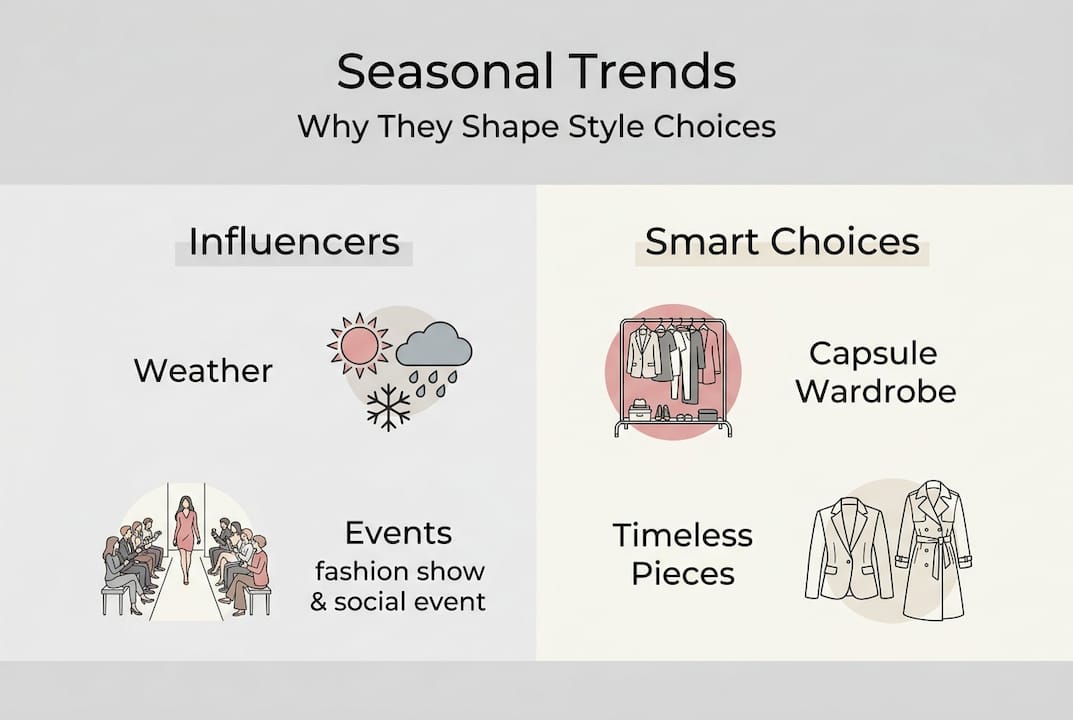
Economic pressure changes how we shop. When budgets tighten, seasonal trends shift toward durable, versatile pieces that work across multiple seasons. Shoppers delay non-essentials and start thinking in terms of cost-per-wear, which is the total cost of an item divided by how many times you actually wear it. A $150 coat you wear 80 times costs less per wear than a $40 top you wear twice.
Here’s how to shop seasonal trends without the regret:
Pro Tip: Build your seasonal capsule around two or three trend-forward pieces and fill the rest with versatile basics. This way you look current without overspending or cluttering your closet with pieces that won’t survive next season. A mindful wardrobe editing approach makes this process feel intentional rather than restrictive. For a deeper look at eco-conscious choices, building an eco wardrobe is a great next read.
With a stronger understanding of why seasonal trends matter, here’s where to go next if you want to master your own style evolution.
WomanEdit is built for exactly this kind of curiosity. Whether you’re figuring out how to start updating your wardrobe without blowing your budget, looking for a guide to staying ahead in style effortlessly, or curious about how celebrity culture influences the trends that end up in your closet, we’ve got the content to keep you informed and inspired. Our team of female founders and writers curates everything with one goal: giving you the tools to make style choices that feel genuinely yours. Dive in and see what resonates.
Seasonal trends shape your choices through a mix of climate needs, cultural events, and what brands prioritize each season. Climate-driven fabric and style needs create a natural pull toward certain materials and silhouettes depending on the time of year.
Trends with staying power tend to match shifting lifestyles, economic realities, and versatile everyday use. Economic shifts compress trend windows, pushing consumers toward timeless pieces over fleeting ones.
Not at all. They vary significantly by climate, local culture, and regional events, though global platforms can spread certain aesthetics almost everywhere. Primary seasons dictate fabrics, colors, and trends based on local climate and cultural context.
A capsule wardrobe approach works well: focus on 12 to 16 versatile pieces per season and shop off-season for better prices. Buying off-season and using a capsule keeps your style current without the financial hangover.
Their constant engagement with social and digital platforms gives them outsized influence on what gains traction each season. Women aged 18-40 dominate curated clothing purchases at 82%, making them the primary drivers of seasonal trend adoption.