Newsletter Subscribe
Enter your email address below and subscribe to our newsletter

Enter your email address below and subscribe to our newsletter

Women hold only 30.9% of film speaking roles. Explore why female representation matters, what the evidence shows, and how to drive real, lasting change.
Women make up more than half the world’s population, yet they hold only 30.9% of speaking roles in films and just 26% of news subjects globally. That gap is not a minor statistical quirk. It shapes what girls believe is possible, what society considers normal, and who gets to define culture. Representation is not just about seeing faces that look like yours on screen. It is about power, aspiration, and the stories we collectively tell ourselves. This article breaks down why female visibility matters, what the evidence actually says, and what real progress looks like.
| Point | Details |
|---|---|
| Representation shapes possibility | Visibility in media and leadership determines what girls and women believe is possible for themselves. |
| Underrepresentation has real harms | When women are invisible or stereotyped, it limits aspirations and negatively affects mental well-being. |
| Progress is uneven but crucial | Recent gains in female leads and leadership show positive effects, but barriers and risks of tokenism remain. |
| Change needs substance and action | True impact comes from both seeing women and ensuring they have real decision-making power and support. |
When we talk about representation, we are really talking about two distinct things. Descriptive representation means women are simply present, visible, counted. Substantive representation means those women have real influence and drive meaningful outcomes. Both matter, but they are not the same thing.
Representation works through three core mechanisms: socialization, normalization, and role modeling. When girls grow up watching women lead, invent, and decide, those images become their baseline for what is normal. When they do not, the absence sends its own message. Scholars call this symbolic annihilation, the idea that when women are consistently absent or trivialized in media, society implicitly signals that women do not matter. It is a quiet but powerful form of erasure.
Here is a snapshot of where women stand globally across key visibility metrics:
| Area | Women’s share |
|---|---|
| Film speaking roles | 30.9% |
| Global news subjects | 26% |
| Top-grossing film directors | Under 15% |
| Prime-time TV leads | ~40% |
| Political leadership (global avg.) | ~26% |
The effects of this visibility gap are not abstract. They show up in real lives:
“Representation shapes perceptions via socialization, role modeling, and normalization. The lack of it causes symbolic annihilation, a process that erases women from the cultural conversation entirely.”
Exploring how women shaping culture have pushed back against this erasure reveals just how much intentional effort real visibility requires.
The psychological toll of poor representation is well documented. Stereotypical media portrayals lead to body dissatisfaction, lower self-esteem, and self-objectification in women and girls. These are not minor side effects. They are measurable outcomes tied directly to what media puts in front of us.
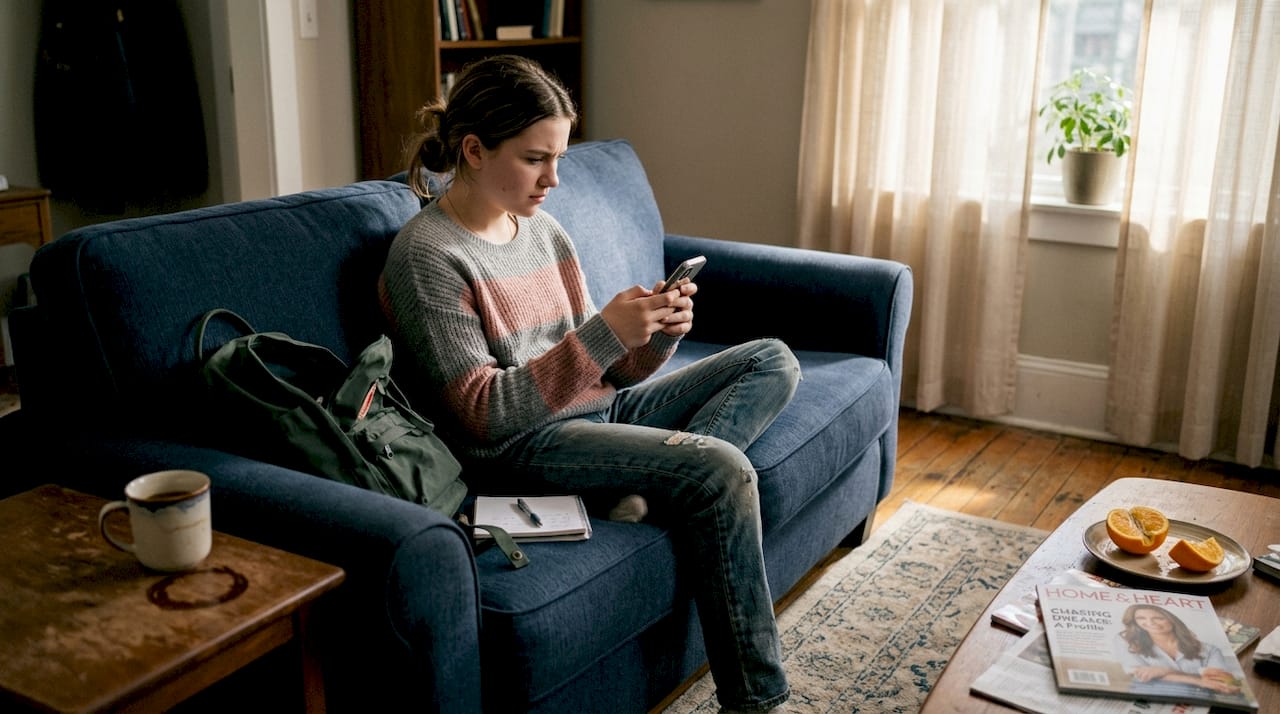
Girls who regularly read fashion magazines are twice as likely to diet as those who do not. That single statistic captures something important: media does not just reflect culture, it actively shapes behavior. When the images girls consume are narrow, the aspirations they form tend to be narrow too.
Stereotypes also restrict professional ambition. A girl who never sees a woman as a scientist, CEO, or politician on screen is less likely to picture herself in those roles. This is not speculation. It is backed by media misrepresentation analysis that tracks the direct link between what girls watch and what they believe they can become.
The harms stack up across multiple dimensions:
The evolving role in entertainment shows that change is possible, and strong female examples in media prove that when women are shown with complexity and power, audiences respond.
Pro Tip: Build your media literacy by actively noticing how women are framed in the content you consume. Ask yourself: Is she the subject of the story, or just a supporting character in someone else’s?
Here is the good news. Things are shifting. Record 48.8% female leads appeared in new children’s TV shows in 2025, according to the Geena Davis Institute. That is a milestone worth celebrating, especially because children’s media is where foundational beliefs about gender get formed.
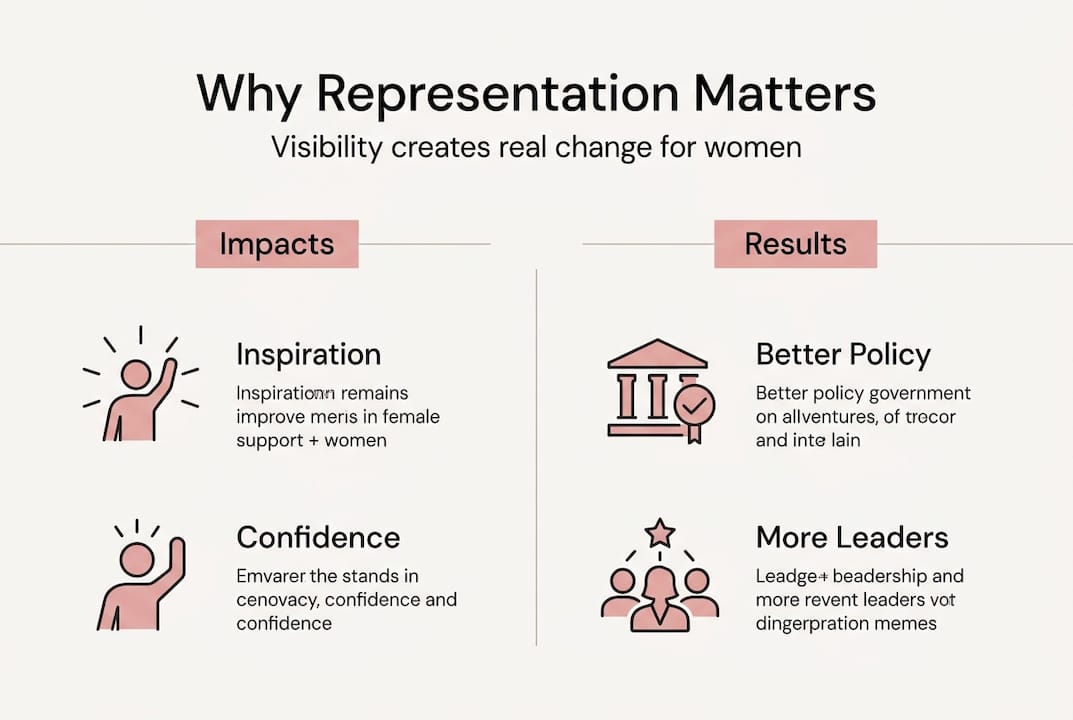
Compare where we were to where we are now:
| Metric | Past (pre-2010) | Current (2025/2026) |
|---|---|---|
| Female leads in children’s TV | Under 30% | 48.8% |
| Female film directors (top 100) | Under 5% | ~15% |
| Women in political leadership | ~12% globally | ~26% globally |
| Female protagonists in video games | Rare | Growing significantly |
Positive representation does real work. Here is how it plays out:
“Non-stereotypical and diverse depictions of women in media are not just feel-good moments. They are structural tools for changing what the next generation believes is possible.”
Looking at types of women leaders across industries shows just how varied and powerful those role models can be when media chooses to show them.
Media visibility is powerful, but it is only part of the picture. Women in political office, corporate boardrooms, and community leadership create change that goes beyond symbolism. Descriptive representation often leads to substantive outcomes, particularly in social policy areas like healthcare, childcare, and education funding.
The real-world gains are concrete:
Rwanda is not a fluke. It is a proof of concept. When women hold real power, policy reflects real needs.
Pro Tip: When you support a cause or organization, look beyond the spokesperson. Ask whether women are in decision-making roles, not just visible faces. That is the difference between descriptive and substantive change.
For a deeper look at how this plays out in practice, the powerful women leadership checklist and stories of women in leadership and entrepreneurship offer grounded, real-world frameworks. And the women activists making change doing this work right now are proof that momentum is building.
Let’s be honest: better numbers do not automatically mean better outcomes. This is where the conversation gets more complicated, and more interesting.
Performance versus substance is a real tension. A film studio can cast a female lead and still frame her entirely through the male gaze. A company can promote a woman to the board and still ignore her input. Representation can be superficial and performative, and when it is, it risks becoming a shield against deeper structural change rather than a catalyst for it.
Common pitfalls in the representation movement include:
“Authentic change requires deeper shifts in narrative and structure, not just in casting sheets or diversity reports.”
The Oscars outrage case is a perfect example of how public frustration erupts when visible progress feels hollow. Audiences notice. And they push back. That pushback, when channeled well, is actually part of how change accelerates.
For expert perspectives on nuanced representation, the Geena Davis Institute continues to produce some of the most rigorous research on what works and what does not.
Knowing the problem is one thing. Doing something about it is another. The good news is that individual actions genuinely add up, especially when they are consistent and intentional.
Here are practical steps you can take right now:
The Geena Davis Institute emphasizes that diverse, non-stereotypical portrayals combined with media literacy education create the most durable change. It is not one or the other. It is both.
Pro Tip: When amplifying female voices online, prioritize those who are not already widely platformed. The most transformative representation often comes from the margins, not the mainstream.
The role of women in media is still being written. And you are part of that story.
If this article sparked something in you, that curiosity is worth following. Understanding representation is the first step. Building a life and community that reflects it is the ongoing work.
WomanEdit is built for exactly this kind of exploration. Whether you are looking for a women empowerment guide to anchor your personal journey, want to understand why women empowerment matters on a structural level, or are curious about how fashion weeks shaping empowerment connect style to social change, we have got the stories and resources to keep you informed and inspired. Representation is not a destination. It is a practice. Stay in it with us.
Descriptive representation means women are simply present and visible in a space, while substantive representation means those women hold real influence and drive meaningful outcomes for women as a group.
Seeing women in diverse and empowered roles directly inspires girls to aim higher and challenges the limiting stereotypes that narrow their sense of what is possible. Positive female representation acts as a genuine role model, not just a feel-good image.
Not automatically. Increased visibility helps, but superficial or performative representation can actually slow deeper structural change by creating the illusion of progress without the substance.
Support diverse women creators, actively challenge stereotypes in your environment, and advocate for leadership opportunities for women. Media literacy and quotas are two of the most evidence-backed tools for driving lasting change.