Newsletter Subscribe
Enter your email address below and subscribe to our newsletter

Enter your email address below and subscribe to our newsletter

Discover practical strategies for everyday empowerment including self-awareness, goal-setting, support networks, and emotional regulation to boost confidence and well-being.
Feeling stuck, overwhelmed, or powerless in your daily life is more common than you think. Many young women struggle with stress, self-doubt, and the challenge of building confidence while juggling work, relationships, and personal goals. This guide offers practical, research-backed strategies to help you take control and feel empowered every single day. You’ll learn actionable steps to build self-awareness, create supportive networks, manage emotions, and celebrate your progress. Let’s dive into the tools that will transform how you approach your life and well-being.
| Point | Details |
|---|---|
| Self awareness foundation | A personal self assessment builds clarity on values, strengths, and growth areas to guide progress. |
| Smart goals guide progress | Using Specific Measurable Achievable Relevant and Time bound goals provides clear direction and measurable progress. |
| Support networks boost wellbeing | Building support networks offers emotional backing and practical guidance to improve resilience and mood. |
| Emotional regulation and boundaries | Developing skills to regulate emotions and set boundaries protects time and energy. |
| Continuous learning sustains growth | A continuous learning mindset keeps skills current and progress moving forward. |
Everyday empowerment isn’t some abstract ideal reserved for special occasions. It’s about taking practical actions daily to build confidence, resilience, and control over your life. For modern women navigating careers, relationships, and personal growth, empowerment means having the tools to handle challenges and make decisions aligned with your values. Research shows that everyday empowerment includes self-awareness, goal-setting, support networks, emotional regulation, and boundaries, creating a framework you can apply immediately.
The mental health context makes this even more urgent. While women report higher life satisfaction but face rising mental health challenges, including increased negative affect and depression rates. This paradox highlights why empowerment strategies are essential. You need practical skills to protect your well-being while pursuing your ambitions. Understanding why women empowerment matters helps you see this as a daily practice, not a distant goal.
Here are the foundational pillars of everyday empowerment:
These elements work together to create a sustainable empowerment practice. You don’t need to master everything at once. Start with one or two areas and build from there. The women empowerment guide offers additional strategies tailored for modern lifestyles. Each pillar reinforces the others, creating momentum that transforms how you experience daily life.
“The rise in negative affect and depression among women, despite higher life satisfaction scores, underscores the critical need for accessible empowerment tools that address both emotional well-being and practical life management.”
Think of empowerment as your personal operating system. When it’s running smoothly, you handle stress better, make decisions faster, and feel more in control. When it’s neglected, everything feels harder. The good news is that small, consistent actions create significant change over time.
Before you can empower yourself effectively, you need to know where you’re starting. Self-awareness is the foundation that makes everything else possible. It means understanding your current emotional state, identifying your strengths, recognizing patterns that hold you back, and clarifying what truly matters to you. Without this clarity, you’re setting goals in the dark.

Start with a personal self-assessment. Set aside 30 minutes in a quiet space and ask yourself these questions: What activities make me feel most alive? When do I feel drained or resentful? What values guide my best decisions? Where do I struggle most with confidence? Write down your answers honestly. This isn’t about judging yourself but gathering data to work with.
Once you have clarity on where you stand, you can set goals that actually move you forward. Using SMART goals effectively supports measurable progress toward empowerment. SMART stands for Specific, Measurable, Achievable, Relevant, and Time-bound. This framework transforms vague wishes into concrete action plans.
Here’s how to create effective empowerment goals:
For example, instead of “I want to feel more confident,” try “I will speak up in three team meetings this month by preparing one question or comment in advance.” That’s specific, measurable, achievable, relevant to building confidence, and time-bound. The self-care guide for women can help you identify goals that support overall well-being.
Pro Tip: Schedule a 15-minute weekly check-in with yourself to review your goals, celebrate small wins, and adjust based on what’s working. This habit keeps you connected to your progress and prevents you from drifting off course.
Remember that continuous self-assessment helps track empowerment progress and adapt goals as you grow. Your priorities will shift as you gain confidence and clarity. What felt important three months ago might not resonate now, and that’s perfectly normal. Building empowerment is about creating habits that support ongoing growth, not achieving perfection. Be patient with yourself as you develop these skills.
No one achieves empowerment alone. Strong social connections are essential for mental health and personal growth. Research reveals that strong social connections buffer stress and improve happiness, yet 19% of young adults experience social disconnection. If you’ve been feeling isolated, you’re not alone, and there are concrete steps to change that.
Your support network includes friends, family, mentors, therapists, and peer groups who understand your journey. These connections provide emotional validation, practical advice, accountability, and perspective when you’re stuck. Studies show that group therapy and personal development groups enhance resilience with lasting effects on empowerment and mental health.
Here are practical ways to build and maintain supportive networks:
Building connections takes time and vulnerability. Start small by showing up consistently and being genuinely interested in others. The empowering relationship tips resource offers additional strategies for nurturing healthy connections.
Equally important is learning to set boundaries that protect your energy and focus. Boundaries aren’t walls; they’re guidelines that help you maintain your well-being while staying connected to others. Saying yes to everything leads to burnout and resentment. Saying no strategically creates space for what truly matters.
| Support network type | Primary benefit | Best for |
|---|---|---|
| Close friends | Emotional validation and trust | Daily support and vulnerability |
| Mentors | Guidance and perspective | Career and life direction |
| Peer groups | Shared experiences and accountability | Specific goals or challenges |
| Therapy | Professional insight and tools | Deep emotional work and healing |
| Online communities | Accessibility and diverse perspectives | Niche interests or remote connection |
Pro Tip: Practice saying no gracefully by using this formula: “I appreciate you thinking of me, but I can’t commit to that right now. I need to focus on [your priority].” No long explanations or apologies needed.
Boundaries become easier with practice. Start by identifying where you feel most drained or resentful. Those areas need stronger boundaries. Communicate your limits clearly and kindly, then follow through consistently. People who respect you will understand. Those who don’t were never supporting your empowerment anyway. The ways to support women guide can help you recognize what healthy support looks like.
Managing your emotions effectively is a game changer for empowerment. Emotional regulation doesn’t mean suppressing feelings or pretending everything’s fine. It means recognizing your emotions, understanding what triggers them, and choosing how to respond instead of reacting automatically. This skill allows you to act aligned with your goals even when you’re stressed or upset.
Practical emotional regulation techniques include:
Physical activity deserves special attention because physical activity boosts psychological resilience, enhancing body appreciation and empowerment. Regular movement builds mental toughness, improves mood, and strengthens your sense of capability. Focus on activities you enjoy and that make you feel competent, not just ones aimed at changing your appearance.
Research confirms that empowerment enables better emotion recognition and coping strategies, which are critical for mental health. As you practice these techniques, you’ll notice you can handle difficult situations with more grace and less drama. You’ll make better decisions and feel more in control of your life.
| Regulation technique | Key benefit | Ease of practice | Time required |
|---|---|---|---|
| Mindful breathing | Immediate calm and focus | Easy | 2-5 minutes |
| Journaling | Pattern recognition and processing | Moderate | 10-15 minutes |
| Pause before reacting | Better decision-making | Easy | 5 seconds |
| Physical activity | Resilience and mood boost | Moderate to hard | 20-30 minutes |
| Emotion naming | Reduced intensity | Easy | 1 minute |
Beyond emotional skills, continuous learning is what keeps your empowerment journey alive long-term. The world changes, you change, and your strategies need to evolve too. Adopting a learning mindset means staying curious, seeking new perspectives, and being willing to adjust your approach based on what you discover.
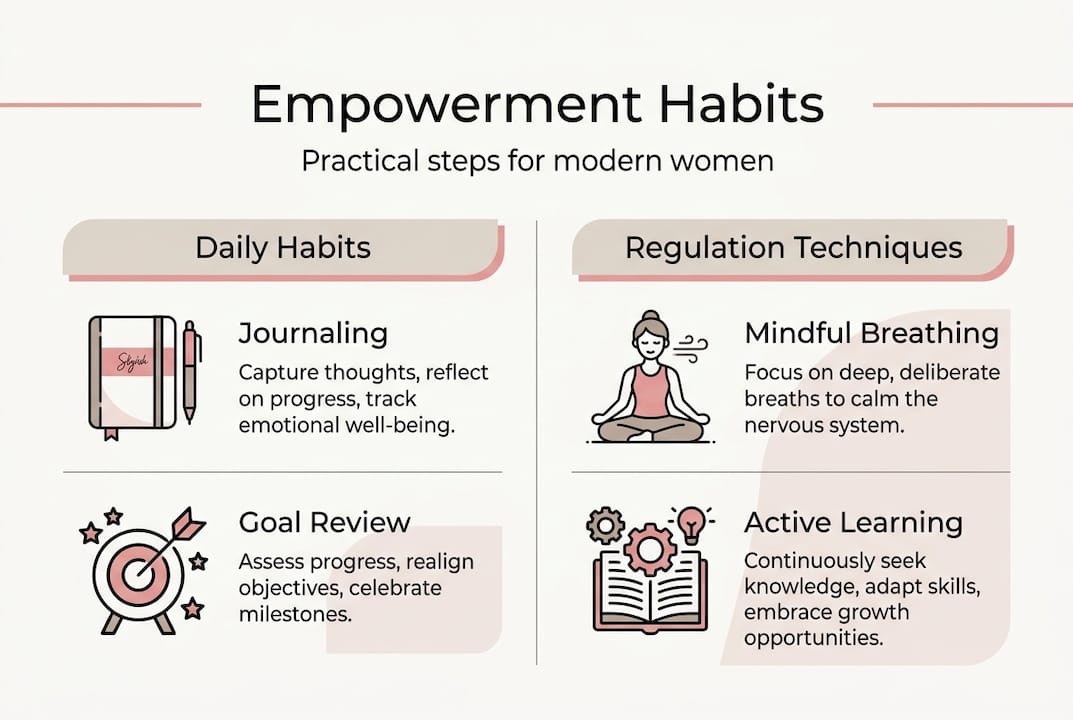
Ways to integrate continuous learning include reading books on personal development and mental health, attending workshops or courses on topics that interest you, working with a therapist to deepen self-understanding, joining discussion groups where ideas are exchanged, and reflecting regularly on what’s working and what isn’t. The therapy women empowerment 2026 resource explores how professional support accelerates growth.
Learning doesn’t have to be formal or expensive. Podcasts, articles, conversations with wise friends, and even mistakes all teach you something valuable. The key is approaching life with openness rather than assuming you already know everything. This mindset keeps you adaptable and resilient as circumstances change. Check out empowerment tips for women for more practical strategies you can start using today.
You’ve learned the foundations of everyday empowerment, from self-awareness and goal-setting to building networks and mastering emotional regulation. Now it’s time to deepen your practice with resources designed specifically for women like you. Womanedit offers specialized guides and articles that support every aspect of your empowerment journey.
Explore the comprehensive women empowerment guide for additional strategies tailored to modern lifestyles. Strengthen your connections with relationship tips for women that help you build healthier, more supportive partnerships. Prioritize your well-being with the self-care guide for women that balances mental, physical, and emotional health. These resources complement everything you’ve learned here, giving you ongoing support as you grow.
Daily habits include journaling for five minutes each morning to build self-awareness and clarify your thoughts. Set one small, achievable goal each day that moves you toward a larger objective. Connect with at least one supportive friend or family member through a text, call, or quick coffee. Practice emotional regulation techniques like mindful breathing when you notice stress building. These small actions compound over time, creating significant shifts in how empowered you feel. For more strategies, visit empowerment tips for women.
Start small by joining interest groups or online forums matched to your passions, whether that’s book clubs, fitness classes, or hobby communities. Show up consistently even when it feels uncomfortable at first. Consider group therapy or personal development groups shown to improve empowerment and create meaningful connections. Reach out to acquaintances for one-on-one conversations to deepen existing relationships. Building a network takes time and vulnerability, but each small step reduces isolation. The ways to support women guide offers additional ideas for finding and nurturing supportive connections.
Regular activity builds resilience which supports emotional regulation and self-worth. Research shows physical activity self-worth predicts greater psychological resilience and body appreciation in women. Focus on competence and enjoyment over appearance to maintain motivation. Choose activities that make you feel strong and capable, whether that’s dancing, hiking, lifting weights, or yoga. Movement shifts your mental state and proves to yourself that you can set goals and achieve them. For more on holistic health benefits, explore women’s wellness benefits.
Look for increased confidence in situations that previously intimidated you, better emotional control when facing stress, and healthier relationships with clear boundaries. Notice whether you’re achieving the SMART goals you set and feeling more aligned with your values. Continuous self-assessment and adjusting goals helps track empowerment progress effectively. Keep a simple journal noting weekly wins, challenges overcome, and moments you felt proud. Progress isn’t always linear, but these markers show you’re moving forward. The empowerment workflow guide provides a structured framework for tracking your growth over time.