Newsletter Subscribe
Enter your email address below and subscribe to our newsletter

Enter your email address below and subscribe to our newsletter

Discover how therapy reduces anxiety by 50-70%, empowers young women through evidence-based approaches, and combines with self-help for optimal mental health results in 2026.
More than 63% of young women now engage with therapy, yet many still wonder if it’s only for severe mental illness or whether self-help alone can deliver real results. The truth is, therapy offers powerful tools for personal growth, emotional resilience, and empowerment that extend far beyond crisis intervention. This article clarifies how therapy reduces anxiety and depression, breaks down common myths, and provides practical steps to help you access and sustain meaningful mental health support.
| Point | Details |
|---|---|
| Therapy significantly reduces anxiety and depression symptoms | Evidence-based approaches like CBT can reduce symptoms by 50-70% among young women. |
| Evidence-based therapies empower emotional regulation | DBT and ACT improve emotional regulation skills by 40-60%, fostering resilience. |
| Combining therapy with self-help yields superior outcomes | This combination leads to 40% higher improvement in depressive symptoms than self-help alone. |
| Cultural competence in therapist selection matters | Finding a therapist who understands your cultural background boosts engagement and success. |
| Consistent engagement overcomes common barriers | Only 35% continue past three sessions, so addressing stigma and accessibility is critical. |
Therapy engagement among young women has surged in recent years. Approximately 63.7% of women aged 18-34 now seek mental health services, reflecting growing awareness of therapy’s role in managing anxiety, depression, and stress. This high uptake underscores the importance of women empowerment through mental health support.
Therapy offers measurable improvements in emotional well-being. Regular sessions help you develop coping skills that reduce symptoms of anxiety and depression while improving stress management and emotional regulation. These benefits extend beyond symptom relief to enhance overall quality of life, relationships, and self-esteem.
Key mental health benefits include:
Therapy also supports your journey toward personal growth and empowerment. By addressing emotional challenges head-on, you gain tools to navigate relationships, career pressures, and life decisions with greater confidence. The mental health tips for young women offered through therapy complement other wellness strategies, creating a holistic approach to well-being.
Pro Tip: Start therapy even when you feel okay. Preventive mental health care builds resilience before crises emerge, making it easier to handle future stressors.
Accessing therapy connects directly to broader empowerment goals. The empowerment guide for women emphasizes that mental health is foundational to achieving personal and professional success. Similarly, relationship empowerment tips highlight how therapy improves communication skills and emotional boundaries, strengthening connections with others.
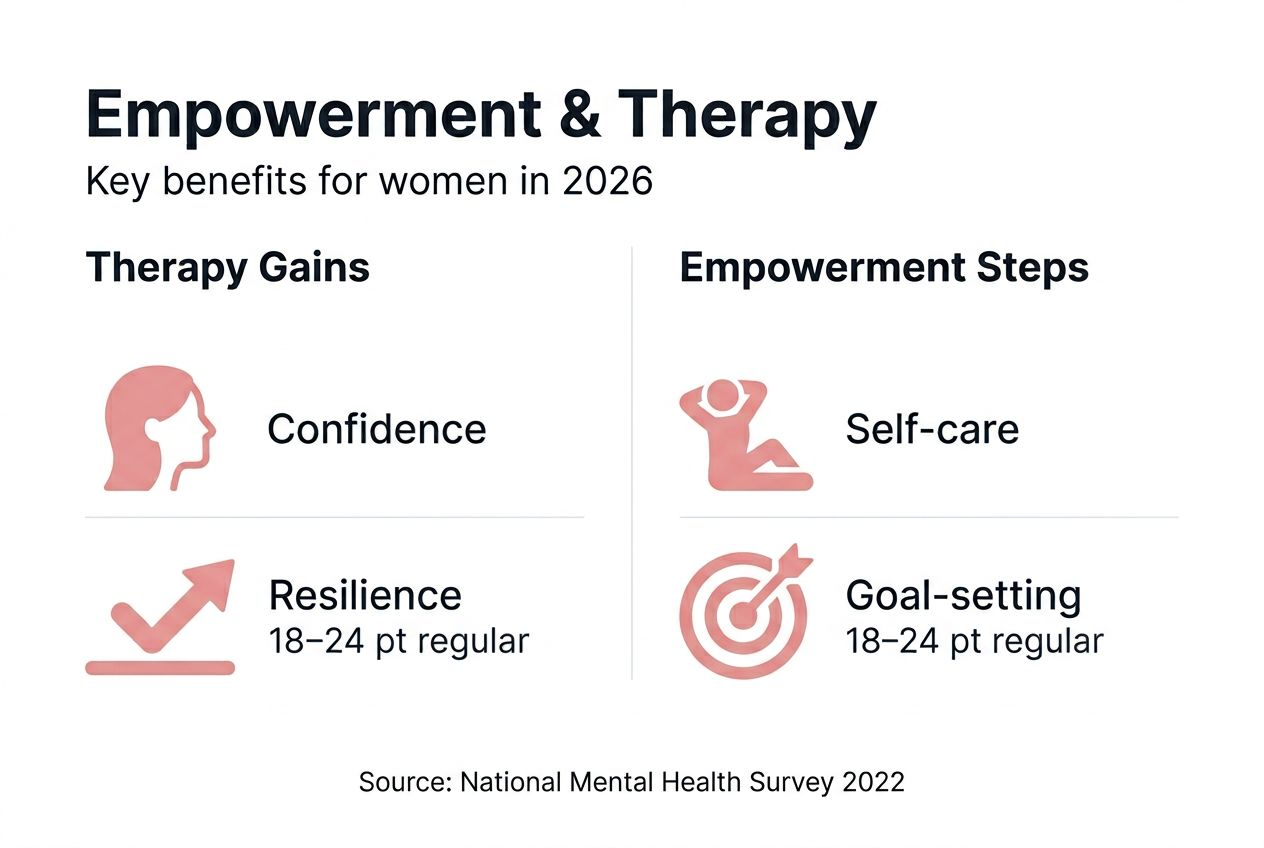
The national mental health survey 2022 data confirms that young women prioritize mental health services at higher rates than previous generations. This shift reflects reduced stigma and greater recognition of therapy’s value in supporting both immediate well-being and long-term empowerment.
Specific therapy modalities have proven especially effective for young women. Cognitive Behavioral Therapy (CBT) stands out for its robust efficacy in reducing symptoms, with average reductions of 50-70% in anxiety and depression among young women. CBT focuses on identifying and changing negative thought patterns, equipping you with practical tools to challenge unhelpful beliefs.

Dialectical Behavior Therapy (DBT) and Acceptance and Commitment Therapy (ACT) offer unique strengths. These approaches demonstrate 40-60% improvement in emotional regulation, particularly valuable for young women navigating intense emotions or relationship challenges. DBT emphasizes mindfulness, distress tolerance, and interpersonal effectiveness, while ACT encourages acceptance of difficult emotions alongside commitment to value-driven action.
| Therapy Type | Primary Focus | Symptom Reduction Rate | Best For |
|---|---|---|---|
| CBT | Thought pattern restructuring | 50-70% | Anxiety, depression, negative thinking |
| DBT | Emotional regulation skills | 40-60% | Intense emotions, relationship struggles |
| ACT | Values-based action and acceptance | 40-60% | Avoidance behaviors, life direction |
| Mindfulness-Based | Present moment awareness | 30-50% | Stress management, self-awareness |
Mindfulness-based approaches complement these therapies by reducing stress and enhancing self-awareness. Integrating mindfulness into CBT or DBT sessions amplifies benefits, helping you stay grounded during emotional challenges. These techniques foster greater self-compassion and reduce rumination.
Key benefits of evidence-based therapies:
Therapy also fosters personal growth beyond symptom management. Understanding the women empowerment definition clarifies how therapy supports autonomy, decision-making, and self-advocacy. The empowerment workflow guide demonstrates how mental health skills integrate into broader life goals.
Pro Tip: Ask potential therapists about their training in specific modalities. A therapist certified in CBT or DBT brings specialized skills that can accelerate your progress.
Research from CBT efficacy meta-analysis and DBT and ACT therapy insights confirms these therapies work across diverse populations. Choosing an evidence-based approach ensures you receive treatment grounded in rigorous scientific validation rather than untested methods.
Many young women hesitate to pursue therapy due to persistent myths. One widespread misconception is that therapy is only for severe mental illness or crisis situations. In reality, therapy serves preventive and developmental purposes, helping you build resilience, improve relationships, and achieve personal goals even when you’re not in crisis.
Another myth suggests therapy offers quick fixes. Genuine progress requires time, consistent engagement, and active participation between sessions. Therapy is a process of skill-building and self-discovery, not a magic solution that eliminates problems instantly.
Common misconceptions debunked:
Some believe self-help resources can replace professional therapy entirely. While self-help books and apps offer valuable insights, they lack the personalized feedback, accountability, and expertise that therapists provide. Combining both approaches yields the strongest outcomes.
Cultural and gender considerations matter deeply in therapy. A therapist who understands your cultural background, gender experiences, and unique challenges creates a safer, more effective therapeutic environment. This cultural competence reduces misunderstandings and builds trust faster.
Understanding women empowerment importance helps contextualize therapy as a tool for broader empowerment. The women empowerment lifestyle guide emphasizes that mental health support is foundational to achieving other life goals, from career advancement to fulfilling relationships.
Therapy also counters the myth that seeking help signals weakness. Recognizing when you need support and taking action to get it demonstrates strength, self-awareness, and commitment to growth. Young women who challenge these misconceptions access powerful tools for lasting change.
Self-help strategies like journaling, meditation apps, and wellness books provide valuable support for mental health. However, research shows that therapy combined with self-help leads to 40% higher improvement in depressive symptoms compared to self-help alone. This combination leverages the structure and expertise of therapy alongside the daily practice of self-help tools.
Self-help approaches have limitations. Without professional guidance, you may misapply techniques, miss underlying issues, or lack accountability for consistent practice. Self-help also struggles to address complex trauma, severe symptoms, or deeply ingrained patterns that require expert intervention.
| Approach | Strengths | Limitations | Best Use |
|---|---|---|---|
| Professional Therapy | Personalized feedback, expert diagnosis, evidence-based treatment | Cost, time commitment, finding right fit | Moderate to severe symptoms, complex issues |
| Self-Help | Accessible, affordable, flexible scheduling | Lacks personalization, no accountability, limited for severe issues | Mild symptoms, maintenance, skill practice |
| Combined | Maximizes outcomes, structured + flexible, professional guidance + daily practice | Requires commitment to both approaches | Optimal for most mental health goals |
Therapy provides structure and tailored strategies that self-help cannot match. Your therapist tracks progress, adjusts interventions based on your responses, and addresses obstacles as they arise. This personalized approach accelerates growth and prevents you from getting stuck.
Key advantages of combining approaches:
Pro Tip: Use self-help resources to supplement therapy, not replace it. Ask your therapist to recommend specific books, apps, or exercises that align with your treatment goals.
The self-care guide for women complements therapy by offering practical daily wellness strategies. When integrated with professional support, these self-care practices become more effective and sustainable.
Young women benefit most from viewing therapy and self-help as complementary rather than competing approaches. The therapy vs. self-help study confirms that this integrated model produces superior outcomes, supporting both symptom reduction and lasting empowerment.
Accessing therapy can feel overwhelming, but breaking the process into steps makes it manageable. Start by identifying your goals and preferences, including the type of therapist, modality, and logistical considerations like location and cost. Research shows that only 35% of young women continue therapy beyond three sessions, highlighting the importance of addressing barriers upfront.
Steps to initiate therapy:
Finding the right therapist fit significantly impacts outcomes. Prioritize therapists who demonstrate cultural sensitivity, understand your specific challenges, and use evidence-based approaches. Don’t hesitate to switch therapists if the connection feels off after a few sessions.
Overcoming common barriers:
Consistency matters more than intensity. Attending regular weekly or biweekly sessions creates momentum and allows skills to build progressively. Sporadic attendance undermines progress and makes it harder to address underlying patterns.
Pro Tip: Schedule therapy sessions at the same time each week. Treating therapy like a non-negotiable appointment reduces the temptation to skip or reschedule.
The empowerment workflow guide offers frameworks for integrating therapy into broader personal development plans. Similarly, confidence boosting tips for women complement therapy by reinforcing self-advocacy skills.
Retention challenges often stem from unmet expectations or practical obstacles. The therapy retention survey identifies stigma and accessibility as primary barriers. Addressing these proactively increases your likelihood of sustained engagement and meaningful progress.
Maximize therapy benefits by actively participating. Complete homework assignments, practice skills between sessions, and communicate openly about your experience. Your engagement level directly influences outcomes, making you an equal partner in the therapeutic process.
Your journey toward mental health and empowerment doesn’t end with therapy. WomanEdit offers a wealth of resources designed to support your growth, confidence, and well-being across all areas of life.

Discover comprehensive guides on empowerment strategies, from building effective workflows to navigating modern lifestyle challenges. The women empowerment lifestyle guide provides actionable insights for integrating mental health practices into your daily routine. Whether you’re looking to enhance your relationships, advance your career, or deepen your self-awareness, WomanEdit delivers content tailored to your needs.
Explore the women empowerment workflow guide to create structured action plans that align with your therapy goals. Learn why women empowerment matters and how prioritizing your mental health connects to broader personal and professional success. WomanEdit empowers you with the knowledge, inspiration, and community support needed to thrive in 2026 and beyond.
Absolutely. Therapy supports personal growth, stress management, relationship improvement, and goal achievement regardless of diagnosis. Many young women use therapy preventively to build resilience and develop skills before challenges escalate.
Search therapist directories that allow filtering by cultural competence, language, and specialization. During initial consultations, ask directly about their experience working with clients from your background. Trust your instincts about whether they demonstrate genuine understanding and respect.
Most people notice initial improvements within 6-8 sessions, though deeper patterns may require several months. Progress varies based on your goals, symptom severity, and engagement level. Consistency matters more than speed.
Yes, combining therapy with self-help enhances outcomes. Ask your therapist to recommend specific resources that complement your treatment plan. This integrated approach reinforces skills and maintains progress between sessions.
Discuss your concerns openly with your therapist first. Early discomfort is normal as you address difficult issues. If the therapeutic relationship feels fundamentally mismatched after 3-4 sessions, finding a different therapist is a valid option. Don’t let one poor fit discourage you from continuing.