Newsletter Subscribe
Enter your email address below and subscribe to our newsletter


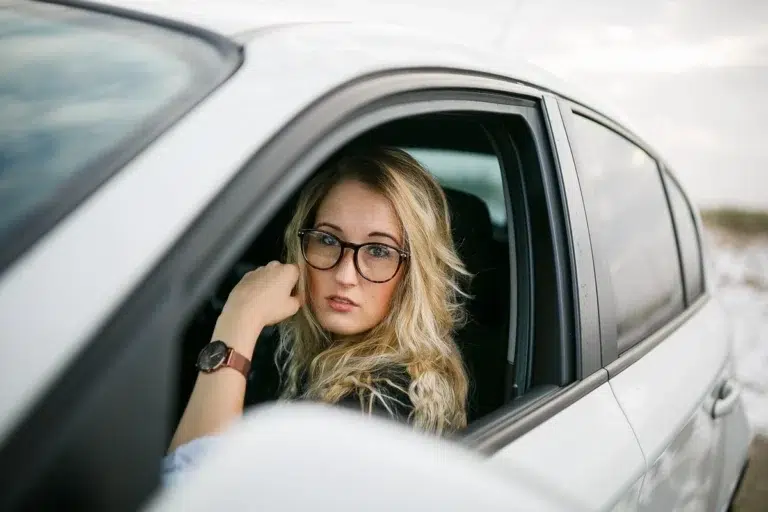
The gig economy's brutal truth for women Uber drivers: one bad passenger means a $6,100 hospital bill and zero protection. This crisis demands action.
Forget the glossy ads and the seamless tap of your screen. We all love the convenience of ride-hailing apps – a car appears, you’re whisked away, easy.
But for the women behind the wheel, often driving late nights to make ends meet, that ‘easy’ convenience hides a brutal, dangerous reality. These apps promise flexible income, but what they often deliver is an under-protected, high-risk grind where one bad passenger, one wrong turn, or one sudden stop can derail a life.

This isn’t a hypothetical. It’s happening right now, to women just like us, across the country.
Picture this: a woman driver, hustling to hit her daily target, picks up a fare. Maybe the passenger is belligerent, violent, or just slams a door wrong, causing a whiplash-inducing accident.
Suddenly, she’s in an emergency room, staring at a $6,100 hospital bill for injuries sustained while working. But here’s the kicker: is it truly “on the job” when you’re conveniently classified as an independent contractor, stripped of basic worker protections?
This isn’t some isolated incident or a ‘bad apple’ problem. This is the systemic vulnerability – a feature, not a bug – baked right into the gig economy model.
Uber, Lyft, DoorDash – these tech titans have built multi-billion-dollar empires on the backs of “independent contractors” who are left utterly alone when the wheels come off.
Drivers are out there, using their own vehicles, bleeding money on gas, and absorbing all the wear and tear. They operate in a public landscape that can turn hostile in a heartbeat.
When a passenger-related incident leads to injury, who picks up the tab for lost wages, vehicle repairs, and those astronomical medical bills? Not the app. Not the company that profits from every single ride.
Oh, sure, these platforms claim to have insurance. They’ll bombard you with PR about their ‘safety features,’ the in-app emergency buttons, the ‘rigorous’ background checks.
But when reality hits, dealing with their labyrinthine claims process is a special kind of hell. It’s not designed to protect you, the individual driver staring down a mountain of debt; it’s designed to shield the platform from liability.
These drivers aren’t employees – they’re denied workers’ comp, paid sick leave, and comprehensive health benefits. What do they get instead? An app, a ratings system that holds their livelihood hostage, and the hollow echo of ‘support’ that rarely materializes when it truly counts.
The technology itself has rocketed light years ahead, making ride-hailing frictionless for us, the riders. But the human protection that should evolve alongside it? That’s still languishing in the dark ages.
Companies trumpet ’empowering individuals’ and ‘flexible work,’ but for countless women driving for these services, it feels more like being cynically exploited and hung out to dry.
They’re out there, often single mothers or sole providers, desperately trying to pay rent, feed their kids, or simply escape economic precarity. And they’re doing it with a target on their backs, both literally on the road and financially in their precarious contracts.
The so-called ‘social contract’ of these apps isn’t just skewed; it’s fundamentally broken.
We, the consumers, get cheap, instant rides at our fingertips. The platforms rake in billions from a massive, disposable workforce that comes without the pesky overhead of traditional employment.
And the drivers? They get whatever meager scraps they can hustle, often at immense personal risk. It’s a transaction that works ‘beautifully’ for everyone except the driver, right up until the moment it spectacularly fails. And when it fails, it’s always the driver who pays the steepest, most devastating price.
Let’s strip away the corporate jargon and the glossy PR. Uber, Lyft, and their ilk aren’t oblivious; they know *exactly* what they’re doing.
They’ve meticulously optimized their business model to offload every conceivable risk and cost onto individual drivers, maximizing their own astronomical profits by brazenly skirting traditional employer responsibilities.
The ‘flexibility’ they so proudly tout? It’s nothing more than a cynical euphemism for ‘no safety net.’ When a driver gets hurt and faces a crippling medical bill, it’s not an unfortunate accident for these companies; it’s a calculated, integral feature of their design.
They didn’t just build a system; they engineered a hierarchy where the convenience for the rider and the bottom line for the corporation always, always come before the dignity, safety, and well-being of the human being doing the actual, dangerous work.
We shouldn’t expect them to change willingly. It’s up to us – as consumers, as citizens – to demand better, to pressure governments to force their hand, or for drivers, en masse, to finally declare that this perilous gamble isn’t worth the paltry reward. Until then, remember who truly pays for your ‘convenient’ ride.
Source: Google News