Newsletter Subscribe
Enter your email address below and subscribe to our newsletter


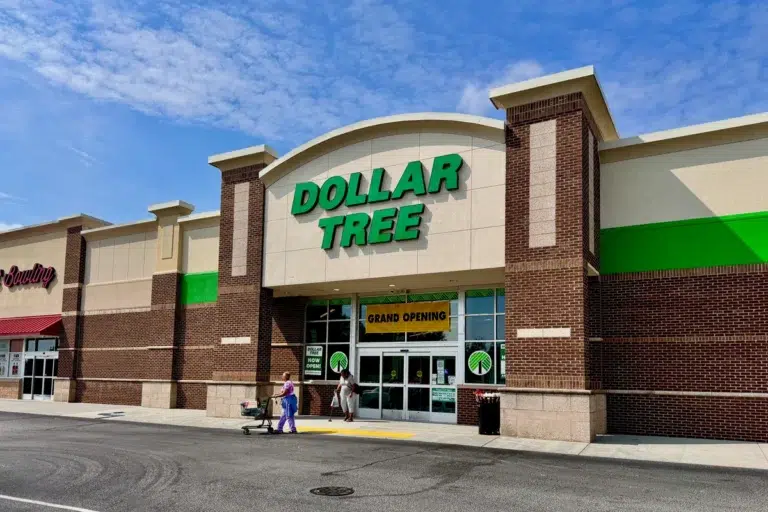
Stop guessing where to save! My shopping list experiment at Dollar Tree, Target, and Walmart reveals the real savings and hidden costs you must know.
Your grocery cart isn’t just a cart anymore; it’s a battleground. Inflation clings stubbornly to our wallets, making the days of strolling into one store and blindly filling up long gone.
We’ve all become accidental retail strategists, meticulously hunting for real savings across Dollar Tree, Target, and Walmart. If you think you’re saving big at every turn, I’m here to spill the beans on where the game is rigged, and what’s actually costing you more.
A recent report from Reuters highlighted what many of us have been doing instinctively: we’re store-hopping. The data showed that nearly 70% of consumers are now splitting their shopping lists, sending some items to Dollar Tree, others to Walmart, and a select few to Target. This isn’t just about pinching a few pennies; it’s about survival.
It’s about stretching every single dollar further so we can still put delicious, wholesome food on the table and keep our homes running smoothly. The report laid it bare: an informal experiment tracking a common shopping list across these three retail giants showed us the true battleground. It’s not just about the sticker price; it’s about unit price, quality, and the clever ways stores make you think you’re getting an amazing deal.
Ah, Dollar Tree. Remember when everything was a true $1? Now it’s the $1.25 store, and let’s not forget their quiet expansion into $3 and $5 items. This isn’t just an inflation adjustment; it’s a smart move to keep you in the habit of thinking “cheap,” while quietly introducing higher-priced items that often offer questionable value when you compare unit prices. It’s a psychological trick, pure and simple.
Where you actually save: Think party supplies, greeting cards, or tiny craft items. These are impulse buys, things you grab because, hey, it’s “only” $1.25. Dollar Tree banks on that mental anchor.
But for food-related items, especially pantry staples or household essentials, you’re almost always getting smaller quantities at a higher unit price. You’re paying for the illusion of a bargain.
Their shift to multi-price points directly boosts their bottom line. They hope you won’t do the math on that tiny bottle of seasoning versus a regular-sized one at Walmart. Trust me, I’ve done the math, and it rarely adds up.
Walmart, with its famous “Every Day Low Prices,” still holds the crown for national brand groceries and larger household items. They use their massive buying power to offer unbeatable prices on the things you buy regularly and in bulk. If you need a week’s worth of milk, eggs, bread, and branded detergents to keep your home humming, Walmart is still your go-to workhorse. Their game is volume and making your everyday essentials affordable.
But Target isn’t backing down. Their secret weapon? Incredible private labels like Up&Up for household goods and Good & Gather for food. These brands are genuinely stepping up their game.
Target wants to give you a curated, aesthetically pleasing shopping experience without making you feel like you’re blowing your budget. Their loyalty programs reel you in, making you feel part of an exclusive club while you save. It’s a brilliant strategy to capture the shopper who wants both value and a little bit of style.
The real hustle isn’t just finding the lowest price; it’s knowing who’s playing what game, and how to beat them at it. You’re not just shopping; you’re traversing a minefield of pricing strategies, and frankly, it’s exhausting!
Here’s the cold, hard truth: the “savings” you chase by store-hopping aren’t always what they seem. Yes, you can shave a few dollars off your total bill. But what’s the hidden cost?
It’s your precious time, the gas in your tank, and the mental load of juggling multiple shopping lists. You’re comparing unit prices on your phone in aisle three, all while trying to remember if you have enough paprika at home. Retailers are banking on you getting tired, on you eventually throwing in the towel and just buying everything at one store out of sheer exhaustion.
The ultimate irony? Retailers trumpet “savings” and “deals” while forcing us to work harder than ever just to maintain our current standard of living. Dollar Tree expands its price points, Walmart doubles down on bulk, and Target pushes its private labels.
All these strategies are meticulously designed to capture your dollars and your loyalty. The consumer is doing the heavy lifting, becoming a full-time retail analyst just to keep pace with basic necessities. It feels like we’re running a marathon just to stand still.
So, what’s a savvy shopper to do? We don’t stop. We get smarter.
We recognize that Dollar Tree is for the quick, fun grab. Walmart is for the bulk staples that anchor our weekly meals. Target is for quality private labels and the occasional stylish treat.
We accept that our grocery run isn’t a single destination anymore, but a strategic circuit, a carefully planned culinary adventure. In this economy, every single dollar counts. Understanding the retail game isn’t just a strategy – it’s the secret ingredient to truly winning at life.
WordPress Categories: Food & Drinks
Photo: Wikimedia Commons (query: Dollar Tree split)
Source: Google News