Newsletter Subscribe
Enter your email address below and subscribe to our newsletter


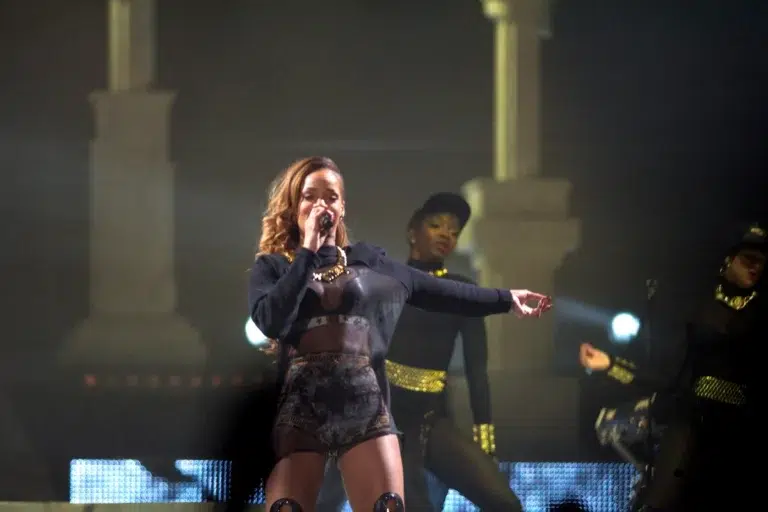
Jay-Z's Yankee Stadium finale was epic, but Beyoncé, Rihanna, and Teyana Taylor created the true seismic shift. Find out how they stole the show.
Forget the whispers about New York City vibrating or Yankee Stadium shaking. Jay-Z’s residency finale was undoubtedly a spectacle, solidifying his enduring legacy.
But make no mistake: the true seismic shift, the undeniable roar that echoed through the Bronx, came from the women who commanded that stage. Beyoncé, Rihanna, Teyana Taylor – they weren’t just guest stars; they were the main event. They proved once again that a man’s empire is often best illuminated by the queens he invites to stand beside him.

For three hours and change, as Sunday bled into Monday, Yankee Stadium pulsed with star power. Jay-Z, ever the impresario, brought out Usher, a legend in his own right.
But when Beyoncé stepped out for “Crazy in Love,” when Rihanna swaggered through “Diamonds,” or when Teyana Taylor absolutely owned her moment, the energy didn’t just amplify – it ignited. It became something sharper, more vital, more undeniably powerful.
This wasn’t merely a concert; it was a deliberate, potent declaration. The women were its most resonant voice.
The conversation, as always, will pivot to Jay-Z’s enduring influence, his undeniable knack for shaping cultural moments. And credit where it’s due, he built the platform. But it was the collective force of Beyoncé, Rihanna, and Teyana Taylor that truly elevated this residency from a superstar’s victory lap to a profound cultural commentary.
Consider the sheer visual impact: three formidable women, each a titan in her own right, commanding a stage at a Jay-Z event, in a stadium. In a genre – and an industry – still grappling with male dominance, their collective presence was far more than just a performance. It was a declaration.
Their amplified visibility on such a high-profile stage isn’t merely about individual artistry. It’s a powerful indicator of the undeniable influence and commercial viability of female artists. Can anyone still deny their market power?
Teyana Taylor’s inclusion, sandwiched between two of the most iconic women on the planet, was particularly profound. This wasn’t just a guest spot; it was an unequivocal affirmation of her talent and impact.
It hinted at a powerful mentorship dynamic, a symbolic passing of the torch, or perhaps, more accurately, a shared lighting of the path for emerging female artists. This wasn’t about simple cameos; it was about a palpable exchange of power, artistry, and mutual respect that fundamentally redefined what collaborative events can look like.
It sets an undeniable new benchmark for female representation in major concert events, putting direct pressure on other promoters to prioritize diverse, truly inclusive lineups. The bar has been raised.
Let’s strip away the glitter and the breathless praise for a moment. Yes, it was an incredible show. Yes, it was inspiring to see these women shine.
But here’s the Red Marker verdict, plain and simple: While Jay-Z deserves credit for inviting them, let’s not pretend this was an act of pure altruism or a sudden, benevolent revelation of female power. These women are not just global forces; they are the forces.
Beyoncé is the industry’s gravitational center. Rihanna is a billionaire mogul who occasionally blesses us with groundbreaking music. Teyana Taylor has carved out her own fiercely independent, undeniable path. Their power is self-made, not granted.
The real ‘so what’ here isn’t just that they shared the stage; it’s that their presence undeniably boosted the event’s prestige, its cultural capital, and yes, its financial draw. Jay-Z, the astute businessman he is, understood that to truly cement his own legacy as a curator, he needed the biggest, brightest stars – and a significant portion of that constellation is female.
This wasn’t just smart; it was a calculated, brilliant strategy: leverage the undeniable, established power of women to elevate your own platform, simultaneously appearing progressive and delivering an unforgettable, must-see experience. It’s a masterclass in strategic alignment.
This wasn’t about giving women a voice; these women already wield megaphones, sound systems, and global platforms. It was about strategically aligning with that existing, formidable power to create a moment so undeniable, it temporarily eclipses any lingering questions about who truly holds the keys to the kingdom.
It’s a powerful visual, yes, but let’s be unequivocally clear: the women on that stage earned their place through sheer, undeniable talent and relentless grind, not by being granted permission. The power dynamic, while appearing collaborative, still subtly positions them as adding value to his event.
The true, seismic shift will come when women curate and headline these events with the same frequency and budget, inviting men to elevate their platforms. That’s the real revolution we’re waiting for.
Rihanna’s own social media activity, reflecting the palpable excitement, underscored the electrifying atmosphere. It was electric, no doubt.
But let this be our unwavering mantra: the future of women in hip-hop and R&B isn’t just about sharing a stage; it’s about owning the stadium.
This residency was a powerful showcase of what is possible, yes, but it must be seen as a stepping stone, a launching pad, not the finish line. The true test of this moment’s legacy will be how many more women are elevated, empowered, and handed the keys to their own empires, not just invited to visit someone else’s.
The stage is set. Now, let the queens build their own kingdoms.
Source: Google News