Newsletter Subscribe
Enter your email address below and subscribe to our newsletter


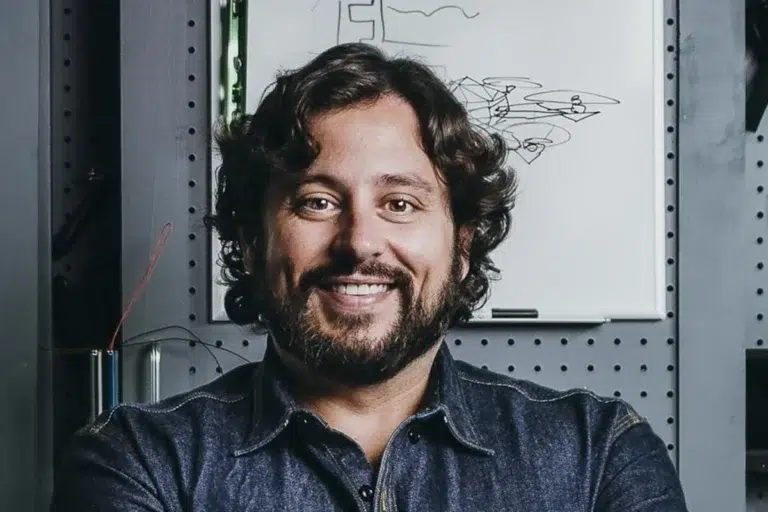
Tech titans just hatched chicks from artificial eggs, proving natural reproduction can be bypassed. Are we ready for this powerful new era of playing God?
For decades, the concept of a “Jurassic Park” has been firmly rooted in the realm of science fiction, a thrilling, cautionary tale of humanity’s hubris in playing God. Yet, recent scientific breakthroughs are steadily eroding the line between fantasy and reality, pushing the boundaries of what we once thought impossible. The news that scientists have successfully hatched live chicks from a fully artificial egg is not merely a fascinating biological feat; it represents a monumental leap forward, one that brings the ambitious dream of de-extinction tantalizingly closer.
This achievement, while perhaps not as dramatic as bringing back a dinosaur, is foundational. It demonstrates the profound capabilities of synthetic biology and advanced reproductive technologies. Imagine an incubator that doesn’t just mimic a natural nest but entirely replaces the biological processes of a mother, providing precise control over every environmental variable, from temperature and humidity to nutrient delivery. This level of control allows for unprecedented insight into embryonic development and offers a potential pathway for species whose natural reproductive methods are endangered or even non-existent. It’s a testament to the intricate dance between engineering and biology, where cutting-edge hardware and sophisticated software converge to nurture life.
The conversation around de-extinction has been significantly amplified by companies like Colossal Biosciences, co-founded by tech entrepreneur Ben Lamm and geneticist George Church. Their audacious goals to resurrect species such as the Woolly Mammoth, the Thylacine (Tasmanian Tiger), and the Dodo bird have captured global attention and significant investment from the tech sector. While Colossal’s primary focus has been on mammalian and avian species that would typically require a surrogate mother or advanced artificial womb technology, the success with an artificial egg for chicks offers a powerful proof-of-concept for the broader feasibility of ex-utero gestation.
Colossal’s approach is deeply embedded in the most advanced technological tools available today. They are not merely cloning; they are meticulously reconstructing genomes using ancient DNA fragments, leveraging CRISPR gene-editing to insert mammoth-specific traits into Asian elephant cells, or Thylacine characteristics into related marsupial genomes. This process is a marvel of computational biology, requiring immense processing power, sophisticated AI algorithms to piece together fragmented genetic data, and high-throughput sequencing machines that can analyze genetic material at an astonishing rate. The data generated and analyzed is staggering, mirroring the “big data” challenges faced by other tech giants.
“The ability to hatch life outside of a biological parent is a game-changer. It opens doors for species preservation, but more profoundly, it gives us a glimpse into a future where the genetic blueprint might be all we need to restart life.”
The practical application of an artificial egg, especially in the context of de-extinction, is immense. For species like the Dodo, whose closest living relatives might be too genetically distant or physically incompatible to serve as surrogates, an external artificial incubation system could be the only viable path to resurrection. It bypasses the ethical complexities and biological limitations of interspecies surrogacy, offering a controlled environment for development from embryo to hatchling.
However, with such profound scientific power comes an equally profound ethical responsibility. The prospect of bringing back extinct species, or even creating “de-extinct” proxies, raises critical questions. What are the ecological implications of reintroducing animals into ecosystems that have evolved without them for centuries? Could these resurrected species outcompete existing ones, or introduce new pathogens? Are we creating a “zoo of the past” or genuinely restoring biodiversity? These are not trivial concerns and require careful consideration and robust regulatory frameworks.
The breakthrough of the artificial egg for chicks is more than just a scientific curiosity; it is a harbinger of a future where humanity’s capacity to manipulate life itself is expanding at an exponential rate. It pushes us to confront not only what we *can* do, but what we *should* do. As the lines blur between the natural and the engineered, the scientific community, policymakers, and the public must engage in a thoughtful dialogue to ensure that these incredible advancements are used wisely, for the benefit of all life on Earth, rather than merely satisfying a fantastical dream.
Photo: Wikimedia Commons (query: Ben Lamm)
Source: Google News