Newsletter Subscribe
Enter your email address below and subscribe to our newsletter

Enter your email address below and subscribe to our newsletter
Bangladesh’s former Prime Minister Sheikh Hasina now faces a death sentence from the country’s International Crimes Tribunal. They found her responsible for a brutal crackdown on student-led protests that ended her rule.
The 78-year-old leader got convicted of crimes against humanity after she ordered lethal force against protesters, a move that left hundreds dead last year.
This verdict is a massive moment for Bangladesh’s interim government, which had promised justice for the victims. Outside the Supreme Court, crowds gathered as judges spent over two hours reading out the 453-page judgment before announcing the death sentence.
Sheikh Hasina, now in exile in India, wasn’t there for the verdict. She was convicted in absentia, along with former Home Minister Asaduzzaman Khan.
It’s a turning point for Bangladesh, but let’s be honest—who knows if Hasina will ever actually face execution, given her safe haven in India? The interim government, led by Nobel laureate Muhammad Yunus, 85, has to juggle rebuilding trust, managing tricky ties with India, and prepping for upcoming elections.
Sheikh Hasina was convicted of crimes against humanity and sentenced to death on Monday for ordering violent crackdowns on student protesters. The International Crimes Tribunal in Dhaka found her guilty in absentia while she remains in India.
The tribunal in Dhaka spent months on the case against Sheikh Hasina. This court focuses on war crimes and crimes against humanity in Bangladesh.
Justice Golam Mortuza Mozumder presided over the proceedings. The court reviewed evidence about the deadly force used against student protests in 2024.
Bangladesh’s legal system gave the tribunal jurisdiction over mass atrocities and human rights violations. The process followed international legal standards, even though Sheikh Hasina wasn’t there in person.
They appointed legal representation for her. It’s not ideal, but that’s how it played out.
The tribunal found Sheikh Hasina guilty of crimes against humanity. The main issue? She ordered deadly crackdowns on anti-government protesters.
Key charges included:
The court said she was directly responsible for violently quashing the student protests. Evidence showed she personally authorized the deadly response.
The tribunal decided her actions broke international law. The violence led to countless deaths and injuries among protesters.
Sheikh Hasina received her death sentence while living in India. The tribunal sentenced her without her ever setting foot in court.
She escaped Bangladesh during the chaos that toppled her government. India has given her refuge ever since.
Her court-appointed defense lawyers argued her case, but she was nowhere near the courtroom.
Sentencing details:
This is the harshest penalty Bangladesh’s legal system allows. The tribunal handed it down for the worst category of international crimes.
Former Home Minister Asaduzzaman Khan also got a death sentence in the same case. Both were found guilty for their roles in the crackdown.
The verdict covers crimes during the 2024 student uprising that ended Hasina’s rule. The tribunal zeroed in on the deadly suppression of those protests.
They can appeal the sentences, but enforcing them? That’s a whole other story, especially with Hasina in India.
The student uprising that took down Sheikh Hasina started in July 2024 as protests against government policies. It escalated fast, turning into massive calls for her ouster.
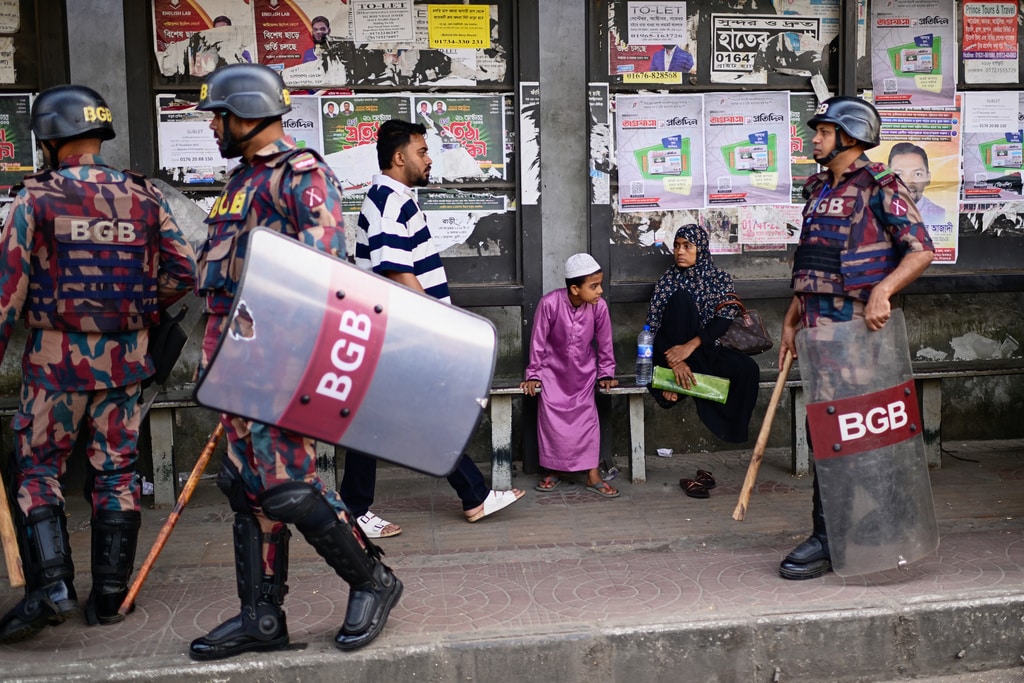
The government’s response? Violent, involving security forces and paramilitary border guards. According to the UN, about 1,400 people died.
Students began protesting in July 2024, angry about the quota system for civil service jobs. They wanted reforms to the system that reserved jobs for descendants of 1971 independence fighters.
Things started peacefully at universities across the country. Students argued the quota was unfair and blocked merit-based hiring.
Protests spread like wildfire from campus to campus. Social media fueled demonstrations in cities like Dhaka and Chittagong.
By August, the movement had gone beyond student issues. More citizens joined in, demanding political changes and Sheikh Hasina’s resignation.
Key dates:
Sheikh Hasina’s government cracked down hard. Security forces used tear gas, rubber bullets, and live ammunition on demonstrators.
The International Crimes Tribunal found evidence of “coordinated and systematic violence against unarmed civilians.” Prosecutors said this was crimes against humanity, plain and simple.
Paramilitary border guards joined police to suppress the protests. The government even sent in extra security units to control crowds.
They cut the internet and imposed curfews to stop people from organizing. Many protesters ended up in jail.
The tribunal ruled Sheikh Hasina ordered the deadly response. Asaduzzaman Khan was also found responsible for directing security operations.
A UN report estimated 1,400 people died during the protests and crackdown. Most were young protesters and civilians.
Hundreds more got injured by police and security forces. Many needed hospital care for gunshot wounds and other serious injuries.
Human rights groups documented excessive force by security personnel. They found police fired directly into crowds of unarmed protesters.
The tribunal said these killings were crimes against humanity. Evidence showed mass killings as part of systematic attacks on civilians.
International observers condemned the violence. Countries and human rights organizations called for investigations into the government’s response.
This case involves several major political figures from Sheikh Hasina’s administration and lays bare the deep divides in Bangladesh’s politics. Testimony from state witnesses has drawn attention to the bitter rivalry between the Awami League and the Bangladesh Nationalist Party.
Sheikh Hasina led Bangladesh as Prime Minister for over 15 years before fleeing to India in August 2024. She’d just won a fifth term a few months before everything unraveled.
Her administration faced heavy criticism for autocratic rule and human rights abuses. The tribunal found her guilty of ordering lethal force against student protesters in 2024.
From exile, Sheikh Hasina has denied all charges. She called the verdict “biased and politically motivated” right after sentencing.
“I’m not afraid to face my accusers in a proper tribunal where evidence can actually be tested,” she said after the court’s decision.
Asaduzzaman Khan was Home Minister during the 2024 protests. His ministry ran the police and security forces that cracked down on demonstrators.
Khan held major responsibility for law enforcement decisions. The Home Ministry’s orders shaped the government’s response to the protests.
As Home Minister, Khan coordinated security operations. His role put him at the center of the events that led to so many deaths.
State witnesses gave key testimony tying Sheikh Hasina and her officials to the deadly crackdown. Their accounts helped establish the chain of command during the violence.
The tribunal heard about official policies targeting protesters. A UN report even cited evidence that attacking anti-government demonstrators was official policy.
Several officials from Sheikh Hasina’s administration face charges alongside her. The co-accused include ministers and security officials who carried out the crackdown.
Up to 1,400 people may have died during the protests, according to the UN. Most deaths came from security forces opening fire.
The Awami League, Bangladesh’s oldest political party, can’t participate in the upcoming February elections. The party faces tough restrictions after Hasina’s ouster.
Opposition leaders like Mirza Fakhrul Islam Alamgir from the Bangladesh Nationalist Party have welcomed the verdict. The BNP calls this justice for years of political persecution under Sheikh Hasina.
Khaleda Zia, BNP chief and Hasina’s longtime rival, got out of prison after Sheikh Hasina fled. She’d been jailed in 2018 on what her party says were trumped-up corruption charges.
The two women—dubbed the “battling begums“—have dominated Bangladeshi politics since the 1990s. Their rivalry shaped the country for decades.
Sajeeb Wazed, Sheikh Hasina’s son, has defended his mother from abroad. He insists the charges are political and have no real legal basis.
Sheikh Hasina’s death sentence throws a wrench into diplomatic ties between India and Bangladesh. It also tests the interim government’s authority and shakes up Bangladesh’s political future under Muhammad Yunus.
Hasina’s still in exile in India after fleeing Bangladesh in July 2024. She faces execution, but as long as she’s abroad, that’s not happening.
Bangladesh asked India to extradite Hasina, but Delhi’s not having it. No sign they’ll hand her over—so, yeah, that’s a diplomatic standoff.
India’s refusal raises tough questions about regional cooperation. Tensions between Dhaka and Delhi are running high. Hasina’s presence in India shields her from the death penalty for now.
Her lawyers appealed to the UN, citing fair trial concerns. They argue the tribunal didn’t offer due process. Hasina wants the charges brought to the International Criminal Court in The Hague instead.
Honestly, the extradition issue could drag on for years. Hasina stays safe, but the diplomatic headaches just keep growing.
Muhammad Yunus leads the interim government after the uprising. The Nobel laureate took over when Hasina was ousted in July 2024.
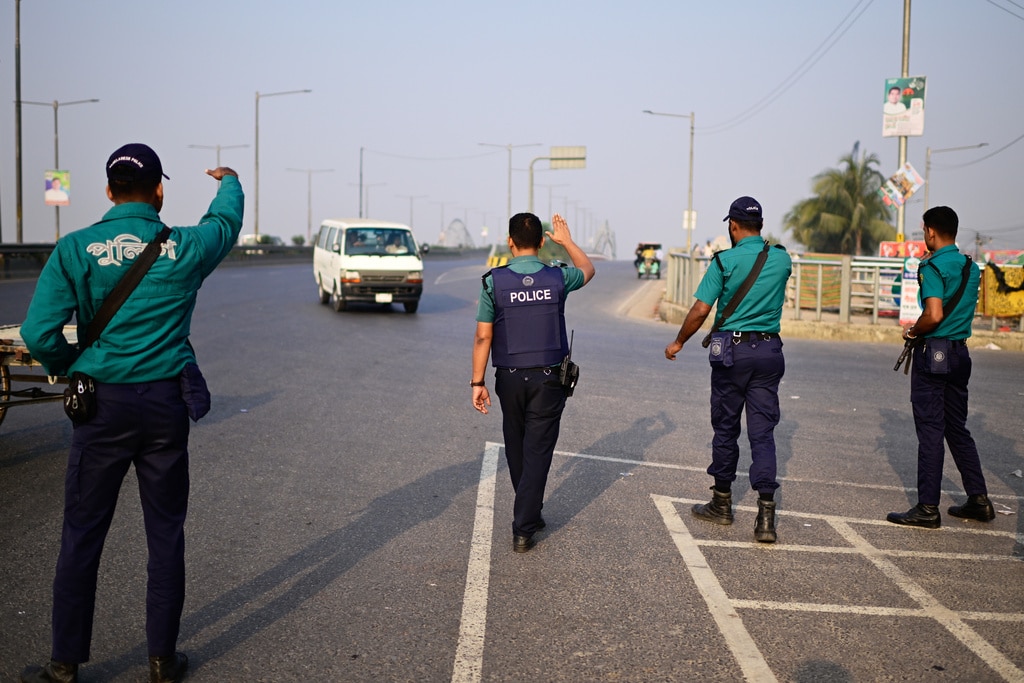
The government called Hasina’s sentence “historic” and “profound.” Officials urged calm, knowing emotions could boil over. Security was tight in Dhaka during the verdict.
Yunus’s administration banned Hasina’s Awami League in May 2025, knocking her party out of future elections. Parliamentary elections are set for February 2026.
They’re struggling to keep order. Bombs exploded and buses burned before the verdict. Even on sentencing day, a bomb went off in Dhaka—luckily, no injuries.
The interim government has to balance demands for justice with the need for stability. Families of victims want harsh punishment for Hasina and her associates.
The UN Human Rights Office didn’t have a simple reaction to the verdict. They called it an “important moment for victims” but, as always, stood firmly against the death penalty.
UN investigators documented around 1,400 deaths during the 2024 protests. Their February 2025 report suggested these deaths could be “crimes against humanity.”
They presented evidence of point-blank shootings and deliberate maiming of protesters. It makes you wonder what really went on in those chaotic days.
International observers are genuinely worried about Bangladesh’s political divisions. The sentence isn’t likely to heal deep splits between opposing groups.
Rights activists argue Hasina and her party haven’t shown any remorse for the killings. That attitude doesn’t exactly help the wounds close.
The verdict could shape Bangladesh’s democratic future in ways no one can fully predict. Political experts believe the Awami League will struggle to return to normal politics.
The party, they say, needs to apologize and distance itself from Hasina if it wants to regain public acceptance. Whether they’ll actually do that is anyone’s guess.
Bangladesh’s relationship with India is still tense over the extradition issue. This diplomatic standoff might affect regional stability and cooperation for years.
The death sentence handed to Sheikh Hasina has kicked up a storm of legal and political questions about Bangladesh’s justice system, international law, and the fallout from the 2024 student uprising that left up to 1,400 dead.
Sheikh Hasina got a death sentence for crimes against humanity tied to the brutal crackdown on student protests in July and August 2024. The International Crimes Tribunal-1 found her guilty of ordering security forces to use lethal weapons on protesters.
Justice Golam Mortuza Mozumder said the “accused prime minister committed crimes against humanity by her order to use drones, helicopters and lethal weapons” against demonstrators. The protests started over road safety but quickly turned into a massive anti-government movement.
The tribunal said Hasina both ordered and failed to stop the mass killings during the uprising. Her former Home Minister Asaduzzaman Khan Kamal also received a death sentence for his part in the violence.
UN estimates put the death toll at up to 1,400. The interim government’s health adviser reported over 800 deaths and 14,000 injuries after the crackdown.
The International Crimes Tribunal-1 (ICT-1) handed down the historic death sentence for Sheikh Hasina on November 17, 2025. It was the first time a former Bangladeshi head of government was convicted for crimes against humanity.
The tribunal indicted Hasina in June 2025 on charges linked to the crackdown. The ICT also gave her six months in prison for contempt of court in another case.
Former Inspector General of Police Chowdhury Abdullah Al-Mamun got a five-year sentence from the same tribunal after he turned state witness and testified against Hasina and Khan Kamal.
The tribunal ran all proceedings in absentia since Hasina fled to India in August 2024. Her supporters slammed the process as a “kangaroo court.”
Bangladesh law allows the death penalty for crimes against humanity under the International Crimes Tribunal Act. The tribunal found Hasina guilty of ordering lethal force and not stopping the killings.
The court sentenced her to “execution by hanging” based on evidence of her direct command. She faced five charges, including murder and crimes against humanity.
The death sentence isn’t final—she can appeal to higher courts. But the political drama and Hasina’s absence make the legal process even messier.
Bangladesh still uses capital punishment, ignoring international calls to abolish it. The country has executed people for war crimes and terrorism in the last few years.
The 2024 student uprising toppled Sheikh Hasina’s 15-year rule in August 2024. She had to flee and seek asylum in India.
An interim government led by Nobel Peace Prize winner Muhammad Yunus stepped in after Hasina left. This dramatic shift ended the Awami League’s long hold on power.
After the death sentence, the Awami League called for shutdowns and lockdowns nationwide. Dhaka and other cities saw crude bomb blasts, arson, and street clashes.
The verdict has turned Hasina into a martyr for her supporters and fired up the justice movement. Political violence and instability still haunt Bangladesh’s attempt at democracy.
The United Nations Human Rights Office called the sentencing “an important moment for victims” but regretted the use of the death penalty. The UN opposes capital punishment, no matter what.
India faces pressure to extradite Hasina under its agreement with Bangladesh. Her son said the Indian government has given her security and treated her “like a head of state.”
India’s official statement said it was committed to “the best interests of the people of Bangladesh, including in peace, democracy, inclusion and stability.” But New Delhi has ignored extradition requests for Hasina before.
International human rights groups are watching the case closely and questioning Bangladesh’s political stability. The proceedings are testing diplomatic ties between Bangladesh and India and drawing global attention to the justice process.
Bangladesh set up the International Crimes Tribunal (ICT) to go after war crimes and crimes against humanity. ICT-1 actually took on Sheikh Hasina’s case under this system.
Interim leader Muhammad Yunus called the verdict proof that Bangladesh’s justice system can hold people accountable. He also said it acknowledged the pain student protesters went through—finally, some recognition, right?
The tribunal lets courts run trials even if the accused isn’t there. This rule stirred up plenty of debate, but, honestly, it keeps the wheels turning when people don’t show up.
Folks who filed complaints against Hasina didn’t have it easy—they got death threats and plenty of intimidation. One guy even got creepy calls from France, warning him about “the consequences of filing a case against Sheikh Hasina.”