Newsletter Subscribe
Enter your email address below and subscribe to our newsletter


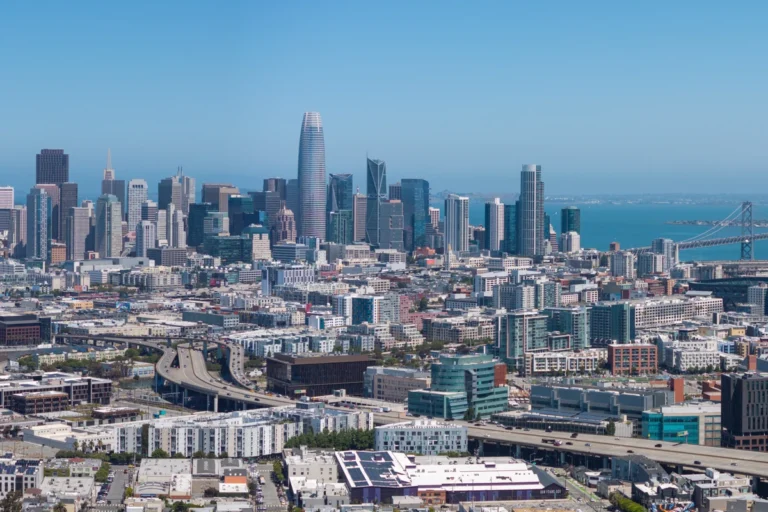
San Francisco, America's emptiest downtown, is a chilling blueprint for urban decay. Its catastrophe is a warning shot for your city.
Forget the postcard views. San Francisco, once the undisputed hub of American ambition, is now a chilling blueprint for urban decay.
Its downtown core isn’t just America’s emptiest; it’s a financial wasteland. Office vacancy rates have soared past 30%, and house prices have plummeted by over 20% from their peak. This isn’t just a local problem; it’s a warning shot for every ambitious professional and city leader across the nation.
Let’s be clear: this isn’t a blip on the radar. This is a full-blown economic catastrophe unfolding in real-time.
Where are the tech titans and the hungry entrepreneurs who once fueled its legendary buzz? They’ve fled, leaving behind eerily silent streets and office towers that stand as monumental tombs to a city that utterly lost its grip.
The raw data is damning. Reports from Reuters and CNBC confirm San Francisco’s downtown office vacancy rate has exploded from under 10% pre-pandemic to a staggering 30% or more today.
This isn’t merely a consequence of remote work; it’s a brutal indictment of a leadership class that utterly failed to grasp — or chose to ignore — a fundamental, irreversible shift in how we work and live. What exactly were they doing as their city bled out?
The human cost is immense. Local businesses — the coffee shops, lunch spots, and retail stores that gave the city character — have been crushed.
Thousands have shuttered their doors permanently, laying off employees and evaporating livelihoods. This isn’t some abstract economic theory; it’s a real-world ripple effect that decimates small business owners and leaves entry-level workers scrambling.
It drains the very soul from a once-vibrant community. Your career, your opportunities, your financial stability are directly tied to the health of the cities you operate in.
And then there’s the real estate market. Once a symbol of unattainable wealth, San Francisco house prices are now in a freefall, down over 20% from their pandemic-era peaks according to reports from The Guardian.
Property owners who bought at the top are now staring down massive losses, their equity evaporating. This isn’t just a hit to the ‘wealthy few’; it’s an erosion of generational wealth for countless families.
It’s a destabilizing force that impacts everything from local schools to municipal services. Don’t think this can’t happen where you live.
Here’s the terrifying truth: San Francisco isn’t an isolated incident. It’s a grim preview, a crystal ball showing what happens when a city loses its way. Urban economists and market strategists are sounding the alarm, warning us that this economic rot isn’t just contained; it’s already threatening to spread.
Think about it: any urban center that built its entire economic engine on the assumption of daily, in-person office work is now critically vulnerable. If companies continue to embrace hybrid or fully remote models – and all signs point to this being a permanent shift – the demand for expensive downtown real estate will continue its freefall.
This isn’t just about empty desks; it’s a vicious cycle: falling property values slash the tax base, leading to cuts in public services, increased crime, and a further exodus of residents and businesses. The downtown core becomes a ghost town, and the city’s future dims.
The message for city leaders is stark and uncompromising: adapt or face an identical fate. You must aggressively attract new industries, redefine urban spaces for a new era, and create genuine incentives for people to live, work, and innovate within your borders.
Blindly clinging to outdated models isn’t just a mistake; it’s a direct path to financial ruin and civic collapse. This isn’t a suggestion; it’s an imperative.
“This isn’t just a San Francisco problem anymore,” a leading urban strategist, quoted by CNBC, recently warned. “It’s a chilling blueprint for what happens when cities fail to pivot. The tax base shrinks, public services crumble, and the quality of life declines rapidly, creating a downward spiral that’s incredibly difficult to escape.”
For you, the ambitious individual striving for success, San Francisco’s spectacular downturn offers brutal, undeniable lessons. Proximity to opportunity still matters profoundly, but the very definition of ‘proximity’ has been fundamentally rewritten. No longer does it solely mean being physically present in a specific ZIP code.
If you’re an entrepreneur, you must critically assess the economic stability and future trajectory of your chosen location. High taxes, declining urban infrastructure, and a lack of public safety aren’t just inconveniences; they are existential headwinds no startup can afford.
The smart money isn’t chasing legacy names anymore; it’s flowing into cities actively cultivating growth potential, innovation, and a high quality of life. Where are you planting your flag?
And if you own property in any major city, this is your wake-up call. Ignore local economic indicators at your peril.
A thriving, vibrant downtown core is the bedrock of a strong property market. An empty, decaying one? That doesn’t just spell trouble; it signals a catastrophic devaluation of your most significant asset. Don’t wait for your investment to become a liability.
Never blindly follow the crowd. The ongoing tech exodus from San Francisco isn’t just a cautionary tale; it’s proof positive that even the most established, seemingly invincible hubs can crumble under the weight of mismanagement and changing realities. Your career trajectory, your financial security, and your long-term success depend entirely on your foresight, your adaptability, and your willingness to make tough, strategic decisions, not on a romanticized nostalgia for ‘how things used to be.’
Let’s be brutally honest: the catastrophic situation in San Francisco isn’t some unforeseen act of God. It’s a direct, undeniable consequence of chronic inaction, misplaced priorities, and a stunning lack of foresight from its leadership. While the world shifted, they stood by, paralyzed, watching as their once-proud city hollowed out from the inside.
This isn’t just a local tragedy; it’s a thunderous wake-up call for every mayor, every city council, and every urban planner across the nation. Ignoring the glaring signs of decline isn’
Photo: Wikimedia Commons (query: San Francisco downtown)
Source: Google News