Newsletter Subscribe
Enter your email address below and subscribe to our newsletter

Enter your email address below and subscribe to our newsletter
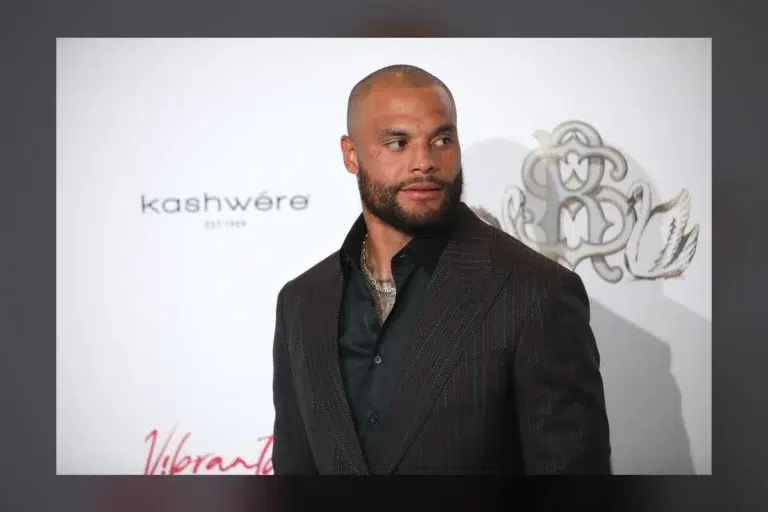
Dak Prescott's canceled wedding and sudden "safety" claims? We're calling out this PR masterclass in damage control.
The “amicable split” narrative? Let’s be real, it’s often a convenient fiction, a public relations balm we apply to messy realities. Dak Prescott’s wedding is reportedly off, and suddenly, the airwaves are filled with talk of “daughters’ safety”—a suspiciously well-timed shield for a very public breakup. This isn’t just a breakup; it’s a masterclass in damage control, and it’s time we called it out.
Dallas Cowboys star Dak Prescott has indeed confirmed his split from ex-fiancée Natalie Buffett. Their wedding, which was to be a lavish affair in Lake Como, has been canceled. The whispers circulating suggest a far less romantic reason than a simple parting of ways: allegations of infidelity against Prescott during their three-year relationship.

Sources close to the situation claim Prescott was caught “red-handed” during the couple’s separate bachelor and bachelorette parties. This alleged discovery reportedly led Buffett to call off the high-profile wedding. In the aftermath, Prescott’s team swiftly released a statement, conspicuously pivoting the focus to his daughters’ “safety and well-being.”
Prescott’s sudden, public concern for “safety” is a move we’ve seen countless times before. When a man in the public eye faces scrutiny for his actions, particularly in relationships, deploying the “children as a shield” tactic is a classic deflection. It subtly shifts the narrative away from the real story—a broken engagement allegedly due to his own behavior—and instead paints him as the protective, responsible father. It’s a powerful, yet often disingenuous, way to garner public sympathy.
Let’s be clear: this isn’t genuinely about shielding children from the paparazzi or media intrusion in a way that couldn’t have been handled privately. This is about protecting a carefully curated public image. It’s about controlling the narrative after a very public relationship implosion. Natalie Buffett, who is navigating her own heartbreak and public scrutiny, deserves far more than to be an afterthought in his PR spin. Her feelings, her reality, seem to be secondary to his public image.
Consider Natalie Buffett’s position. She was engaged to a high-profile athlete, her life intertwined with his. Now, her wedding is canceled, allegedly due to infidelity. And what’s the immediate public discourse? It shifts to his children’s safety. What about her emotional well-being? What about the intense, often brutal, public scrutiny she must be facing?
Women in these situations carry an immense “invisible load.” They deal with the profound heartbreak of a broken engagement, often compounded by betrayal. They face the relentless glare of public scrutiny, judgment, and speculation. Crucially, they are often systematically erased from the story, their pain and perspective minimized as the man crafts his own, more palatable narrative. This isn’t “amicable.” This is strategic, and it’s deeply unfair.
We, as a society, often desperately want to believe the best in our sports heroes and public figures. We want to believe they are honorable, good fathers, and exemplary men. So, when Prescott speaks about his daughters, many are quick to nod in agreement, often overlooking the messy, inconvenient details that led to the breakup in the first place.
This narrative plays directly into a deeply ingrained societal expectation: that women should quietly absorb the fallout of a man’s missteps. It subtly reinforces the idea that a man’s career, his public reputation, and his comfort are somehow more important than the raw, inconvenient truth of a relationship’s demise. It’s not just frustrating; it’s utterly exhausting for women who constantly navigate these double standards.
“My focus right now is on my daughters and ensuring their safety and well-being during this time.” – Dak Prescott (as reported by CNN)
This statement, as reported by major news outlets like CNN, is a masterclass in strategic communication. It’s meticulously crafted to elicit sympathy and admiration. It deftly diverts attention from the alleged infidelity and positions him as a responsible, caring parent. It’s a classic move designed to control the narrative.
Let’s be brutally honest: there are very few truly “amicable” splits when infidelity is involved. Someone is deeply hurt. Someone feels profoundly betrayed. To frame such a situation as a smooth, mutual decision is not just disingenuous; it’s a way to silence the pain and invalidate the experience of the injured party.
What does “safety” even mean in this context? Is it about shielding his children from paparazzi, a challenge many public figures manage without such overt public statements? Or is it about shielding them—and the public—from the uncomfortable truth of why their father’s wedding was called off? Children are far more perceptive than we often give them credit for. They pick up on unspoken tensions and inconsistencies, and a carefully constructed narrative might not be as impenetrable as some hope.
This situation serves as a stark, frustrating reminder. Women are constantly, implicitly and explicitly, told to overlook red flags, to accept less than they deserve, and to quietly clean up the emotional mess when a man fails to live up to his commitments. It’s a pattern that needs to be broken.
We need to stop buying into these carefully constructed narratives that prioritize a man’s public image over genuine accountability. We need to start asking tougher questions. We need to demand more honesty, more transparency, and more respect, especially from public figures who wield significant influence.
Dak Prescott’s personal life is, ultimately, his own. But when he makes a public statement designed to shape perception, it absolutely becomes fair game for scrutiny. And that statement, so heavily focused on “safety” in the wake of alleged infidelity, feels less like genuine concern and more like a well-worn smokescreen. It’s a familiar playbook, and frankly, we’re tired of reading it.
When will we, as a society, start acknowledging the true, often devastating, cost of these “amicable” separations on the women caught in their wake? What’s the most infuriating “amicable split” story you’ve ever encountered, and what did it truly cost the woman involved?
Photo: Photo by Gage Skidmore on Openverse (flickr) (https://www.flickr.com/photos/22007612@N05/53695421448)
Source: Google News