Newsletter Subscribe
Enter your email address below and subscribe to our newsletter

Enter your email address below and subscribe to our newsletter
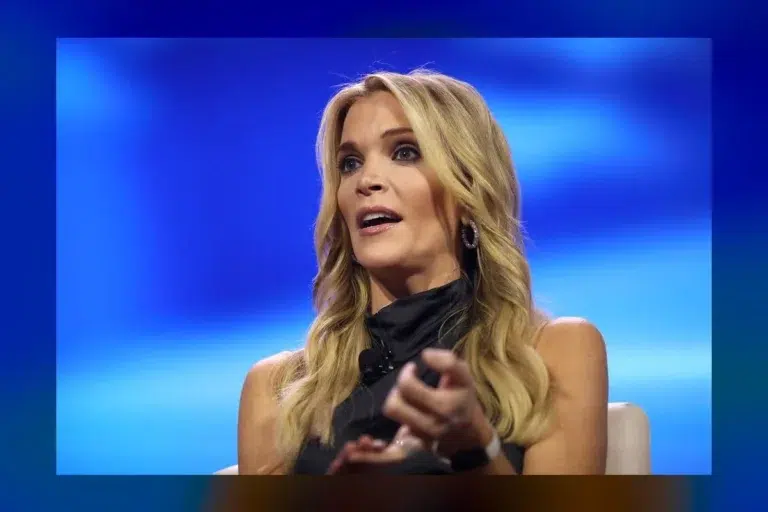
Megyn Kelly's "no shame" health revelation is anything but. We expose how her "treatment" is just another celebrity Ozempic grift.
Megyn Kelly, ever the provocateur, recently dropped a bombshell: a secret “treatment” has utterly transformed her health. This isn’t a confessional; it’s a calculated play, another celebrity cashing in on the GLP-1 craze with all the subtlety of a sledgehammer.
Her sudden, almost theatrical, transparency feels less like an honest sharing of personal truth and more like a meticulously orchestrated PR stunt. The timing? Impeccable. The motive? Transparent. This isn’t about genuine health advocacy; it’s about monetizing access and peddling a narrative, not sharing inconvenient truths.

Kelly, a media personality whose brand thrives on controversy, recently trumpeted a profound health transformation. She credits an unspecified “treatment,” declaring with a performative flourish, “There’s no shame in it.”
These pronouncements weren’t whispered in confidence; they were broadcast loudly on her SiriusXM show, “The Megyn Kelly Show,” and amplified across her social media channels. The implication is as clear as a freshly polished diamond: she’s almost certainly leveraging a GLP-1 agonist.
For the uninitiated, these drugs were initially designed to treat type 2 diabetes. Now, they’ve become the darling of the weight management world, with names like Ozempic, Wegovy, and Mounjaro dominating headlines and dinner party conversations.
Kelly’s steadfast refusal to name the specific drug isn’t an oversight; it’s a strategic maneuver. This calculated vagueness allows her to control the narrative, to reap the benefits of the “transformation” without the direct, sometimes scrutinized, association. She wants the glow, not the glare.
Her descriptions of improved energy, enhanced metabolic health, and, crucially, significant weight loss, mirror precisely the well-documented effects of GLP-1 agonists. She even casually mentioned their widespread adoption among her peers – a statement that isn’t groundbreaking news, but rather a tacit confirmation of what everyone already suspects.
Kelly’s sudden embrace of a “no shame” stance rings hollow for many, and frankly, it should. This is the same Megyn Kelly who, during her tenure at Fox News, frequently launched tirades against body positivity, often targeting individuals who dared to exist outside a narrow, conventional mold.
Now, she champions a “shame-free” approach to weight loss, a jarring pivot that screams hypocrisy from the rooftops. The internet, bless its unforgiving memory, has not forgotten her past pronouncements.
Social media platforms have, predictably, erupted with cynicism. Users on Reddit’s r/Fauxmoi and r/BravoRealHousewives didn’t mince words, labeling her actions as “performative wellness grift.” Many believe she’s been on these drugs for an extended period, citing her noticeable “podcast glow-up” as compelling evidence. The visible shrinking of her jawline in recent photos only adds fuel to this already blazing fire of speculation.
Twitter/X users, never ones to shy away from a hot take, have piled on with sarcastic theories, largely converging on the idea that she’s shrewdly monetizing her weight loss. They view it as yet another celebrity endorsement, expertly timed to coincide with what many are calling the “Ozempic-saturated hellscape.”
Is this truly about health? Or is it simply about riding a lucrative wave, perfectly timed to maximize personal gain? The public, with a collective eye-roll, seems to overwhelmingly lean towards the latter.
Let’s talk brass tacks: GLP-1 agonists are prohibitively expensive. A monthly supply can set an individual back anywhere from $900 to a staggering $1,400. Many insurance plans, despite the clear health benefits, still do not cover these medications for weight loss alone. This creates an insurmountable barrier for the vast majority of Americans.
Kelly’s carefully constructed narrative conveniently sidesteps this harsh reality. She, with her access to top-tier medical care and substantial financial resources, can easily afford these medications. Most Americans, struggling with rising healthcare costs and stagnant wages, simply cannot.
Her story, focused on individual choice and personal triumph, blithely ignores the crushing financial burden and the profound ethical dilemmas these drugs present. What about the still-unfolding long-term effects? What about the critical shortages that leave diabetic patients, for whom these drugs are often life-saving, scrambling for their prescriptions?
The market for these drugs isn’t just booming; it’s exploding, projected to hit an astronomical $100 billion by the early 2030s. Celebrity endorsements like Kelly’s don’t just fuel this growth; they act as rocket fuel, creating insatiable demand, driving up prices, and perpetuating the myth that these drugs are a magic bullet. They conveniently gloss over the true, often devastating, cost for everyday people.
Is this genuine medical progress, democratically available to all? Or is it simply another stark example of the wealthy leveraging their privilege to gain an advantage, leaving the rest of us in the dust? It feels undeniably like the latter – a glaring example of elite access while the majority struggles with a broken healthcare system.
Kelly’s carefully curated openness is being framed by some as brave, as a courageous act of destigmatization. But is it, truly? Or is it merely a shrewd, calculated business maneuver, designed to bolster her brand and expand her influence?
As a media personality, her very livelihood, her empire, hinges on public perception and constant relevance. A “health transformation,” particularly one shrouded in just enough mystery, is a goldmine for business. It generates buzz, attracts new followers, and, most importantly, opens lucrative doors for new sponsorships and partnerships.
The “no shame” message isn’t just a statement; it’s a shield, deflecting potential criticism and positioning her as a trailblazer. She’s not merely losing weight; she’s, ostensibly, starting a movement. This isn’t accidental; it’s strategic, a masterclass in personal branding.
Let’s be clear: this isn’t about genuine health advocacy. This is about personal branding, about expertly monetizing a trend, and about maintaining a firm grip on relevance in an ever-shifting media landscape. It’s another glaring example of the wellness industry at its most cynical, preying on insecurities and promising quick fixes.
We, the audience, deserve more from our public figures. We deserve unvarnished honesty, unassailable transparency. We don’t need vague pronouncements or thinly veiled celebrity grift. We need real solutions, accessible healthcare for all, and leaders who are committed to addressing systemic issues, not merely those who profit handsomely from them.
Photo: Photo by Gage Skidmore on Openverse (flickr) (https://www.flickr.com/photos/22007612@N05/53067782478)
Source: Google News