Newsletter Subscribe
Enter your email address below and subscribe to our newsletter

Enter your email address below and subscribe to our newsletter
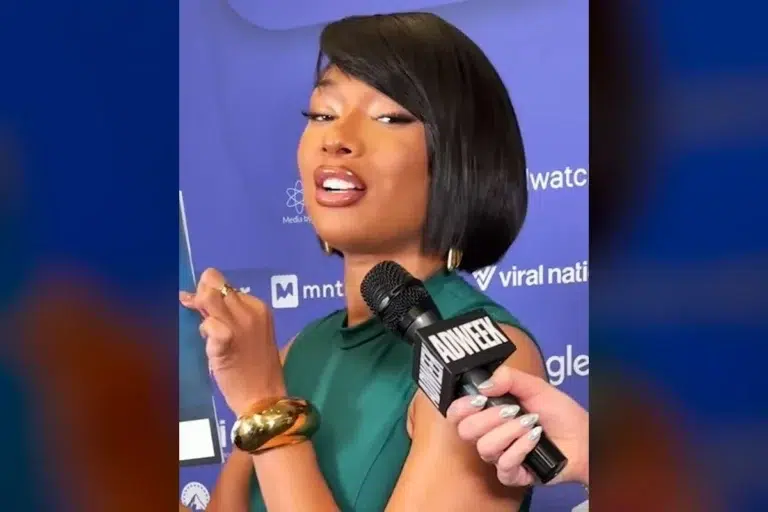
Megan Thee Stallion's "collapse" at her Moulin Rouge! debut sparked a Reddit firestorm, with 15,000+ upvotes fueling claims of a PR stunt.
Let’s be brutally honest: when Megan Thee Stallion “collapsed” during her Moulin Rouge! debut, the internet didn’t just side-eye it; it tore the narrative to shreds. The public isn’t just “not buying it”—they’re actively selling the idea that this was a masterclass in PR manipulation, not a genuine medical emergency. This isn’t just about one celebrity’s health; it’s a chilling indictment of how readily we, as a society, dismiss and distrust women in the unforgiving glare of the spotlight.
On March 30, 2026, the superstar rapper took the stage for her special cameo as Madam Zidler at the Al Hirschfeld Theatre. The reports came in a flurry: Megan appeared disoriented, clutched her chest, and reportedly collapsed backstage during a quick costume change. Paramedics were summoned. She was transported to Mount Sinai West. Her publicist issued the standard “recovering and in stable condition” statement. But the internet, that vast, unforgiving echo chamber, didn’t just doubt it; it erupted in a cacophony of outright disbelief.

Go ahead, scroll through Reddit, X, or TikTok, and you’ll find a digital autopsy of this incident. Threads on r/popculturechat and r/Fauxmoi didn’t just gain traction; they exploded with over 15,000 upvotes each. Users weren’t hinting; they were screaming, “Staged AF.” Their primary piece of evidence? The timing. Her “rushed to hospital” exit conveniently coincided with her historic debut as the first woman to ever step into the iconic Zidler role. Coincidence? Or calculated move? The masses have made their judgment.
The skeptics aren’t just loud; they’re forensic. They point to the glaring absence of paparazzi photos of an ambulance, a rarity in the age of constant celebrity surveillance. There were no leaked medical details beyond vague “symptoms being evaluated.” Her publicist’s statement? “Boilerplate,” they sneer, branding it a “PR script.” One viral X thread, boasting over 50,000 likes, quipped, “She’s allergic to flopping on stage – this is her out before reviews tank.” This nasty jab didn’t just question her health; it cruelly linked it to her post-Tory Lanez “victim” narrative. Others, equally venomous, dismissed it as a “Megan-Kardashian ploy” for sympathy streams, a cynical grab for relevance. Memes, those brutal instruments of public opinion, depicted her “ill” from twerking or suffering from “acute relevance deficiency.” The internet, it seems, has no chill.
Perhaps the most cutting criticism has come from Black Twitter, a community that often holds its own to the highest standards. “First Black Zidler? More like first publicity stunt,” one user declared, cutting deep. “Girl, you rap about hot girl summers, not can-can collapses.” The comparisons are brutal, invoking the likes of Kanye West’s erratic behavior or Britney Spears’ very public breakdowns, all fueling the “attention whore era” narratives. TikToks, some garnering over 200,000 views, openly allege this is nothing more than promo for her upcoming May 17 run, or a desperate tour cash-grab before the show’s July close. This isn’t just shade; it’s a full-blown eclipse of trust.
But let’s be clear: this isn’t solely about Megan Thee Stallion. This is about a deeply disturbing, pervasive pattern. When a female celebrity faces any form of crisis, our default setting isn’t empathy; it’s suspicion. We immediately assume manipulation, a carefully orchestrated scheme. Why is it that our first, often unthinking, instinct is to disbelieve women—especially Black women—who are in entertainment?
Beyond the vitriol, this incident should force us to confront uncomfortable questions about performer welfare. Broadway is not for the faint of heart; it’s a relentless grind. Combine that with the demands of a global music career, and the physical and mental toll can be immense. Studies, like those published by Reuters Health, consistently highlight the alarming rates of burnout and stress among performers. Yet, the public’s reaction suggests these legitimate concerns are secondary, if not entirely irrelevant. The narrative shifts from health to perceived deception. Why do we so readily deny the humanity of those who entertain us?
Performers collapsing on stage is hardly a novel phenomenon. The legendary tenor Luciano Pavarotti famously canceled shows due to illness. Julie Andrews, a vocal icon, tragically lost her singing voice. Pop titans like Adele and Lady Gaga have openly spoken about the crushing physical and mental toll of their careers. Yet, when Megan Thee Stallion experiences something remotely similar, it’s immediately branded a “fake.” Is it because she’s a rapper, a genre often unfairly demonized? Or is it simply because she’s a woman, and therefore, her pain is inherently suspect?
This pervasive cynicism isn’t just a flaw in our character; it’s a symptom of a much larger, more insidious problem. We demand that women in entertainment be superhuman. They must be flawless, perpetually “on,” and utterly impervious to the pressures that would crush mere mortals. The moment they show a flicker of weakness, a hint of vulnerability, we don’t offer support; we attack. We accuse them of attention-seeking, of manufacturing drama, and then we gleefully tear them down from the pedestals we ourselves built for them.
This incident vividly highlights the intense, microscopic scrutiny faced by women in the public eye. Their every move is judged, their narratives are often hijacked and controlled, and their genuine pain is too frequently dismissed as theatrics. We conveniently forget that these are human beings, flesh and blood, experiencing immense pressure and relentless schedules. When did empathy become such a scarce commodity?
The “Moulin Rouge!” production, as expected, expressed well wishes. Megan’s publicist, predictably, asked for privacy. But the public response? It’s been overwhelmingly negative, a ravenous feeding frenzy of speculation and judgment. What does this collective reaction say about us, the audience, the consumers of celebrity spectacle?
Have we become so jaded, so utterly distrustful, that our first impulse is always to assume the worst? This isn’t just about Megan Thee Stallion anymore; it’s a mirror reflecting our own biases and the disturbing way we consume celebrity news. It’s a stark measure of our collective empathy, or rather, our alarming lack thereof.
This incident could have been a pivotal moment for a real, meaningful conversation about the human cost of fame, about the immense pressures placed on performers. Instead, it devolved into yet another opportunity to tear a successful woman down. We must do better. We must actively question our own biases, challenge our preconceived notions, and extend grace, not immediate, venomous condemnation. #TruthEdit
Source: Google News