









Newsletter Subscribe
Enter your email address below and subscribe to our newsletter


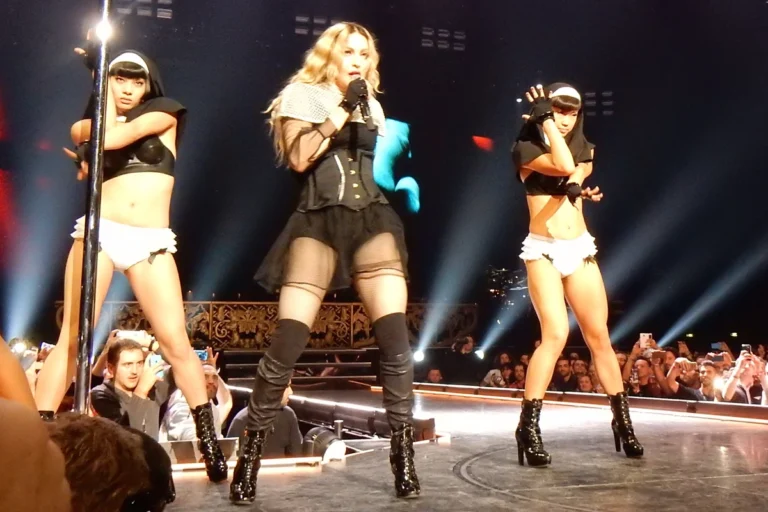
Madonna's awkward VMA comeback exposes industry ageism, revealing how Hollywood clings to youth while sidelining legendary icons like her.
Madonna’s stumble onto the VMAs stage at 68 was more than a misstep—it exposed how the industry clings to youth at the expense of its icons. Her performance, once legendary, now felt like a painful reminder that even the Queen of Pop isn’t immune to aging’s toll.
She kicked off MTV’s biggest night with her signature style—futuristic metallics and hits reimagined with multimedia effects. But the crowd’s excitement quickly soured. Instead of fireworks, viewers saw a fading star struggling to keep up.

Performing “Like a Prayer,” “Vogue,” and “Hung Up,” her voice strained, her dance sluggish. Critics called it a “nostalgic tribute” that fell flat—more sad than inspiring.
Fans on Twitter and TikTok echoed the sentiment: this wasn’t a triumphant return but a stark reminder that icons are human. One tweet summed it up: “Madonna is a legend, but tonight’s performance felt like a shadow of her former self. It’s hard to watch her struggle.”
The social media backlash was swift. Fans who admired her provocative past now saw a fragile figure battling her body. Was her age the issue, or had she ignored the toll of decades on tour? The line between admiration and concern blurred.
Critics echoed this view. A Variety journalist noted her appearance was “a reminder of her pioneering spirit, but also of the toll that touring and aging can take.”
“This performance exposes a harsh truth: the industry still worships youth, even if it means sidelining its icons,”said cultural critic Lisa Monroe.
Madonna’s VMAs moment highlights a brutal double standard: why do we demand icons stay forever young? At 68, she’s among the oldest to headline a major awards show, yet her physical decline is undeniable.
Her brief post-performance statement, thanking fans and citing her “love for performance,” sounded hollow. Industry insiders suggest she’s shifting toward curated appearances rather than grueling tours—an intelligent move, or a sign of resignation? The line between resilience and capitulation is razor-thin.
This isn’t just about Madonna. It’s about a system that refuses to accept aging as natural. Instead, it treats aging as a flaw—an inability to stay relevant—rather than a badge of wisdom.
Madonna’s appearance reignited debate about ageism. Why celebrate performers at 40 but dismiss those at 70? Shouldn’t resilience, influence, and stories etched into faces be valued?
The industry’s unspoken rule remains: youth sells, relevance fades, and aging icons become relics. Madonna’s frailty exposes this hypocrisy—her legacy is undeniable, but society undervalues aging artists. Will we rewrite these narratives or discard them once bodies no longer conform?
The villain isn’t just Madonna. It’s a system that refuses to evolve. The entertainment industry worships eternal youth—punishing those who age publicly and rewarding perpetual novelty.
Her decision to perform at 68 was a gamble—either brave defiance or desperate relevance. Neither. It was a brutal reminder that public perception is merciless. Her visible decline drew gasps, and disappointment was palpable.
What’s next? Icons like Madonna will likely favor curated appearances over exhausting tours. It’s a smart move—protecting legacy and health. But the industry must change.
Icons shouldn’t be punished for aging; they should be celebrated for resilience. The key question: can entertainment finally accept aging as a natural, valuable part of life?
Madonna’s VMAs debut at 68 was a raw, uncomfortable reminder: aging is inevitable, and society’s refusal to respect it is cruel. Her performance laid bare the harsh truth—time waits for no one.
Will future icons be allowed to age gracefully, or will they be discarded for not fitting youth-obsessed standards? The answer depends on whether society can accept that age is just a number—and that true legacy is built on resilience, influence, and stories over decades.
Madonna has become a mirror of our obsession with youth. The real question: how long before the industry stops punishing aging legends simply for living their stories?
Source: Google News