Newsletter Subscribe
Enter your email address below and subscribe to our newsletter


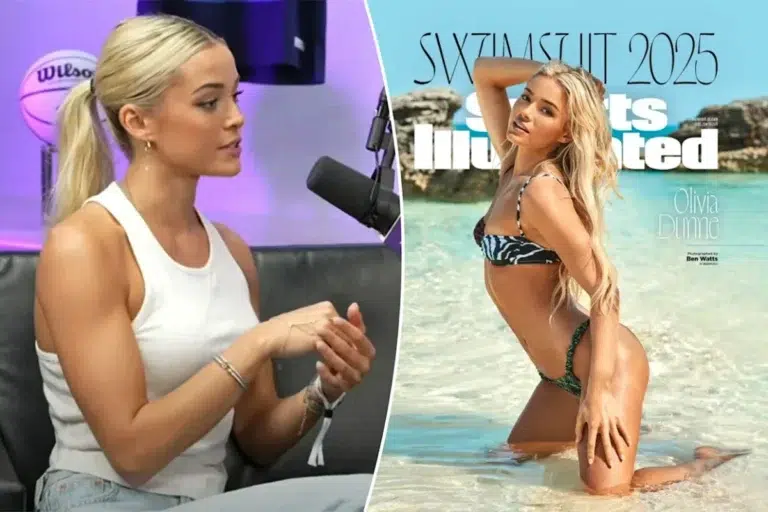
Livvy Dunne, known for promoting detox, joins the Baywatch reboot. Is her new role a genuine move or a calculated performance? Explore the debate.
Livvy Dunne has built a brand on transparency, mental wellness, and the gritty reality of online life. So, when she offered a “behind-the-scenes” glimpse into her Baywatch reboot role, many expected an authentic peek. Instead, it feels less like a genuine reveal and more like a meticulously staged performance, raising a crucial question: Is this simply another calculated move in the relentless pursuit of attention, or can genuine self-care truly coexist with the demands of viral fame?
The LSU gymnast and social media sensation is set to play Grace, a “highly enthusiastic” junior lifeguard, joining a cast that includes Hassie Harrison, Brooks Nader, and TikTok personality Noah Beck. This ensemble, touted as “star-studded,” has already become a lightning rod for online criticism, fueling a fierce debate about authenticity and ambition.

Dunne has consistently championed the importance of setting boundaries, disconnecting from screens, and prioritizing genuine rest and recuperation. Her message resonated deeply with a generation grappling with digital burnout. Yet, the irony isn’t lost on many: here she is, diving headfirst into a high-profile project that critics are already savaging. Can one truly advocate for digital detox while simultaneously embracing a role that guarantees maximum exposure?
The public reaction has been undeniably brutal. From every corner of the internet, netizens are declaring the reboot “peak influencer grift,” dismissing it as a desperate, uninspired move from a Hollywood machine increasingly out of touch with genuine talent.
Her Baywatch casting, in particular, has ignited a firestorm of outrage. Critics are quick to label it a “woke cash-grab,” packed with familiar faces like SI Swimsuit models, arguing vehemently that genuine acting talent has been sidelined in favor of social media metrics. The cries of a “nepo-baby apocalypse” echo across platforms, suggesting a systemic issue rather than an isolated incident.
Her undeniable LSU gymnastics fame, coupled with her boyfriend Paul Skenes’ rising baseball star, only fuels these privilege claims. In a world increasingly wary of unearned success, the perception of a golden ticket, rather than raw talent or hard work, makes people unwilling to hold back their harshest judgments.
On platforms like Reddit, communities such as r/television and r/popculturechat are absolutely exploding with commentary. Threads boasting over 2,000 upvotes are already mockingly dubbing it “Baywatch: Influencer Edition,” with many predicting a dismal 4.2 IMDb flop – a score even lower than the critically panned 2017 film.
Meanwhile, X users are relentlessly ‘ratioing’ her “behind-the-scenes” selfies, burying them under a deluge of critical replies. Comments range from the darkly sarcastic:
Behind-the-scenes of unemployment simulator.
To the biting and cynical:
Baywatch now stands for ‘Bimbos And Yachts Watching TikTok’.
This isn’t just criticism; it’s a digital public shaming, relentless and deeply personal.
Dunne has, in the past, openly shared her personal self-care strategies, painting a picture of intentional living. She emphasized the critical need for time dedicated to quiet reflection, the importance of cultivating hobbies entirely unrelated to gymnastics or her meticulously curated public image, and the grounding power of nurturing close relationships with family and friends. These were not just platitudes; they were presented as essential anchors in a turbulent digital sea.
But the crucial question now looms: How do these carefully constructed strategies hold up against such a relentless, brutal public onslaught? It’s one thing to eloquently discuss the importance of boundaries and self-preservation; it’s an entirely different, far more challenging battle to actually enforce them when your entire career, and indeed your financial livelihood, hinges on constant public visibility and engagement.
Her initial openness about mental health was genuinely significant, a brave step that confronted the often-glamorized, perpetually positive influencer narrative. She offered a more nuanced, realistic portrayal of online life, giving permission to countless young people to acknowledge their own struggles. This was empowering.
Yet, from this perspective, her latest career move feels less like progress and more like a significant step backward. It appears to be a blatant, almost desperate, grab for mainstream attention, one that actively invites the exact mental health pressures and relentless public scrutiny she so eloquently warned against.
The internet, ever cynical, is rife with sarcastic theories. Some are calling it a “softcore porn reboot” masquerading as family entertainment. Others suggest it’s merely a thinly veiled attempt to capitalize on nostalgia, with wilder claims even alleging NIL money laundering is somehow funding the production, and that Dunne’s reported $3M+ deals are what truly bought her a “recurring role,” rather than acting prowess.
This entire situation throws into sharp relief the immense, often unbearable, pressure placed upon young public figures. It starkly reveals the fragile, almost invisible, line between genuine self-preservation and the relentless demands of career ambition. Dunne’s previous transparency, her willingness to show vulnerability, had served as an important, empowering lesson in self-advocacy for a generation dealing with similar digital pressures.
But now, her current choices invite uncomfortable, yet vital, questions: Can one truly advocate for profound mental wellness and digital boundaries while simultaneously chasing every high-profile gig that promises greater visibility? Or is the siren call of mainstream fame, with its glittering promises and fleeting rewards, simply too strong to resist, no matter the personal cost to one’s peace of mind?
The core issue isn’t about blaming Livvy Dunne for seizing an opportunity; it’s about acknowledging the brutal, often unforgiving, reality of the entertainment industry. It’s a powerful, sobering reminder of how quickly even the most well-intentioned “self-care” principles can be swallowed whole by the insatiable demands of the fame machine.
The mental toll of constant exposure, relentless scrutiny, and vitriolic criticism is immense, often leaving scars unseen. There’s a cruel, almost tragic, irony in witnessing someone who once championed mental wellness now enduring such a public, brutal mental gauntlet.
The Baywatch reboot isn’t just a test for Livvy Dunne’s acting chops; it’s a stark, public examination of her commitment to the very wellness principles she espouses. Will her self-care strategies prove resilient enough to withstand the storm, or will this entire chapter reveal that the pursuit of fame, for some, is simply an irresistible current, sweeping away even the most earnest intentions of self-preservation? Perhaps the real “behind-the-scenes” story here is the ongoing, often painful, negotiation between authenticity and ambition in the unforgiving spotlight.
Source: Google News