Newsletter Subscribe
Enter your email address below and subscribe to our newsletter

Enter your email address below and subscribe to our newsletter
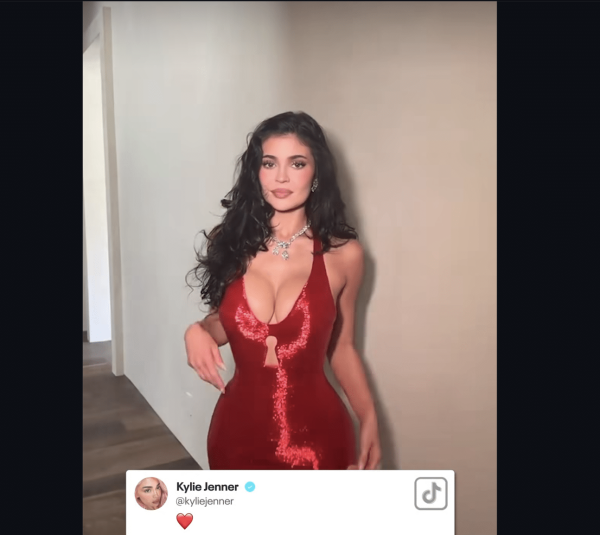
Kylie Jenner's red sequin dress ignited a fiery debate. Was it a fashion triumph or a disaster? We dissect the internet's polarized reactions.
“Red hot nights 🔥” — a simple Instagram caption from Kylie Jenner, yet it ignited a wildfire across the internet, sparking a debate hotter than any red carpet. Was her latest sequined ensemble a fashion triumph or a sartorial misstep? The moment those photos dropped, showcasing her in a striking high-neck, long-sleeved, thigh-high slit red sequin dress, the internet collectively gasped, then immediately chose sides. And honestly, who could blame us? This wasn’t just a dress; it was a declaration, a conversation starter, and ultimately, a masterclass in celebrity brand management.
But here’s the real question that keeps me up at night, scrolling through endless comment sections: Why do we care so much? Why does a single outfit worn by one of the world’s most photographed women provoke such intense, polarized reactions? Is it the dress itself, or the woman wearing it? And what does this tell us about our own relationship with fashion, celebrity, and the relentless churn of social media? Let’s peel back the sequins and really get into it.
Let’s dive into the anatomy of this viral fashion moment, because believe me, it’s far more than just a dress.
Kylie Jenner stepped out in an all-red, all-sequined gown, and the internet exploded. Within 24 hours, her initial Instagram post racked up over 10 million likes, and on X, mentions of “Kylie Red Dress” surged by a staggering 300%. This isn’t just organic buzz; this is a carefully orchestrated moment, whether Kylie intended it or not. The dress itself is undeniably bold. Head-to-toe sequins, a high neck for a touch of demure elegance, contrasted sharply with a dramatic thigh-high slit that screams unapologetic sex appeal. It’s a classic silhouette, amplified by an audacious fabric choice.
Some lauded it as “everything! Absolute showstopper” (as @FashionistaFan declared on X), celebrating its unabashed glamour. They saw confidence, power, and a woman owning her space. And I agree, there’s an undeniable magnetism to a sequined gown. It harks back to old Hollywood glamour, to divas like Marilyn Monroe and contemporary queens like Beyoncé, who have all leveraged the shimmering power of sequins to command attention. There’s a reason sequins have never truly gone out of style; they embody celebration, luxury, and a joyful defiance of subtlety. They are, quite simply, magic woven into fabric.
However, others, like @StyleCritique, found it “a miss… It feels a bit dated and overwhelms her.” And I understand that perspective too. The line between dazzling and gaudy can be razor-thin when it comes to sequins. There’s a risk of looking like a disco ball if not executed with finesse. Was this dress too much? Did it wear Kylie, rather than Kylie wearing it? This is where personal taste, and perhaps a touch of celebrity fatigue, come into play. It’s a valid question to ask: in an era of quiet luxury, does such overt maximalism still resonate, or does it feel like a relic from a bygone era?
But this debate, this immediate, visceral “hit or miss” judgment, is precisely what makes Kylie Jenner a fashion force. She thrives on these conversations, on being the subject of our collective gaze. Her fashion choices are rarely neutral; they are designed to provoke, to inspire, and yes, sometimes, to divide. And in doing so, she keeps herself not just relevant, but absolutely central to the fashion discourse.
Why red? Why sequins? The color red is universally associated with passion, power, and danger. It’s impossible to ignore. Combine that with the light-catching, attention-grabbing nature of sequins, and you have an outfit designed to stop traffic – both literally and metaphorically. This isn’t a coincidence. Kylie understands the visual language of fashion, and she wields it like a master artist. The dress wasn’t just a garment; it was a carefully constructed symbol, a beacon demanding our attention. It tapped into our primal responses to color and shine, making it almost impossible to scroll past without forming an opinion. This isn’t just about aesthetics; it’s about psychology. We are hardwired to react to such visual stimuli, and Kylie, knowingly or unknowingly, plays into that beautifully.
Moreover, the choice of a high-neck, long-sleeved silhouette, punctuated by that audacious thigh-high slit, creates a fascinating tension. It’s simultaneously modest and overtly sensual, leaving just enough to the imagination while still delivering a powerful dose of allure. This push and pull is what makes the outfit so compelling and, frankly, so debatable. It defies easy categorization, forcing us to engage with its complexities rather than simply dismissing it. This is smart styling, whether you love the dress or not.
Let’s be brutally honest: this isn’t just about a pretty dress. This is about brand Kylie. Her fashion choices, much like her sisters’, are meticulously documented, dissected, and ultimately, they translate into cold, hard cash. This viral moment, ignited by a single red sequin dress, is estimated to have generated millions of dollars in media valuation for her brand. Think about that: a dress, a few Instagram posts, and suddenly, her influence is quantifiable in seven figures. That’s not just influence; that’s an empire.
This isn’t accidental. Kylie Jenner, and the entire Kardashian-Jenner machine, are masters of leveraging social media to their advantage. They understand the algorithms, the power of a trending hashtag, and the insatiable appetite of the public for celebrity content. Was this dress a strategic choice intended to generate buzz? An unnamed source close to her team stated, “Kylie loves to experiment with her style. She felt confident and beautiful in the dress, and that’s what matters most to her.” While I believe she *did* feel confident, I also believe every public move by a figure of her magnitude is, to some extent, strategic. The outcome — massive engagement, trending topics, and endless articles like this one — is the goal. It’s a sophisticated game of chess, and Kylie is always several moves ahead.
Who benefits? Kylie, first and foremost. She reaffirms her status as a fashion influencer, keeps her name in the headlines, and fuels the engine of her various business ventures. If the designer of the dress were to be publicly identified, they would instantly receive unparalleled global exposure. And let’s not forget the ecosystem of fashion commentators, social media influencers, and entertainment journalists who feast on these moments, generating their own content and engagement. It’s a self-perpetuating cycle of celebrity, fashion, and media, a well-oiled machine churning out content and capital.
But what gets lost in this glittering spectacle? The actual craftsmanship behind such a heavily embellished piece. The countless hours of labor, the intricate detail of applying each sequin, the skill required to create a garment that drapes so perfectly. We often overlook the human element, the artistry, in our rush to declare something “hit” or “miss.” And what about the broader context of sustainable fashion versus the often-unsustainable nature of celebrity-driven trends? These deeper conversations are often drowned out by the immediate “Red Hot Nights” debate. This is where we, as discerning consumers and fashion lovers, need to pause and ask more critical questions.
This incident highlights something profound about our current cultural landscape: everyone is a fashion critic. Thanks to social media, everyone has a platform to voice their immediate, unfiltered opinion. This democratizes fashion discourse in some ways, moving it beyond the exclusive realm of industry insiders. But it also creates a relentless, often brutal, echo chamber of judgment.
Imagine being Kylie Jenner, knowing that every outfit choice, every public appearance, will be scrutinized by millions. The psychological impact of such constant public judgment must be immense. One moment, you’re praised as a “Fashion Icon,” the next, you’re deemed a “Fashion Fail.” How does one navigate that? The “unnamed source” suggests Kylie’s confidence was key, that she felt good, and that’s what mattered. And truly, that *should* be what matters. Personal style is, after all, personal. It’s a deeply individual form of self-expression, and to have it constantly picked apart by strangers must be exhausting.
But does the public’s fascination with celebrity fashion have a deeper cultural significance beyond mere entertainment? I believe it does. These moments, however seemingly superficial, serve as a mirror to our own evolving aesthetic tastes, our anxieties about body image, and our collective understanding of self-expression. We project our own aspirations and insecurities onto these figures. When we critique Kylie’s dress, are we critiquing her, or are we subconsciously critiquing the idea of glamour, wealth, or even what we deem “appropriate” for a woman in the public eye? It’s a fascinating, if sometimes uncomfortable, reflection of our own societal values and biases.
The debate over the red sequin dress isn’t just about fabric and fit; it’s about power, perception, and the persistent human need to categorize and judge. It’s about the tension between individual choice and societal expectation. And let’s be honest, there’s a certain thrill in being part of the collective conversation, in feeling like your opinion truly matters in the grand scheme of celebrity culture.
It wasn’t always like this. Decades ago, celebrity fashion was curated, controlled, and filtered through a handful of fashion magazines and critics. The public’s access was limited, and the feedback loop was slow. Today, with the immediacy of social media, that filter is gone. Every angle, every perceived flaw, every stylistic choice is instantly broadcast and dissected by an army of armchair experts. This has fundamentally changed the game for celebrities. They are no longer just fashion plates; they are walking, breathing content generators, and their style choices are the fuel. This intense scrutiny, while often harsh, also forces celebrities to be more deliberate, more intentional, and arguably, more authentic in their fashion choices – or at least, to project that authenticity.
In an era where athleisure dominates, where jeans and sneakers are acceptable almost everywhere, why does high-octane glamour like a sequined gown still captivate and divide audiences so intensely? Because deep down, we are drawn to spectacle. We crave the fantasy, the escape that fashion, at its most extravagant, provides. It’s a momentary break from the mundane, a splash of color and sparkle in an often-grey world.
Kylie’s red sequin dress isn’t just clothing; it’s a statement about unapologetic glamour, about dressing up simply for the sake of it, about being seen. And in a world that often demands practicality and understated elegance, there’s something thrilling, almost rebellious, about embracing full-throttle sparkle. It reminds us that fashion can be fun, audacious, and a powerful tool for self-expression. It tells us that it’s okay to be extra, to shine, to demand attention. And sometimes, we all need that reminder.
So, was Kylie Jenner’s red sequin dress a hit or a miss? My take, as your WomanEdit beauty and lifestyle editor, is that it was an undeniable *hit* – not necessarily because it was the most groundbreaking or universally flattering gown, but because it achieved exactly what it needed to: it got us all talking. It reminded us of the power of fashion to ignite conversation, provoke thought, and keep the world’s gaze firmly on Kylie Jenner. And in the high-stakes game of celebrity, isn’t that the ultimate victory? She didn’t just wear a dress; she launched a thousand conversations, and that, my dears, is true power.
What do you think? Did Kylie nail it, or was it a fashion faux pas? Let me know your thoughts in the comments – because in the world of fashion, everyone’s opinion counts, and I’m genuinely curious to hear yours. Let’s keep this sparkling conversation going!
Source: Google News