Newsletter Subscribe
Enter your email address below and subscribe to our newsletter

Enter your email address below and subscribe to our newsletter
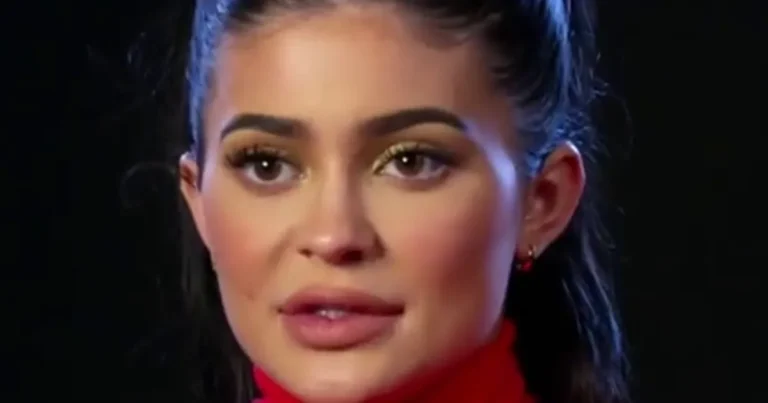
Kylie Jenner's "vacation mode" is a meticulously crafted illusion. Discover why her latest bikini photos are less about joy and more about exhausting digital labor.
Kylie Jenner’s latest bikini photos aren’t just about joy; they are a meticulously crafted illusion designed to sell us a fantasy. This isn’t a woman “having the time of her life”; it’s a billionaire performing for her empire, and frankly, it’s exhausting to watch.
Jenner recently flooded Instagram with new bikini shots, captioning them with saccharine phrases like “having the time of my life” and “vacation mode.” The images, predictably, show Jenner in designer swimwear, posing in a ludicrously luxurious setting, garnering millions of likes and shares faster than you can say “Kylie Cosmetics.”

https://www.instagram.com/p/C3o8_o9P68F/
These aren’t candid snapshots of bliss. These are high-production, strategically deployed assets in the ongoing campaign that is the Kylie Jenner brand. We’re not just looking at a celebrity enjoying her vacation; we’re witnessing a masterclass in digital labor, where every pixel is designed to reinforce an unattainable ideal.
The Kardashian-Jenner family didn’t just build an empire, they architected a new form of public performance. Every post, every caption, every “candid” moment is not just strategic, it’s a calculated maneuver. It’s about engagement, yes, but more profoundly, it’s about maintaining a relentless, almost suffocating, brand visibility.
These photos are more than just marketing; they are a digital tether, keeping Kylie Jenner and Kylie Cosmetics firmly in the spotlight. They reinforce her image as the ultimate beauty icon, driving sales for her sprawling ventures. For her 400 million followers, predominantly young women, these images are less aspirational and more toxic, pushing an unattainable standard of beauty and, more insidiously, happiness.
“Having the time of my life” when you’re meticulously posing for a professional photographer, likely with a glam squad on standby? Spare us the pretense. This isn’t spontaneous joy; this is digital labor at its most blatant. It’s not a vacation; it’s a job, a 24/7 performance demanding constant vigilance and an army of assistants.
The comments sections are a predictable maelstrom of fawning praise and cynical backlash. While fans gush over her “body goals” and anoint her “queen,” the internet, in its infinite wisdom, sees through the charade. Platforms like Reddit and X are rife with brutal honesty, where users dismiss it as a “midlife crisis thirst trap” and meticulously dissect the obvious Photoshop overkill. Those abs look less like natural musculature and more like a graphic designer’s fever dream.
We’re not blind. We see the filler-fueled fakery. We see the calculated promotion for her latest fashion line. The question isn’t whether she’s “having the time of her life,” but rather, how desperately she’s trying to sell us something – an ideal, a product, a fantasy that is as hollow as it is shiny.
This relentless barrage of “perfect” images isn’t just annoying; it’s genuinely damaging. It makes young women feel profoundly inadequate, forcing them to compare their messy, authentic lives to Jenner’s meticulously curated, airbrushed fantasy. It’s a comparison designed to make them feel less than, to crave more, to buy more.
Studies consistently link heavy social media use to alarming rates of anxiety, depression, and crippling body image concerns among young people. This isn’t just about Kylie Jenner; it’s about a pervasive culture of comparison that social media amplifies to an almost unbearable degree. The Royal Society for Public Health has sounded the alarm repeatedly, highlighting how these images set an impossible benchmark, defining “happiness” and “success” almost exclusively through physical appearance and material wealth. It’s a dangerous game, and our youth are paying the price.
Is Jenner’s confident display of her body truly empowering? Or is it merely another performance, rigidly adhering to narrow beauty standards and, ultimately, serving commercial gain? She may be a billionaire, but she remains a performer, a prisoner of the image she has meticulously constructed. Is that freedom? Or is it a gilded cage, requiring constant maintenance and an unending stream of digital content?
The “bikini industrial complex” thrives on this charade. It’s a multi-billion dollar ecosystem where fashion, beauty, diet, and fitness industries all feed voraciously off these idealized images, perpetuating narrow beauty ideals that profit from our insecurities. It’s a vicious cycle, and we, the consumers, are complicit.
These photos are more than just selfies; they are a cultural barometer, revealing what we truly value and what we relentlessly chase. We consume the illusion of happiness, the fantasy of perfection, and the insidious idea that luxury equates to joy. It forces us to question the very nature of authenticity in the digital age, to scrutinize the curated online existence that has become so commonplace. What are we truly seeing? What are we truly buying into?
This isn’t just about Kylie Jenner. It’s about all of us. It’s about the relentless pressure to perform, to compare, to aspire to an ideal that is both manufactured and unattainable. It’s time we stopped buying the lie, stopped feeding the beast, and started demanding something real, something authentic, something that doesn’t leave us feeling inadequate and exhausted.
Source: Google News