Newsletter Subscribe
Enter your email address below and subscribe to our newsletter

Enter your email address below and subscribe to our newsletter
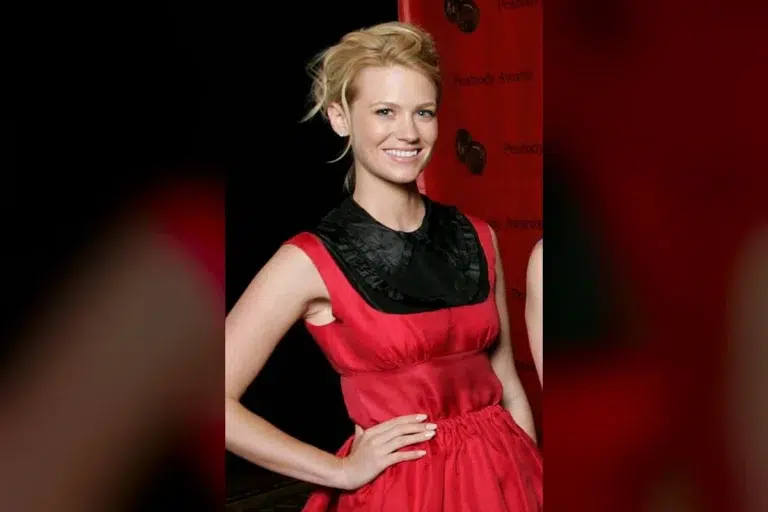
January Jones's "comeback" is sparking backlash. We're calling out her "vulnerable celeb glow-up" for what it really is: a calculated PR stunt.
January Jones, at 47, isn’t just aging gracefully; she’s orchestrating a classic Hollywood comeback, and frankly, it’s a performance worthy of an Oscar… for PR. Her recent “dramatic transformation” and “neurological disorder” reveal? Let’s be honest, it smells less like vulnerability and more like a carefully crafted script designed to keep her firmly in the spotlight. And guess what? We’re not buying this “vulnerable celeb glow-up” narrative for a second.
This isn’t about authenticity; it’s a masterclass in staying relevant in the cutthroat celebrity game. She’s pushing a midlife pivot, a carefully curated reinvention. It’s a performance, plain and simple, designed to generate buzz and keep her name trending. Call it what you want, but I call it a calculated maneuver.

Jones conveniently dropped hints about her “struggles” just before unveiling her new look. Coincidence? Absolutely not. This is a strategic play, designed with surgical precision to generate maximum chatter. It’s the oldest trick in the book, and she’s playing it to perfection.
But here’s the kicker: the internet isn’t fooled. Head over to Reddit and X (formerly Twitter), and you’ll find a veritable feast of skepticism. People are tearing it apart, labeling it a “thirst trap disguised as a therapy session.” Fans are calling it out for exactly what it is – a transparent grab for attention.
“47 and still playing the tortured artist? Pass the Botox.”
“She ‘struggles’ by posting bikini pics from Maldives—must be hell.”
These aren’t isolated comments; they’re a chorus of dissent. People are genuinely fed up with the manufactured vulnerability, and they’re seeing right through the facade. It’s a collective eye-roll at the sheer audacity of it all.
Jones’s “neurological disorder” reveal feels, to many, opportunistic. It’s a convenient label, a new angle that suddenly makes her seem profound and complex. But let’s rewind a bit, shall we? This is the same celebrity known for a string of vague wellness posts and a very public obsession with bone broth. So, is this “disorder reveal” a genuine moment of sharing, or just the latest installment in her carefully managed personal brand?
It’s a prime example of how to stay Insta-relevant, how to keep those clicks coming. It’s not about genuine struggle; it’s about shrewd brand management. In an era where authenticity is currency, this move feels less like an open book and more like a carefully edited manuscript.
Hollywood “transformations” aren’t magic, folks. They’re often powered by an arsenal of cutting-edge technology. Think about it: AI-powered filters can smooth out every perceived imperfection, making wrinkles vanish with a tap. Advanced photo editing software can sculpt bodies, adjust lighting, and create an illusion of flawlessness. It’s all part of the carefully constructed illusion.
And let’s not forget the role of new wearable tech. Imagine smart glasses, like the innovative Aura glasses mentioned by TechCrunch in 2026, allowing for seamless content creation and instant digital enhancement. Celebrities use these tools to meticulously craft their public image, controlling every pixel, every angle. This isn’t raw, unvarnished reality; it’s a meticulously engineered presentation. It makes their “showing off” even more precise, more controlled, and ultimately, less genuine.
The line between real and enhanced has never been blurrier, and celebrities are at the forefront of this digital deception. When every image can be tweaked, every video filtered, how can we ever truly know what’s authentic?
The insidious rise of deepfake technology adds another unsettling layer to this whole charade. It blurs the lines so completely that we’re left asking: What’s real? What’s AI-generated? Celebrities, more than anyone, are grappling with this existential crisis of identity, as reported by The Verge in 2026.
Could Jones’s “transformation” be completely natural? Sure. Or could it be digitally enhanced, a product of sophisticated algorithms? We simply don’t know, and that’s the problem. The technology makes it virtually impossible to tell sometimes, and this erosion of trust is a dangerous precedent. Public figures are even using AI avatars for engagement, creating personalized content that might not even be “them.” So, is her “new look” truly hers? Or is it a carefully crafted digital persona, a sophisticated puppet show designed to keep us guessing?
Every single post, every photo, every “reveal” contributes to a vast digital profile that we, and especially celebrities, are constantly building. Data brokers, as highlighted by Wired in 2026, are voraciously collecting this information, monetizing our online lives in ways most of us can’t even fathom. Celebrities, with their immense public presence, are prime targets for this data extraction.
When Jones posts her satin co-ord pics, she’s not just showing off; she’s feeding the beast. She’s providing more data, more insights into her life, her habits, her preferences. This isn’t just about showing off; it’s about generating valuable data points that can be bought, sold, and analyzed. It raises huge privacy questions: How much control do celebrities truly have over their digital selves? Even when they try to meticulously control their narrative, they’re still inadvertently giving away precious data. It’s a constant, relentless battle for digital autonomy.
Even seemingly noble endeavors, like endorsing eco-conscious gadgets, can become tools for branding. Celebrities might champion sustainable tech, and on the surface, it makes them look good, aligning them with a worthy cause, as GreenTechDaily discussed in 2026. But is it genuine concern, or is it just another calculated marketing ploy?
Is Jones genuinely using a phone made from recycled plastics, or is that just a convenient talking point for her next interview? If she were, you can bet your bottom dollar it would be a headline, meticulously woven into her “transformation” narrative. Every choice a celebrity makes, every gadget they use, every outfit they wear – it’s all scrutinized, analyzed, and ultimately, becomes part of their carefully constructed public image. It’s all part of the grand performance, and we, the audience, are left to decipher the true motivations behind the curtain.
Let’s be clear: January Jones is a savvy operator. She understands the system, and she knows precisely how to work it. This “dramatic transformation” isn’t merely a personal journey; it’s a strategic professional move, a calculated step in her career trajectory. It’s a masterclass in celebrity PR, a meticulously orchestrated campaign designed to keep her relevant and talked about.
So, here’s my advice: don’t buy into the victim narrative. Don’t fall for the hype. This is Hollywood at its most calculating, its most artificial. We, the public, deserve more than these transparent, manufactured narratives. We deserve more truth, more authenticity, and less of this carefully curated charade. It’s time to demand better from our public figures and to see through the smoke and mirrors of celebrity branding. What do you say, are you with me?
Source: Google News