Newsletter Subscribe
Enter your email address below and subscribe to our newsletter


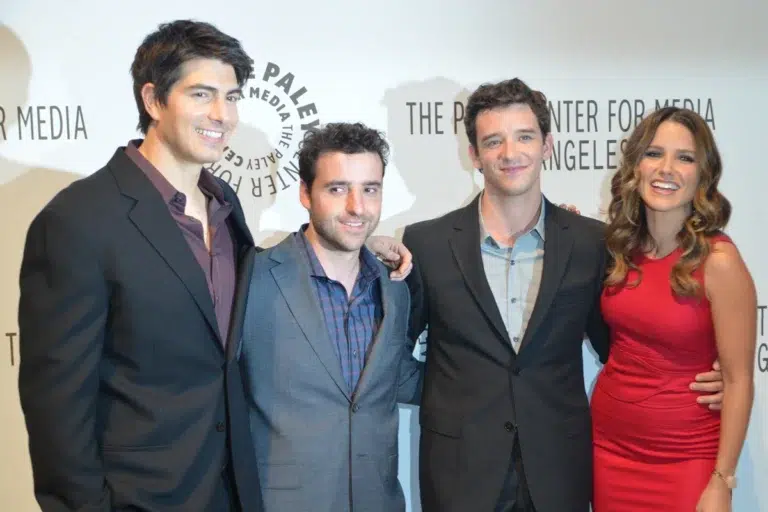
Bernard the Elf just exposed Hollywood's dirty secret: His Santa Clause residuals are insane, dwarfing his Oppenheimer earnings. This shocking truth reveals everything wrong with actor compensation today.
Alright, entertainment insiders, gather ’round, because David Krumholtz – yes, our very own beloved Bernard the Elf – just pulled back the curtain on Hollywood’s dirty little secret about residuals, and trust me, it’s going to make your jaw drop. Turns out his iconic role in Tim Allen’s holiday classic, “The Santa Clause,” is still paying him actual money, unlike his Oscar-winning turn in Christopher Nolan’s “Oppenheimer.” If that doesn’t sound absolutely bonkers, you haven’t been paying attention.
Krumholtz, 48, recently spilled the tea, revealing that checks from Christopher Nolan’s $950 million global blockbuster “Oppenheimer” are often for laughable pennies. Meanwhile, the original “The Santa Clause,” released way back in 1994, still sends him juicy four-figure residual payments annually. Talk about a holiday miracle that keeps on giving, and a modern-day head-scratcher that perfectly illustrates everything wrong with the system.
This isn’t just a quirky anecdote; it’s a glaring spotlight on Hollywood’s messed-up actor compensation. The system has warped, and for the absolute worse. It’s unfair that a modern hit pays less than a decades-old movie, impacting the industry’s integrity.
So, what in the tinsel-covered North Pole is going on here? Why would a nearly 30-year-old Christmas movie — a delightful classic, yes, but hardly a recent cinematic triumph — shell out more than a critically adored, Oscar-winning, and mega-successful juggernaut like “Oppenheimer”? The answer, my friends, is as old as Hollywood itself: ancient contracts versus modern streaming deals. “The Santa Clause” was truly a product of its time, and boy, did that time pay well.
Krumholtz’s firsthand experience isn’t just a ‘proof point’; it’s a screaming siren, perfectly illustrating the core battle actors waged during the historic 2023 SAG-AFTRA strike. Fair residuals in this new, digital-first streaming age aren’t just a ‘nice-to-have’ perk; they are, quite frankly, the lifeline essential for working actors to survive.
Seriously, take a moment to really think about how we consumed films in the glorious 90s versus our current binge-watching era. It’s not just a different game; it’s a different sport, played on a different planet, and residuals haven’t even made it to the shuttle launch.
As Krumholtz himself so eloquently put it, the financial reality for far too many working actors is anything but glamorous. He didn’t mince words, telling reporters:
“Even with a role in a massive hit like ‘Oppenheimer’, the long-term financial security just isn’t there anymore.”
This isn’t just niche Hollywood ‘inside baseball’; it’s a brutal look at how rapidly industries shift, leaving workers vulnerable. We’ve all assumed blockbuster actors are set for life. Krumholtz’s courageous honesty doesn’t just shatter that illusion; it obliterates it.
This mess screams for an urgent overhaul of compensation models. The current system is a cynical joke, failing to reflect the massive, opaque profits streaming services rake in. Studios must step up and pay fairly for the work that generates their billions; anything less is robbery.
So, let this holiday season’s most unexpected truth bomb linger: if an actor, a recognizable face in an Oscar-winning, nearly billion-dollar film, is still fighting for scraps, what hope is there for the rest of Hollywood’s hardworking talent? It’s a question that demands answers, and frankly, demands change – before the magic of moviemaking becomes just another corporate casualty.
Photo: Wikimedia Commons (query: David Krumholtz)
Source: Google News