Newsletter Subscribe
Enter your email address below and subscribe to our newsletter


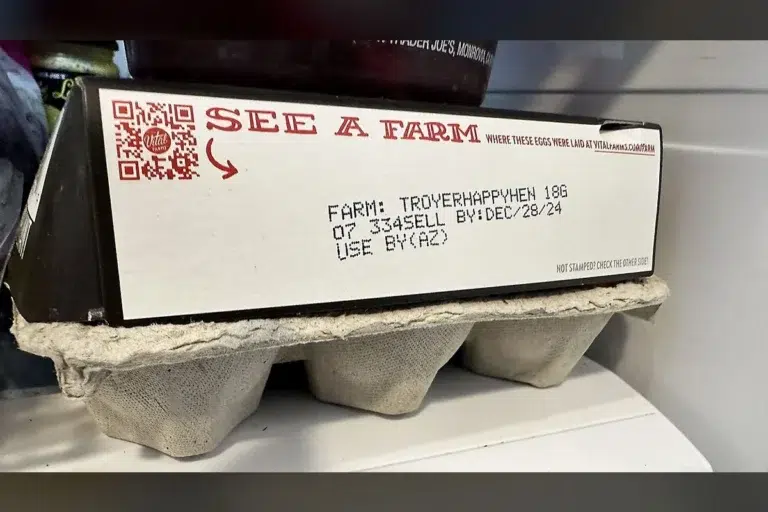
California just banned "sell by" dates, igniting a food revolution. This controversial move demands we rethink our eating habits and fight waste now.
California, my friends, just pulled off a culinary coup! They’ve ripped those deceptive “sell by” dates right off our grocery shelves, fundamentally reshaping how we approach food and, frankly, how we live. This isn’t some polite policy adjustment; it’s a gastronomic revolution, a direct, unapologetic shot fired at the colossal food waste choking our planet and, let’s be honest, our wallets.
Mark your calendars, because as of June 22, 2026, the Golden State has decisively banned that utterly perplexing “sell by” designation. Governor Gavin Newsom, with a stroke of legislative genius via SB 1234, has ensured that from now on, you’ll primarily encounter “Best If Used By” or “Use By” dates. This isn’t a mere cosmetic adjustment, oh no; this is a seismic, fundamental shift, particularly impactful for non-perishable goods and a significant chunk of our dairy aisle staples.
Let’s be brutally honest: the “sell by” date was always a retailer’s secret weapon, a back-of-house inventory tool, never, ever a true consumer safety warning. Yet, for decades, this insidious little label played us for fools, tricking us into prematurely tossing perfectly, gloriously good food. Are you listening? We’re talking about a staggering 130 billion pounds of food annually in the U.S. – a culinary crime scene worth over $160 billion – simply vanishing into thin air! And California, bless its heart, contributes a staggering 11.2 billion pounds to that yearly mountain of waste. It’s enough to make a chef weep!
Environmental advocates, particularly the formidable Natural Resources Defense Council (NRDC), aren’t just doing cartwheels; they’re practically performing synchronized acrobatics! They hail this as the game-changer, the seismic shift needed to slash greenhouse gas emissions. This new standard, they rightly declare, finally confronts the utterly absurd, morally bankrupt practice of perfectly edible food rotting away in our landfills.
“California is once again leading the nation in addressing critical environmental challenges,” stated Governor Gavin Newsom on June 21, 2026. “This common-sense reform will not only drastically cut down on food waste but also put money back into the pockets of hardworking Californians.”
And that’s the delicious truth, isn’t it? This isn’t merely a pat on the back for being eco-friendly; it’s a massive, resounding cheer for being wallet-friendly! The state, with its keen eye on the prize, projects a phenomenal 15-20% reduction in household food waste within just five years. Do you grasp the magnitude? That translates to hundreds of millions, perhaps even billions, of dollars flowing right back into the pockets of hardworking Californians. Tell me, who among us could possibly argue with such a delectable outcome?
But hold your horses, because not everyone is popping champagne corks. Let’s be real: a segment of the population, deeply ingrained with the old ways, frets about food safety. They’ve been meticulously conditioned, almost brainwashed, to trust that “sell by” date as if it were sacred scripture. The California Department of Food and Agriculture (CDFA) is crystal clear on this: “Use By” dates for truly highly perishable items, like raw meat, remain absolutely, unequivocally legally binding. But for the vast majority of everything else? My friends, your own discerning nose and keen eyes are now your ultimate, most reliable guides. Trust your senses!
For the titans of retail, the grocery giants like Ralphs and Safeway, this transition is reportedly smoother than a perfectly emulsified hollandaise. They were, after all, at the legislative table, whispering sweet nothings of long-term operational efficiencies and reduced waste that will undoubtedly eclipse the initial, albeit substantial, $50-75 million compliance costs. But let’s spare a thought, shall we, for the backbone of our communities: the smaller, independent grocers. For them, this isn’t a gentle slope; it’s a sheer vertical climb. They face the daunting task of re-labeling entire inventories, retraining staff who’ve operated under a different paradigm for decades, and overhauling legacy systems. It’s not just a heavy lift; it’s an Everest-sized challenge, demanding resources and resilience that many simply don’t have readily available. A true test of grit!
“For too long, confusing date labels have been a primary driver of food waste,” said Dr. Sarah Miller, Director of CalRecycle, on June 20, 2026. “These new regulations provide clarity and empower consumers to make informed decisions.”
This, my friends, is about true empowerment! It’s about reclaiming your autonomy, trusting your own innate judgment – your nose, your eyes, your gut – over some arbitrary, often meaningless, number printed on a package. Yes, it’s a significant leap of faith for many, a challenge to ingrained habits, but it is an absolutely necessary evolution for a truly sustainable, less wasteful future. We simply cannot afford to continue business as usual.
Now, for the question that truly keeps me up at night, simmering like a slow-cooked ragu: will other states finally jump on this overdue food waste bandwagon, or will Washington, D.C., at long last, find its backbone and step up? Let’s not mince words: California’s market size is gargantuan, a culinary colossus. When the Golden State makes a move, industries often fall in line nationwide, not out of altruism, but to avoid the logistical nightmare of producing different products for different markets. This, my friends, is the infamous, unstoppable “California Effect” in full, glorious swing!
Already, forward-thinking states like New York and Massachusetts are keenly observing, poised to implement similar, much-needed reforms. And the major food manufacturers and national grocery chains? Oh, they’re practically begging, pleading for a single, crystal-clear federal standard. Can you imagine the sheer, unadulterated headache of navigating a chaotic patchwork of 50 different state laws? It’s not just an operational nightmare; it’s a recipe for utter chaos! The “Food Date Labeling Act” – a bill that should have been law years ago – has been languishing, stalled in the bureaucratic molasses of Congress for far too long. The time for federal action isn’t just now; it’s yesterday!
While the EPA and USDA have offered their well-intentioned, albeit insufficient, voluntary guidelines, let’s be blunt: “voluntary” simply doesn’t cut it when facing a crisis of this magnitude. California’s audacious move isn’t just a powerful signal; it’s a seismic tremor, forcing the entire nation to confront this issue head-on. This isn’t merely about what’s in California’s grocery carts; it’s about setting an undeniable, irreversible precedent for the entire country. The pressure, my friends, isn’t just mounting; it’s boiling over for a unified, national approach.
So, what’s the final course in this culinary drama? It’s the raw, undeniable truth: big business, for all its bluster, ultimately craves simplicity and efficiency, even if it means dismantling decades of ingrained, wasteful habits. The environmental imperative – saving our precious planet – is undeniable, yes. But let’s not overlook the equally potent, delicious economic incentive for retailers and manufacturers to slash waste. California, bless its bold heart, just pulled the trigger on a revolution. The gauntlet has been thrown. The aroma of change is in the air. The question isn’t if the rest of the country will follow, but when – and if they’re truly ready for a taste of the future. The table is set. Are you ready to feast on progress?
Source: Google News